
In autumn 2026, Venus and Mercury each move forward, backward, and forward again across a repeated stretch of the zodiac. This study follows that movement in two phases: descent toward the solar meeting and ascent from it. The dividing point is inferior conjunction, when the planet meets the Sun in apparent longitude on the Earth side.
Retrograde begins during descent and continues into ascent. For Venus, we follow questions of warmth, devotion, and relationship. For Mercury, we follow thinking, mediation, and conscience. These are practices developed for this study. What they mean in a life has to be observed in that life.
The current renders
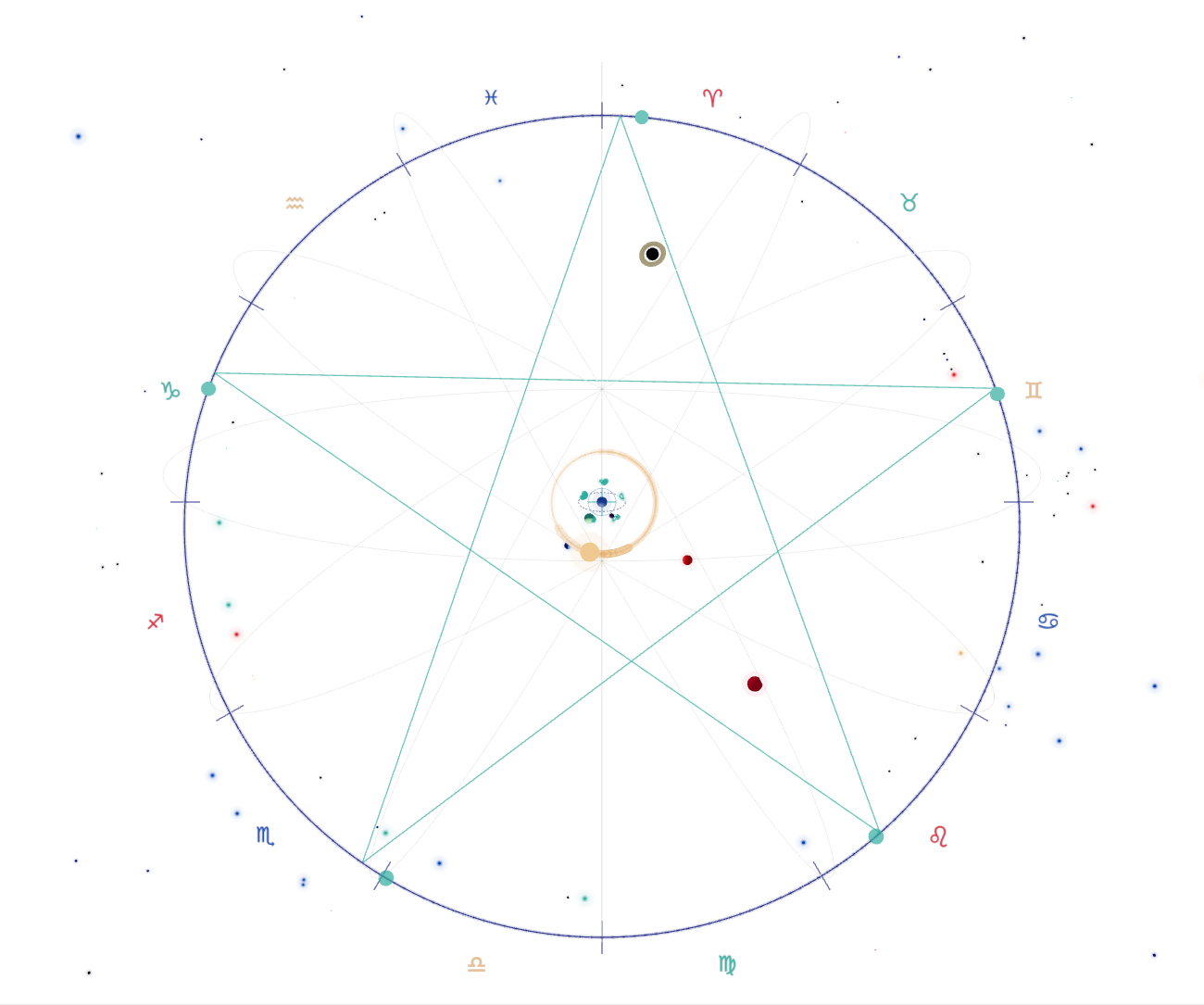
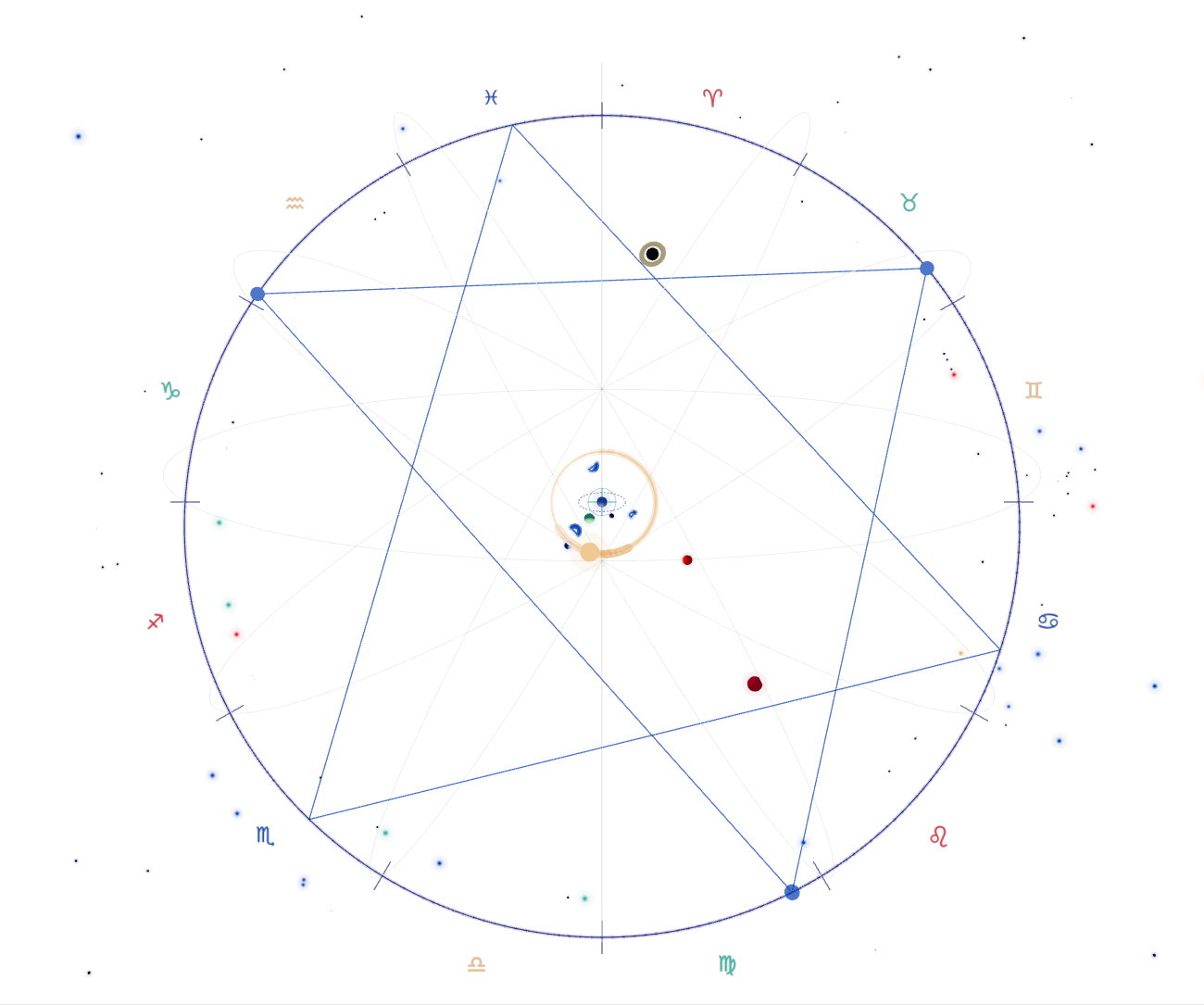
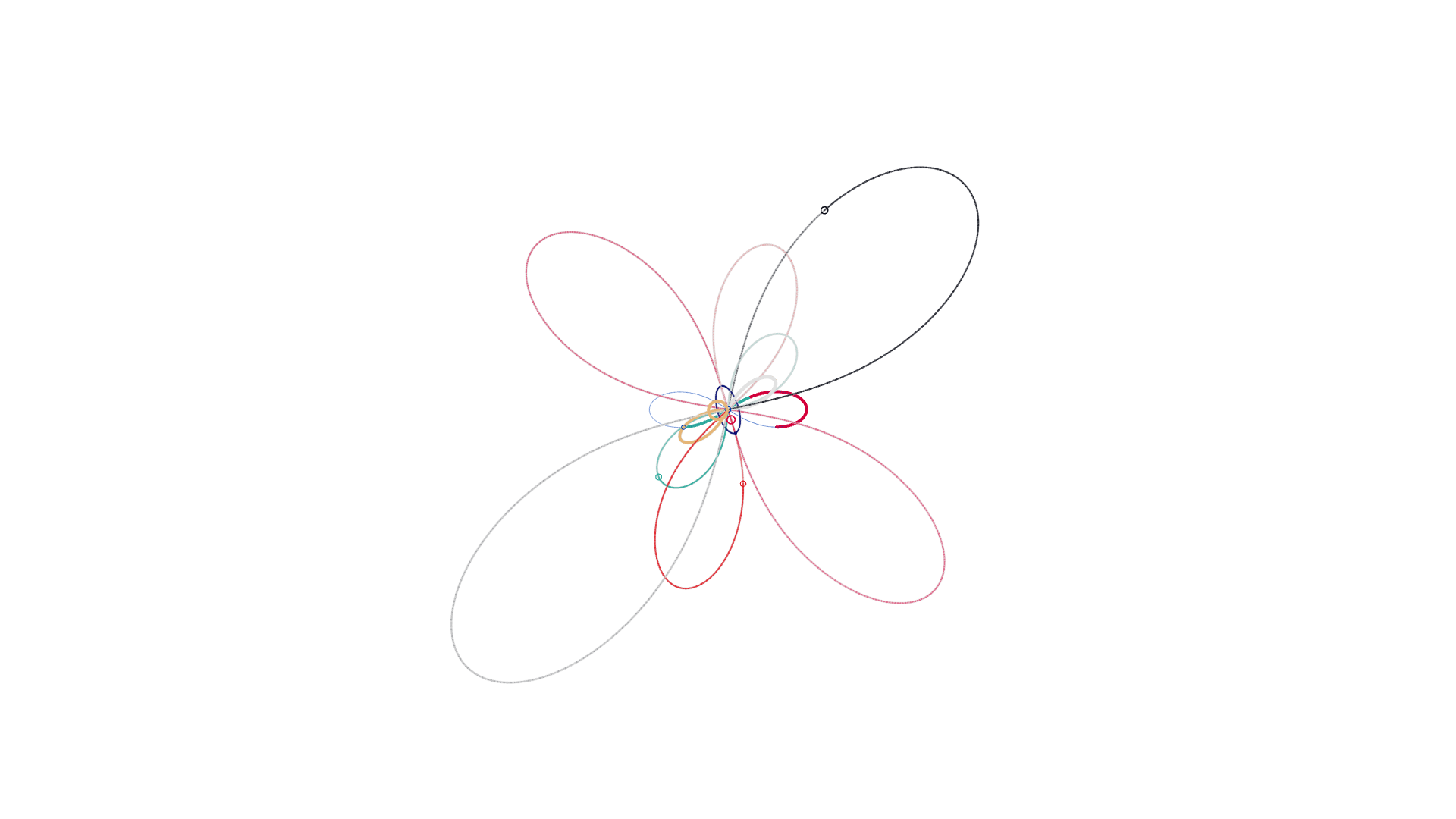
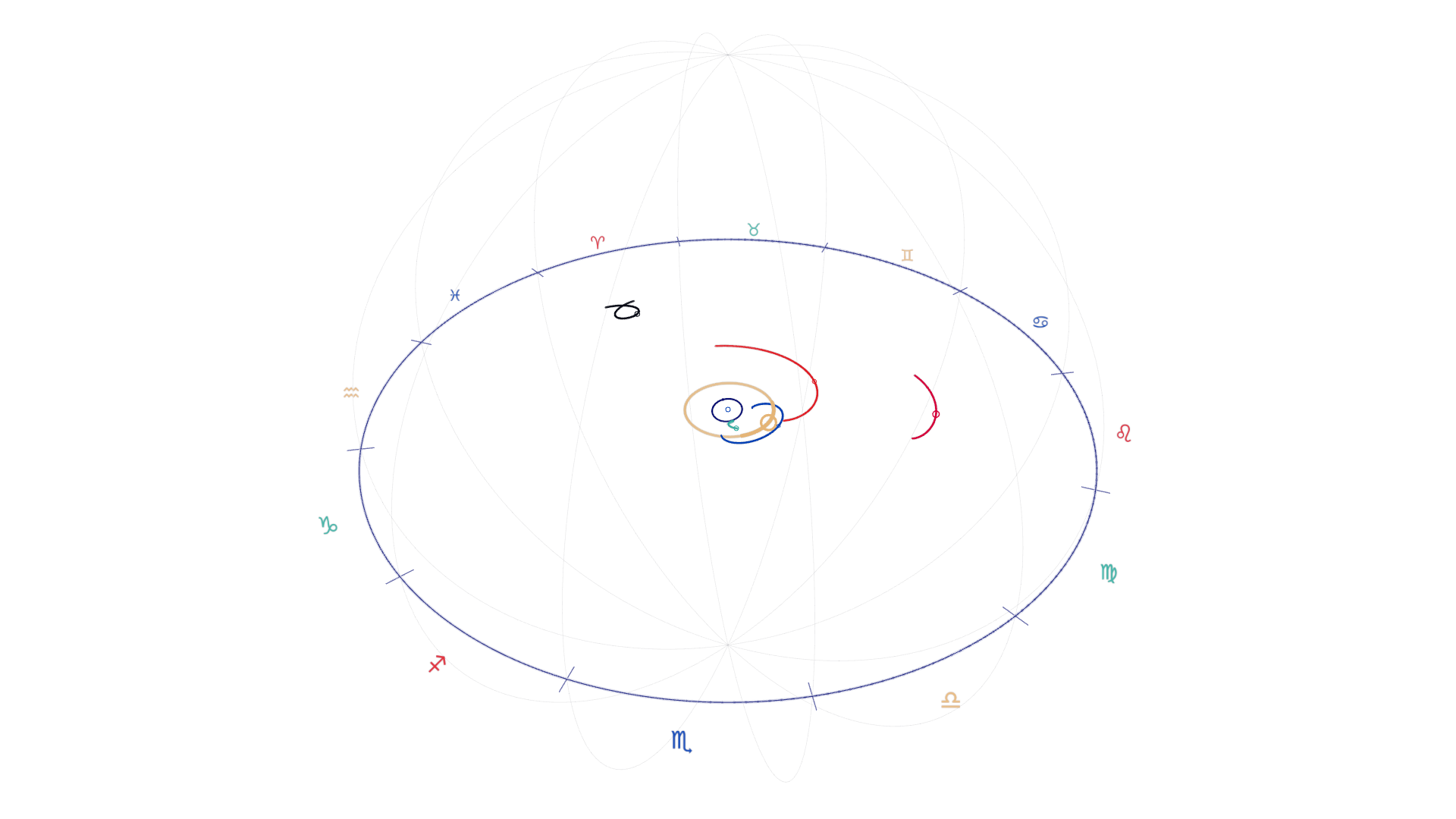
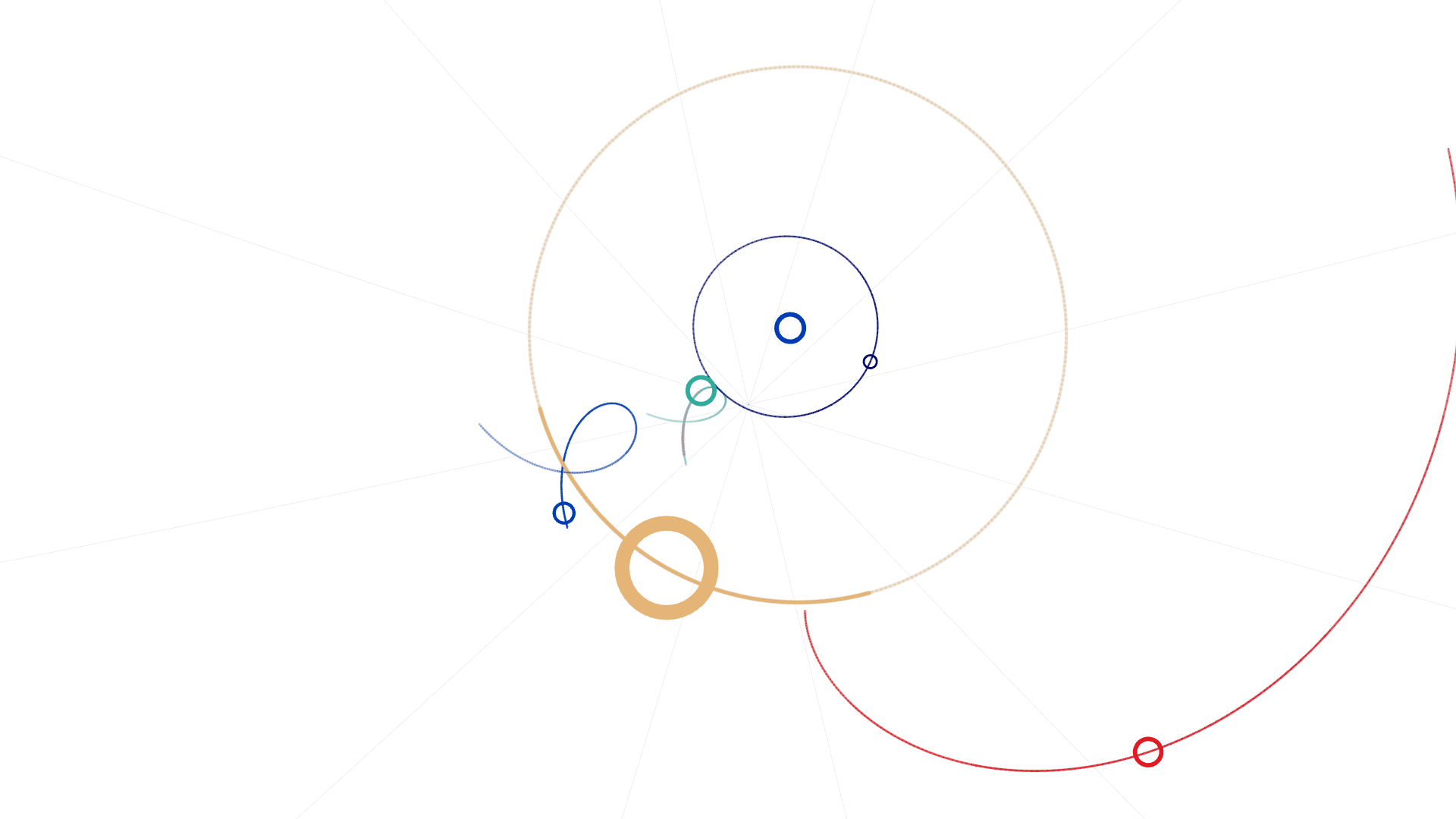
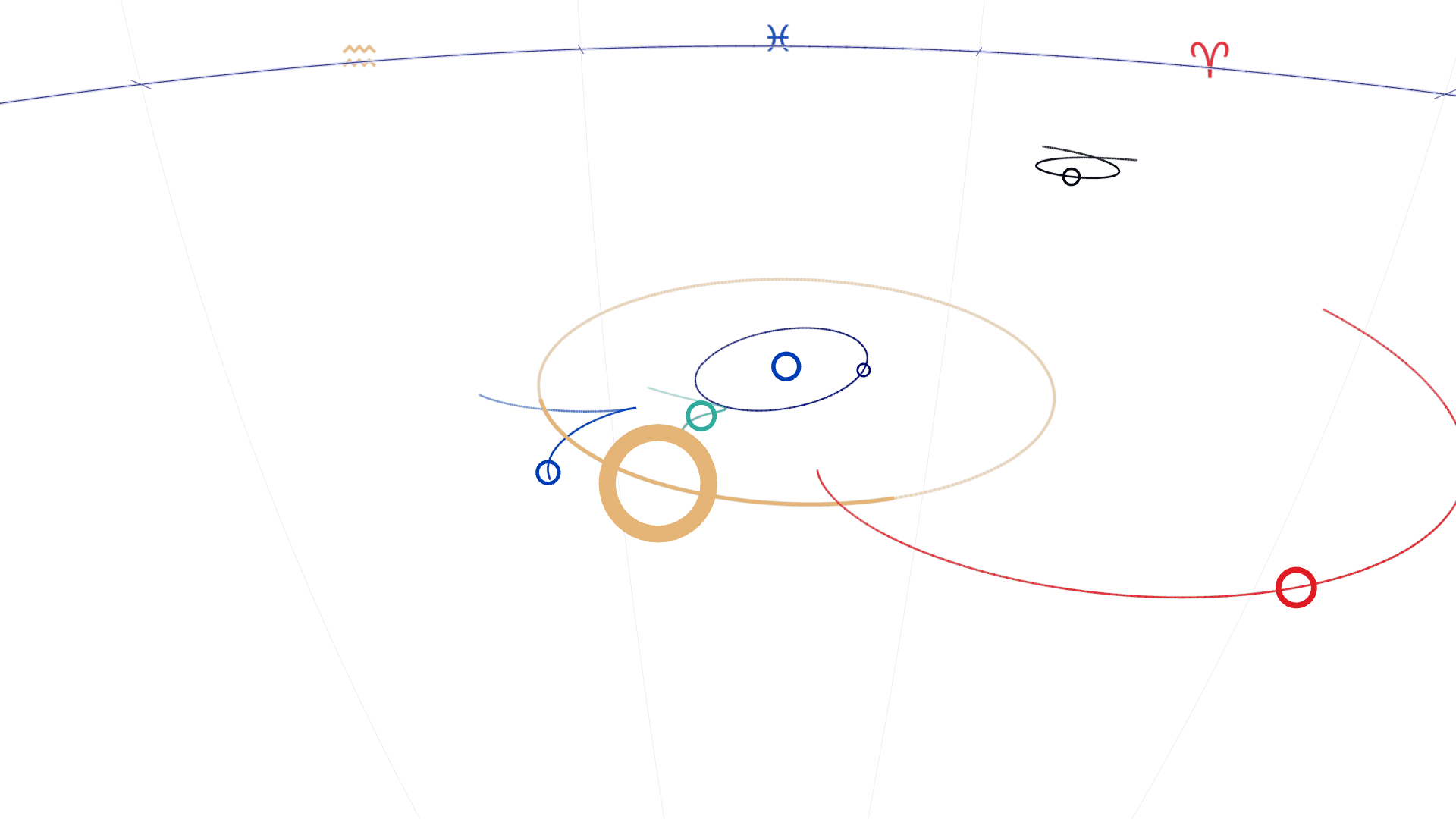
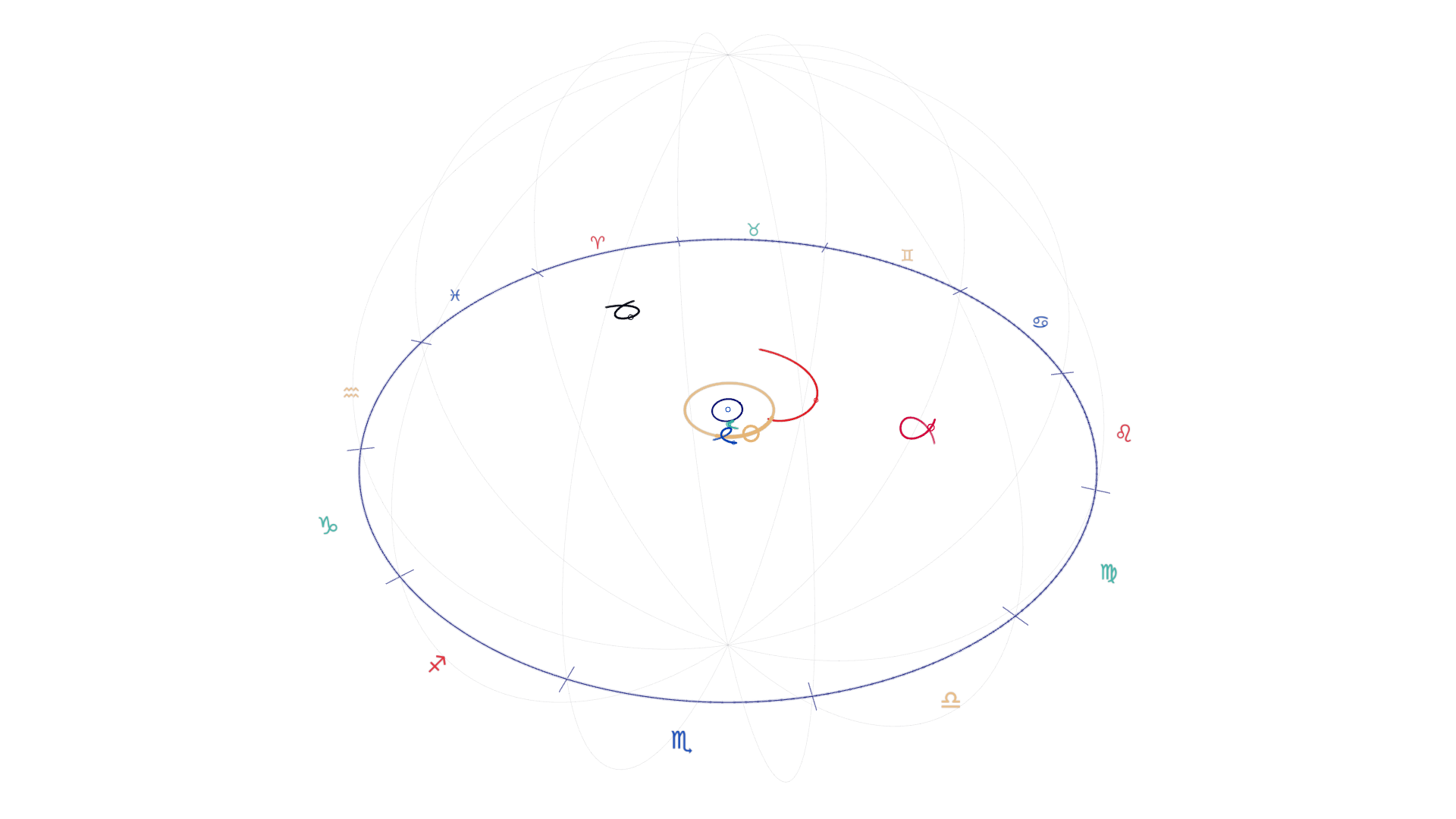
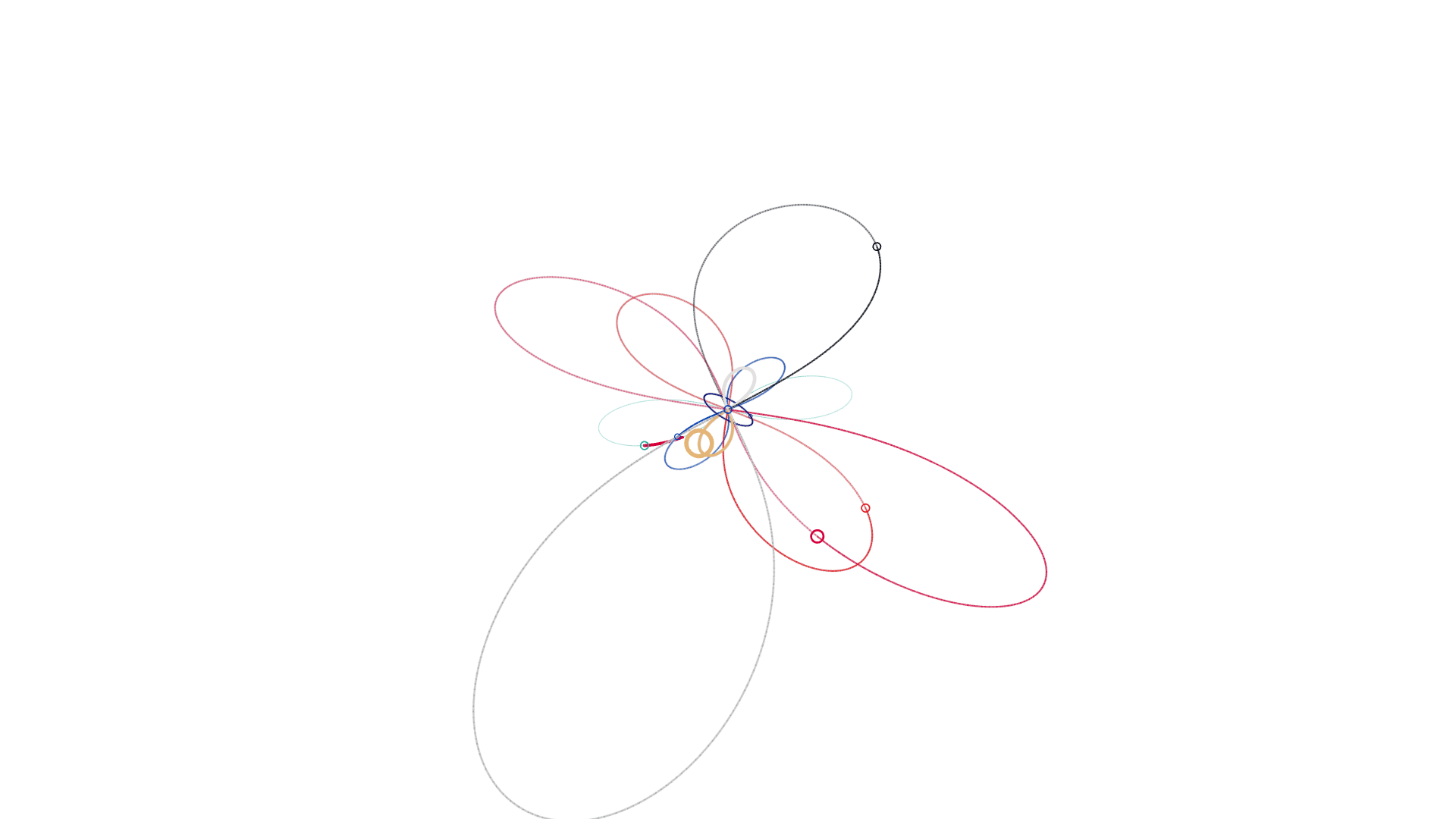
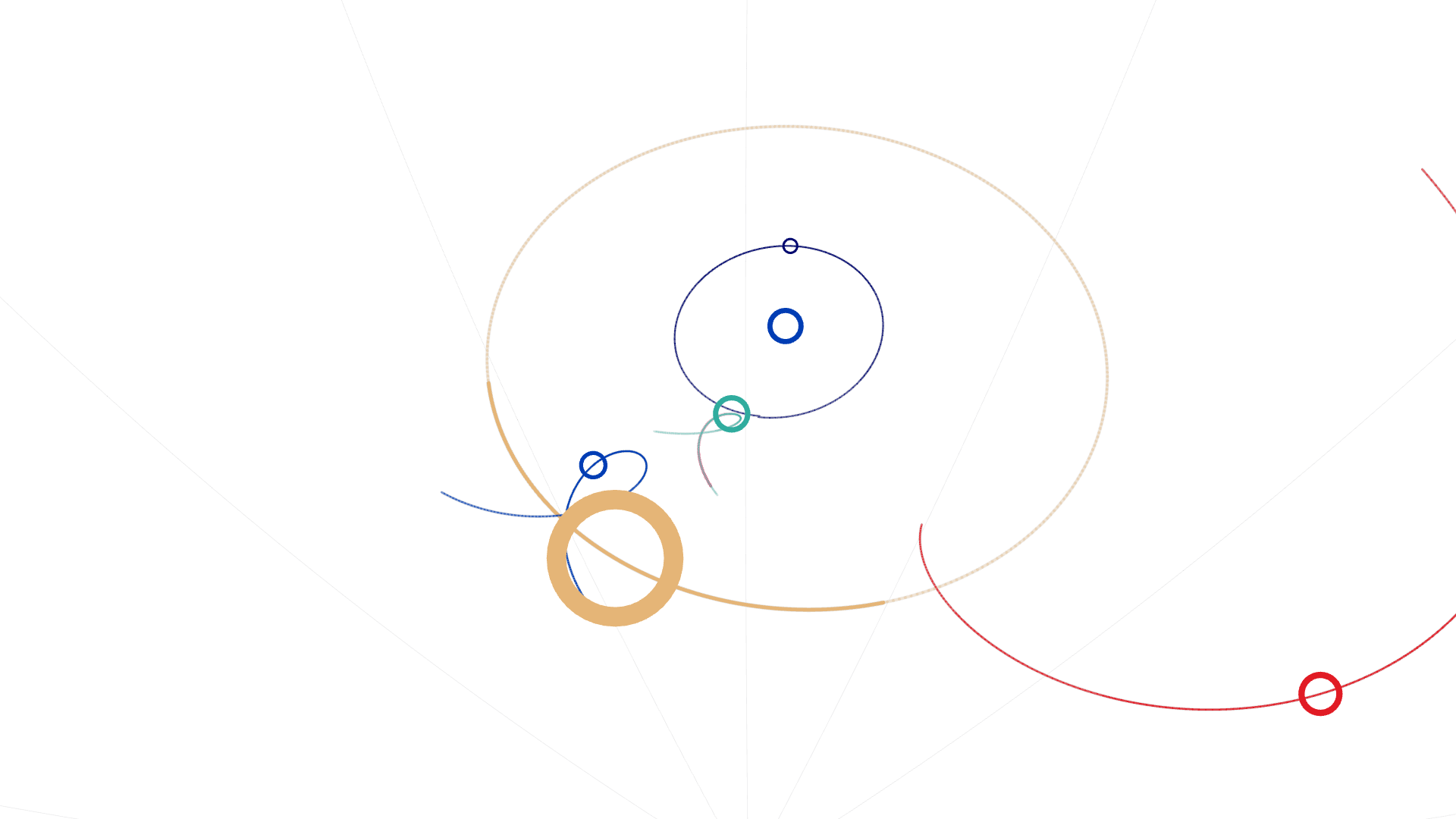
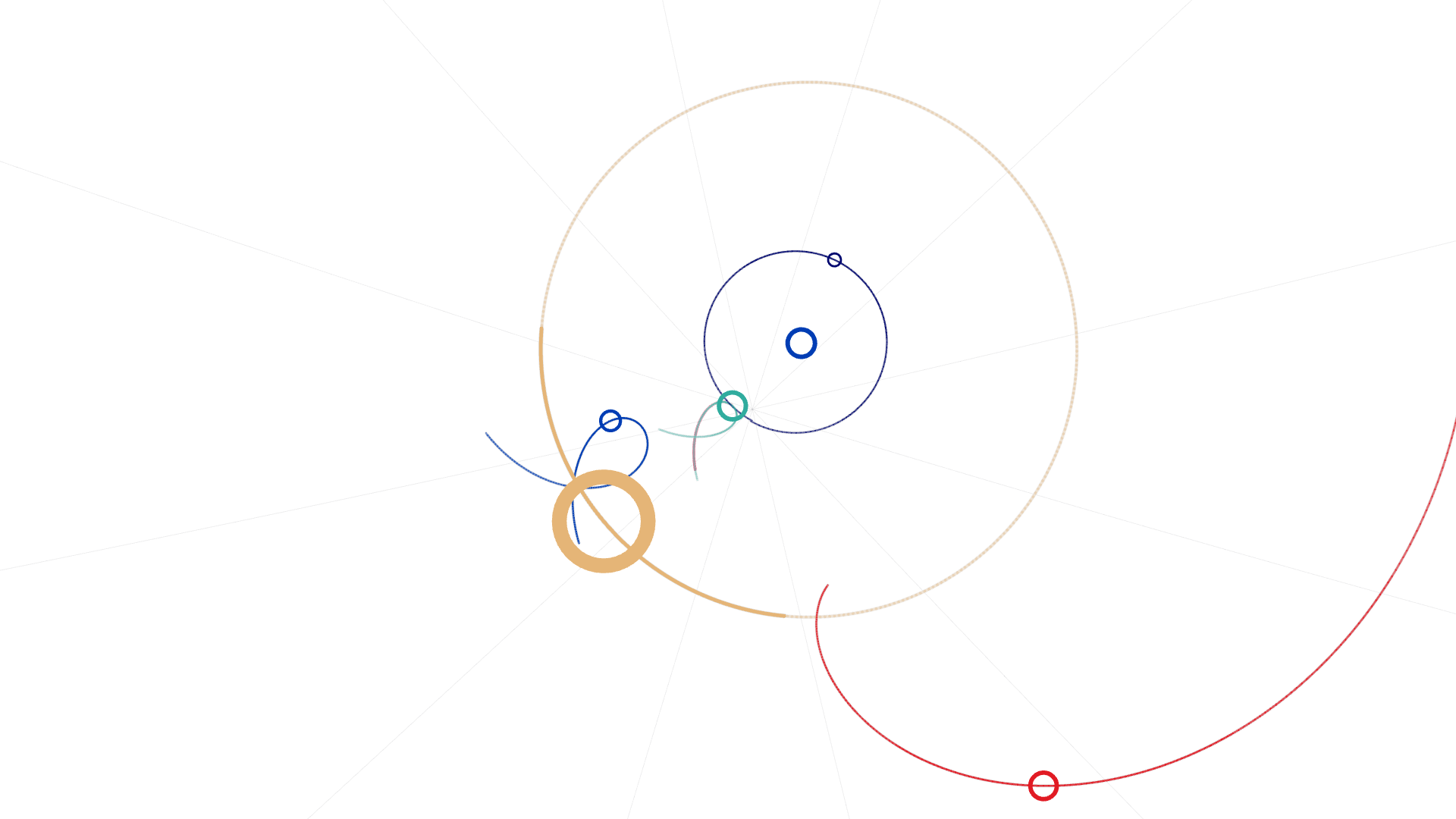
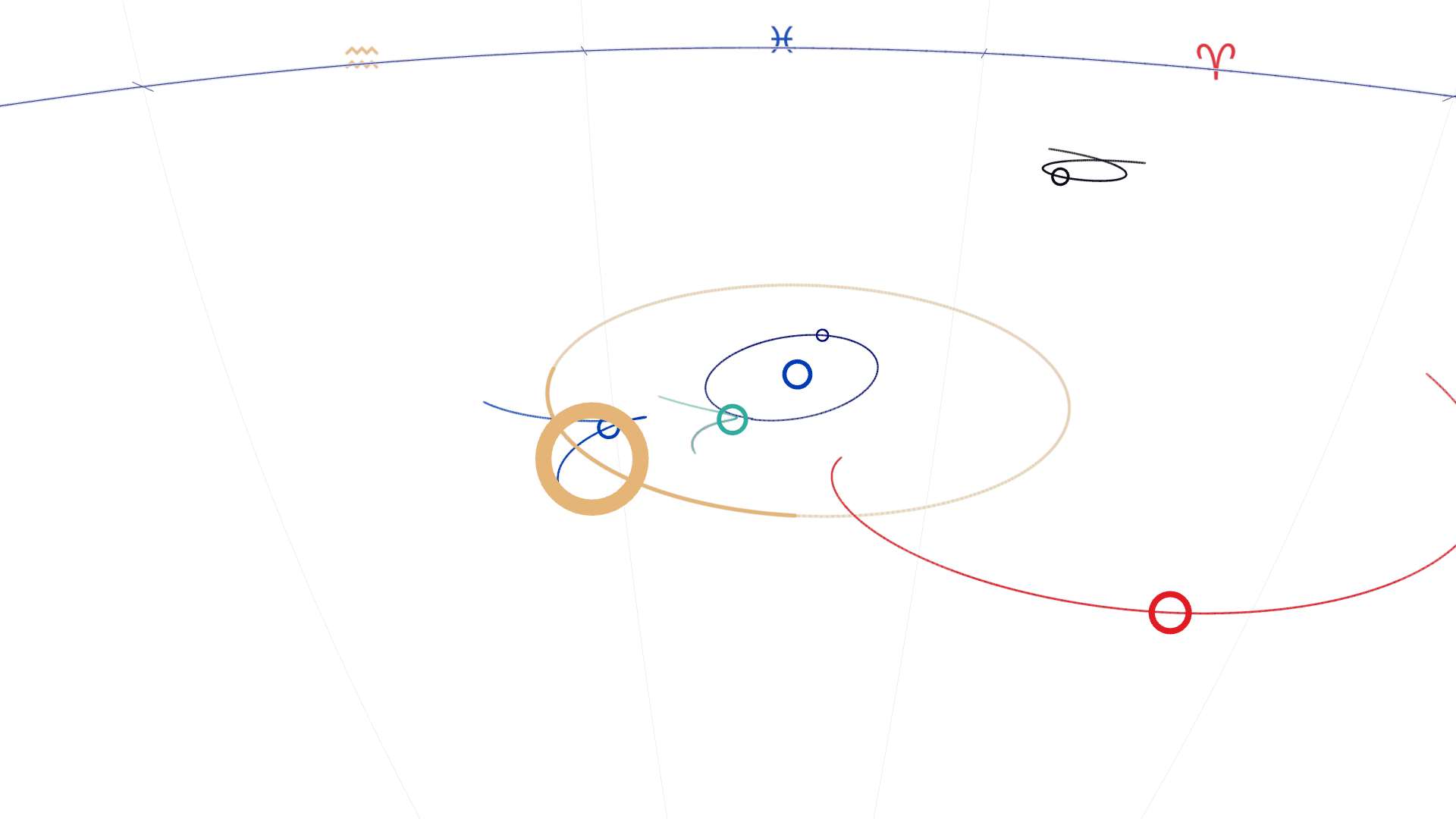
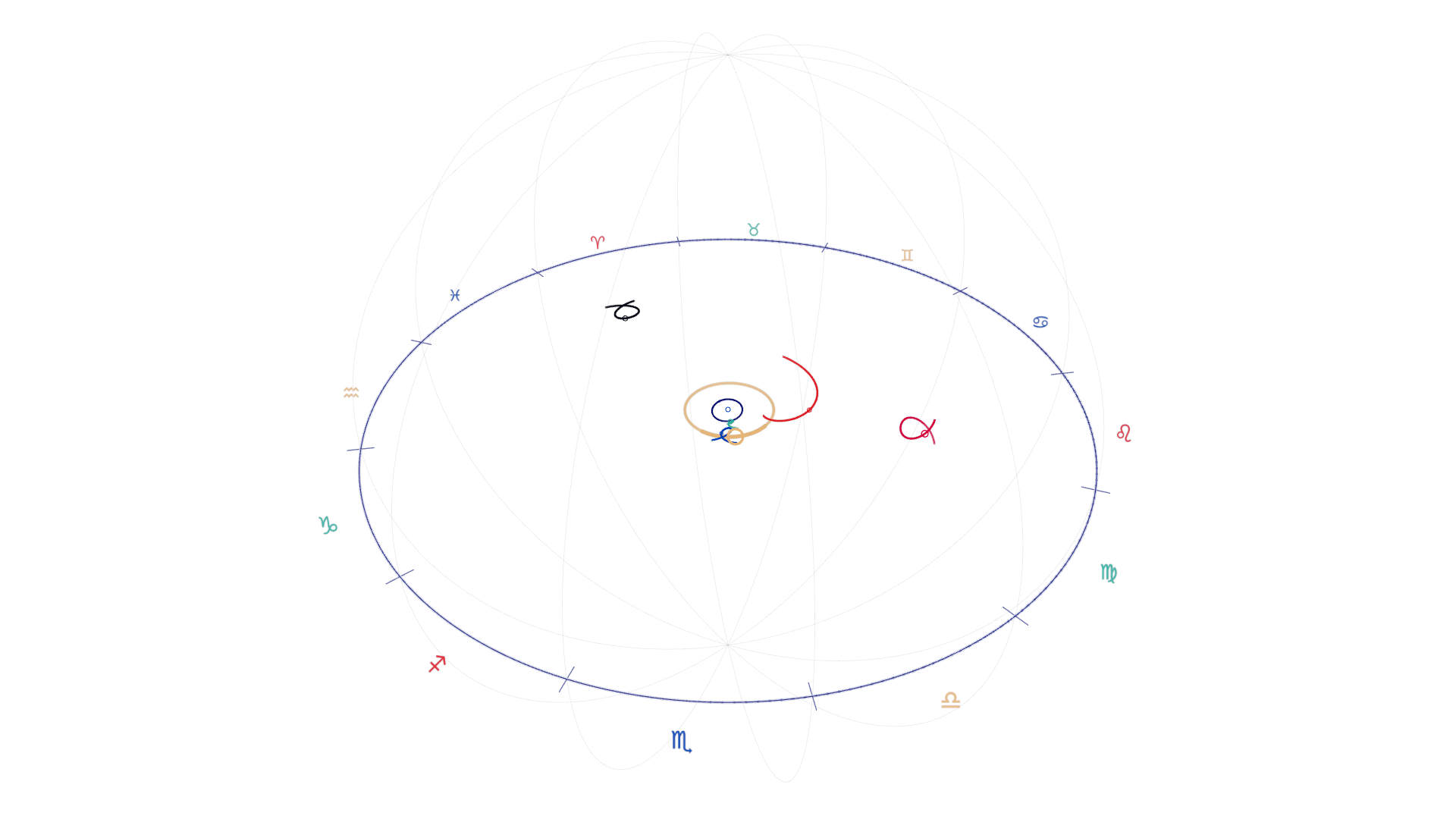
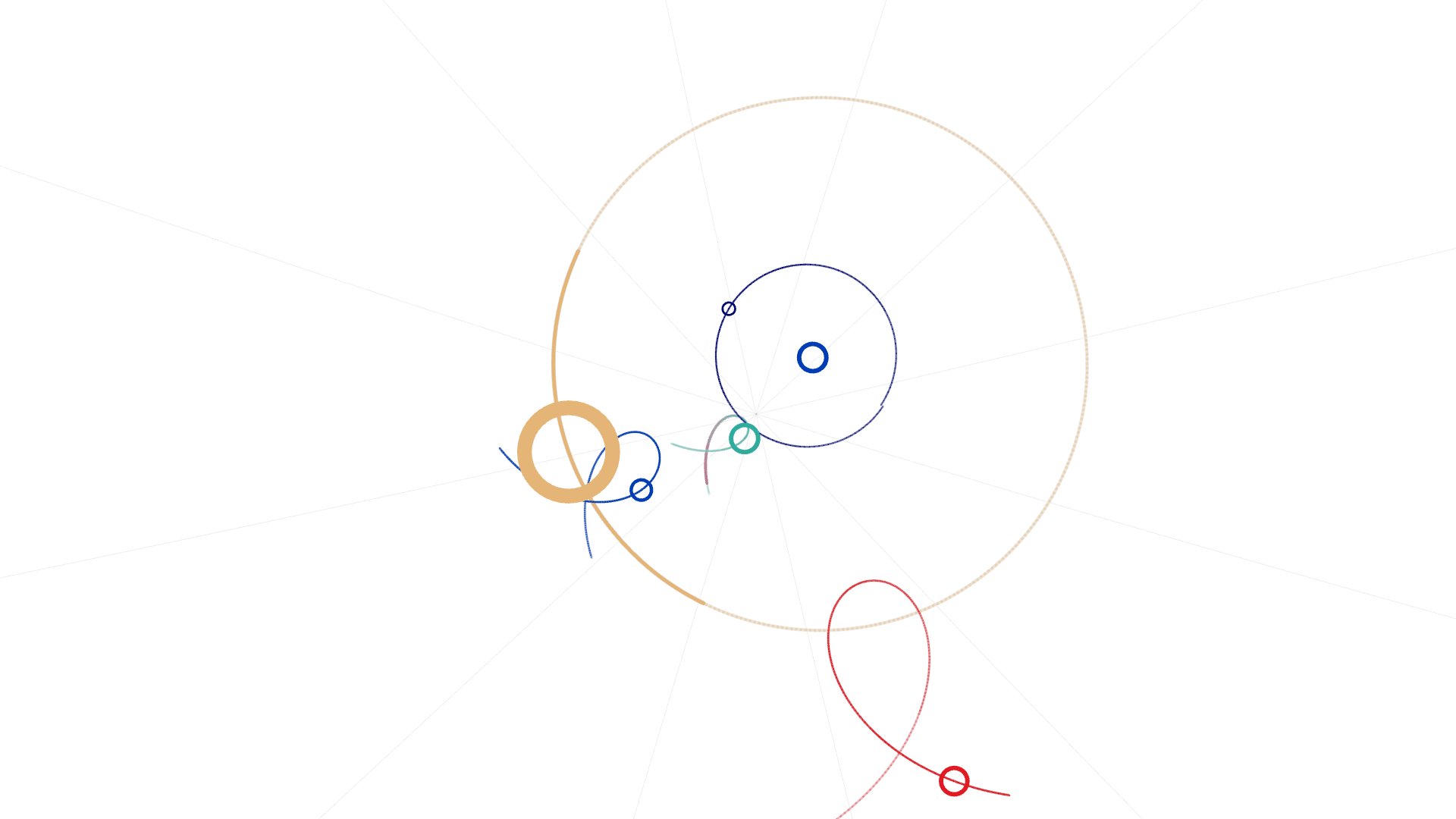
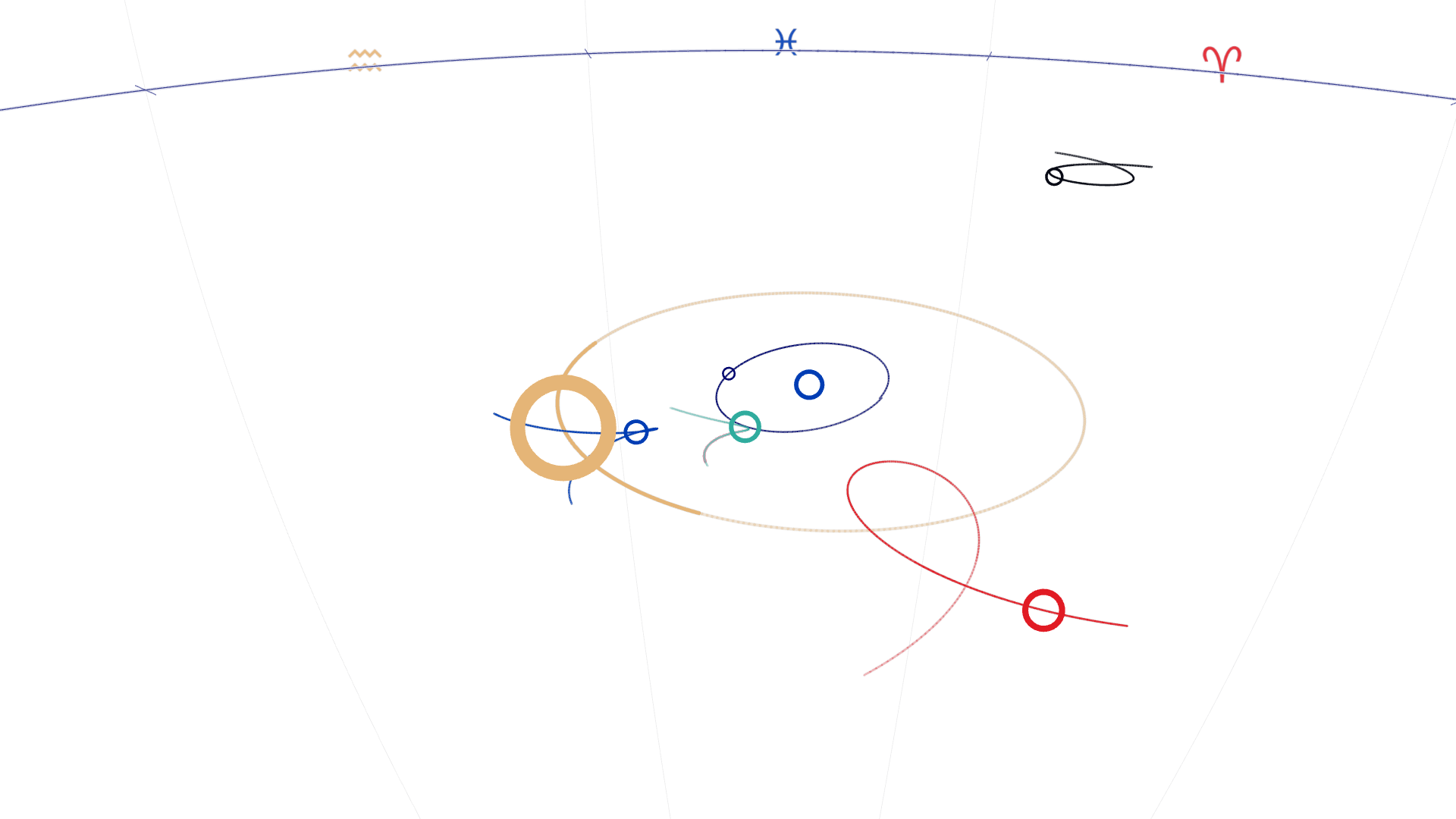
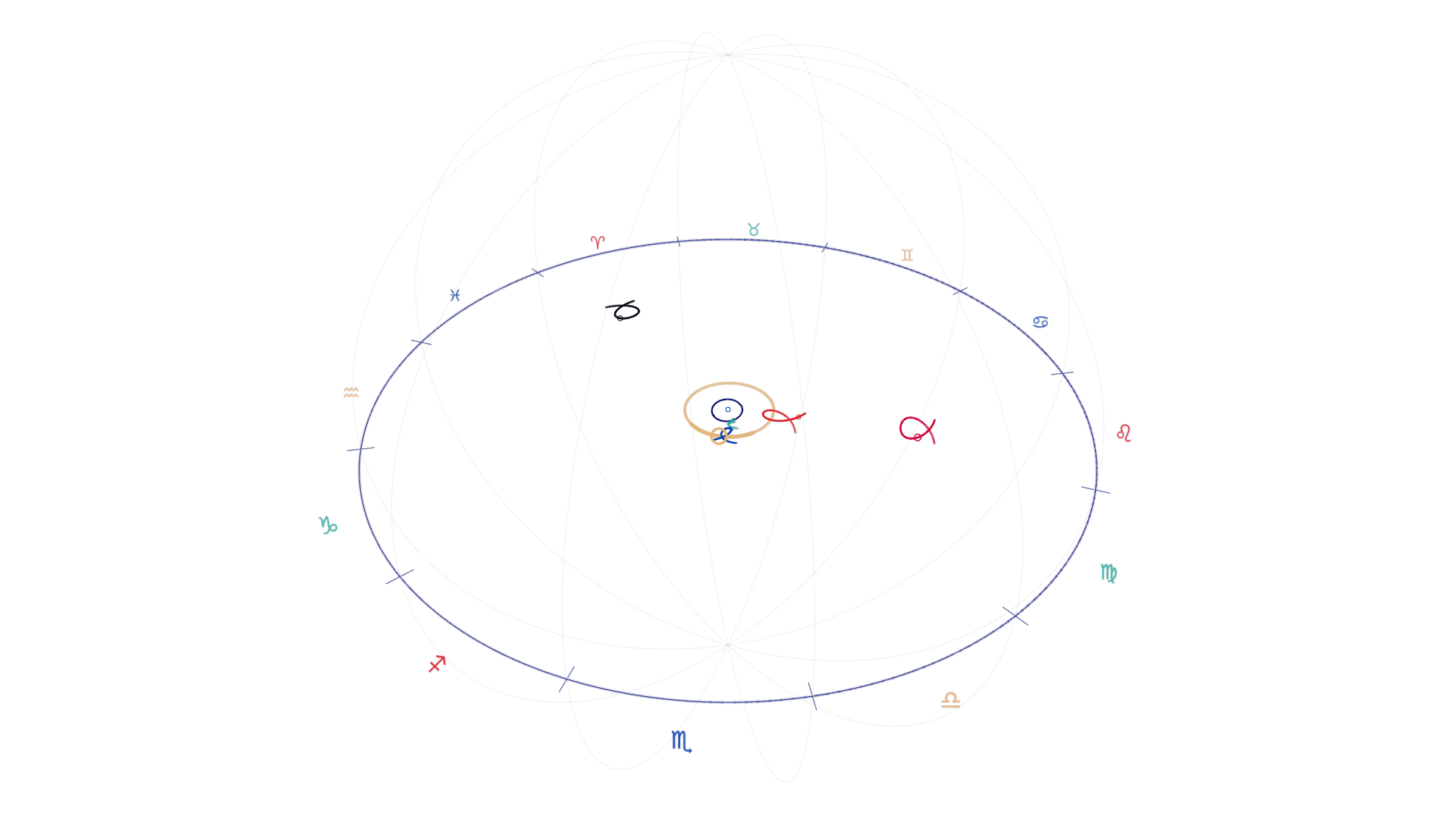
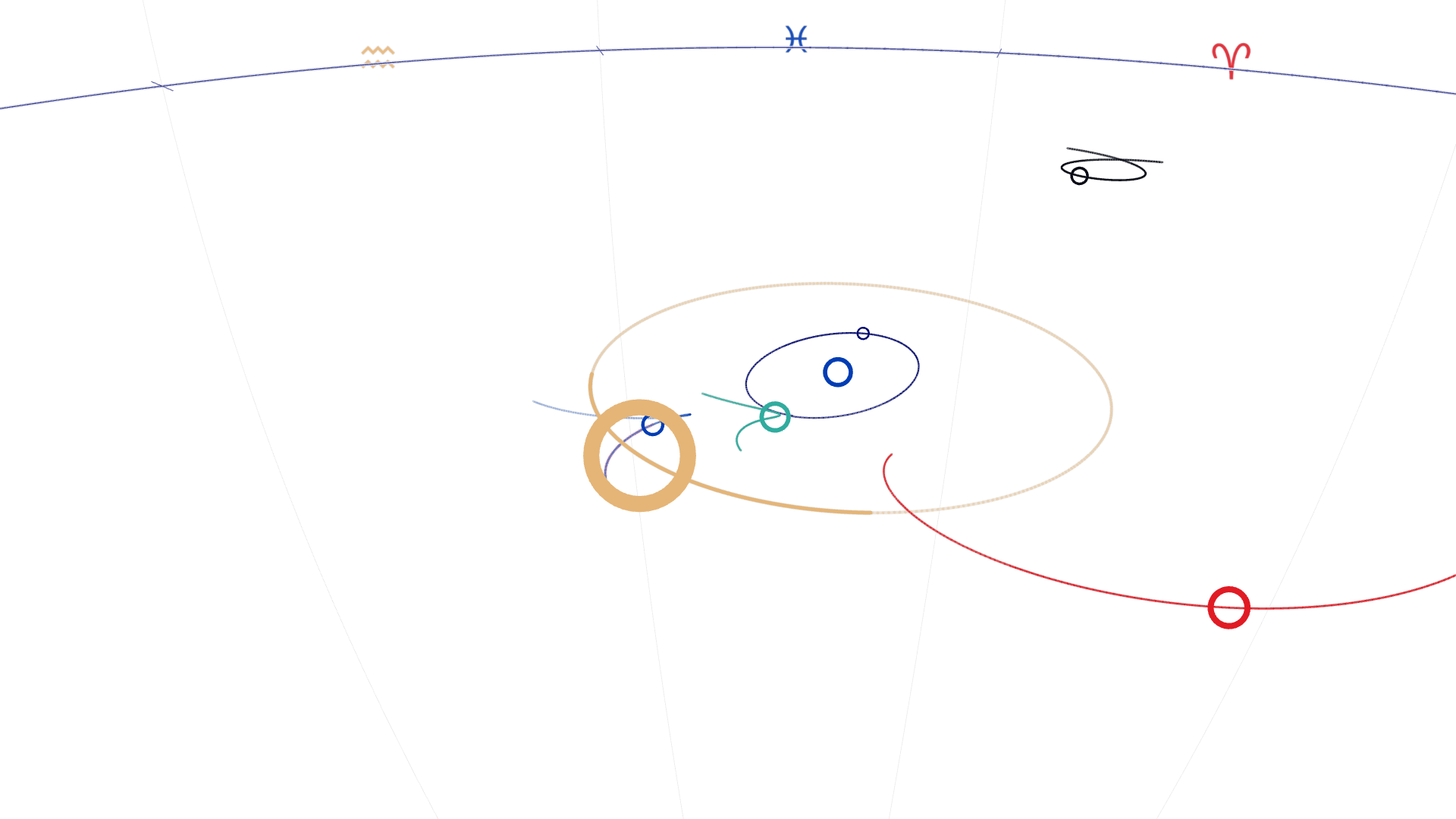
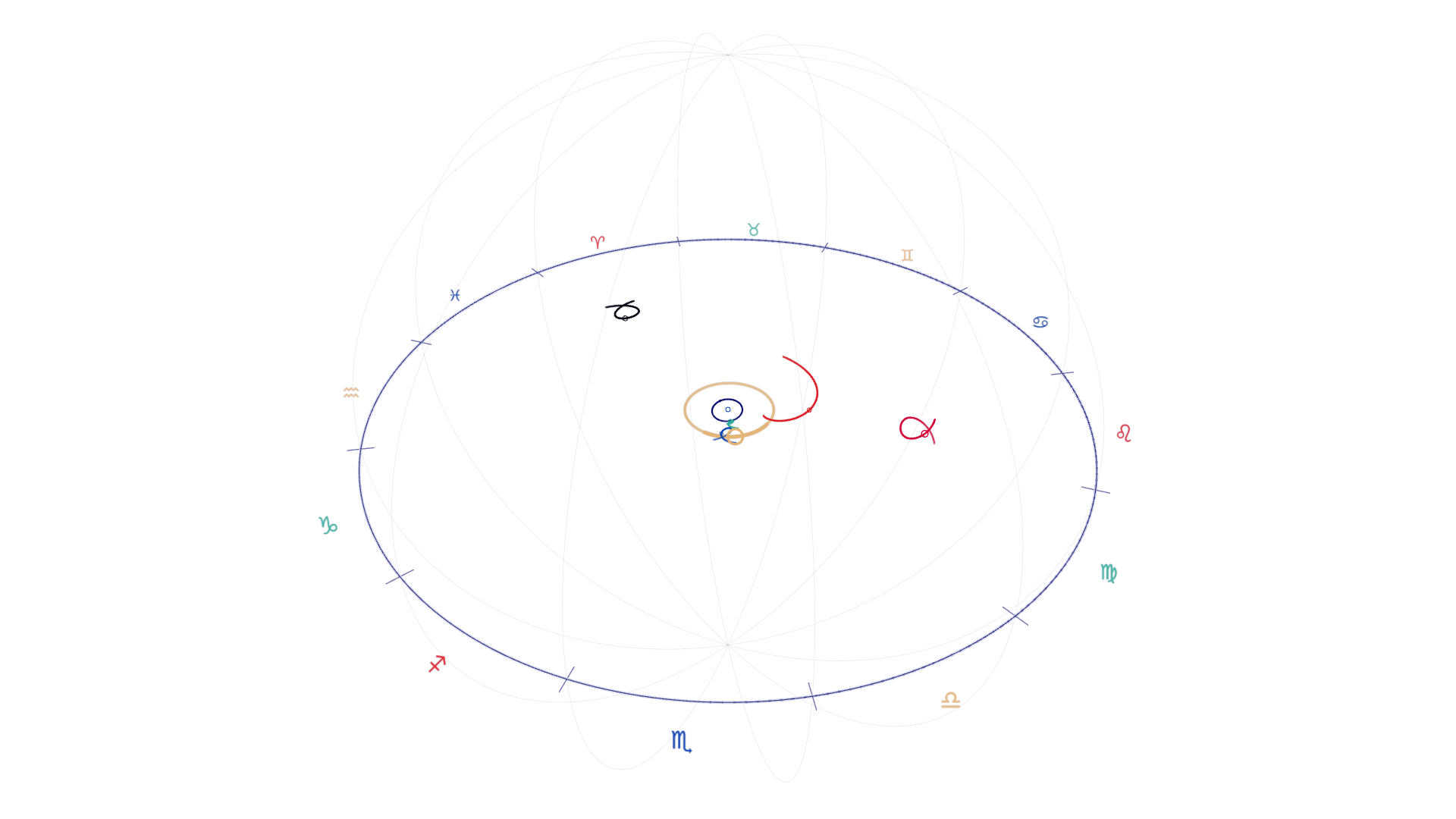
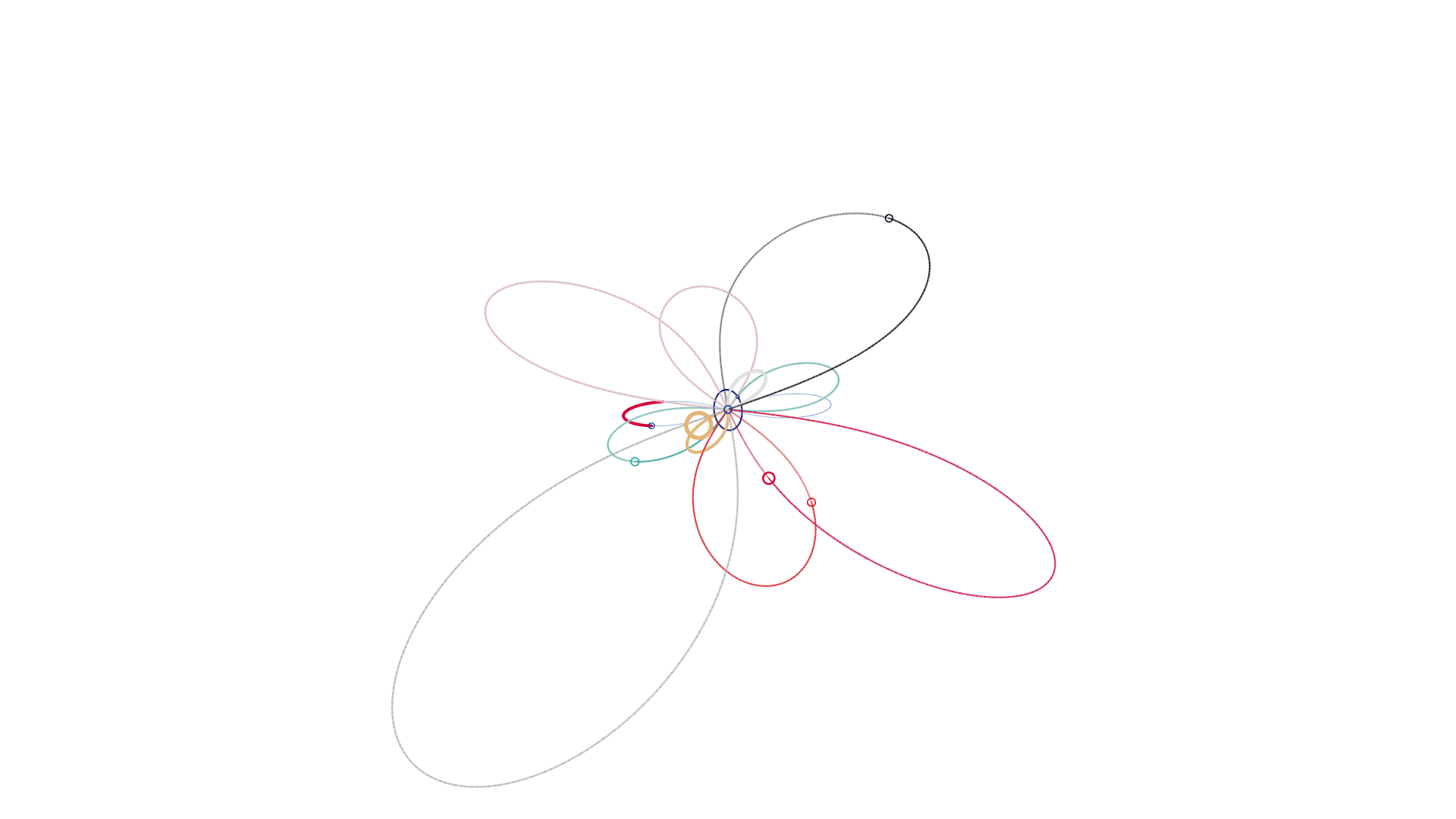
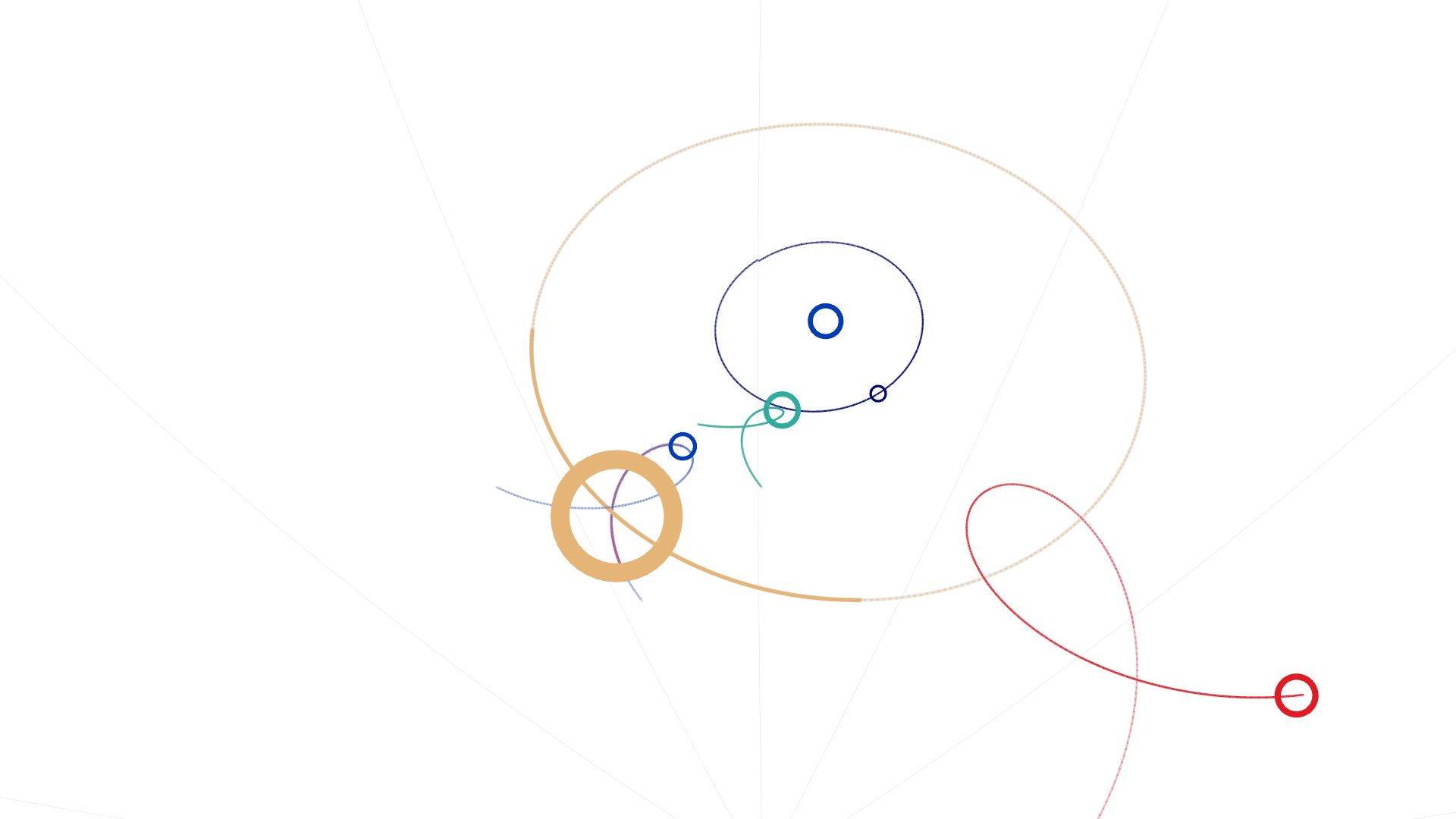
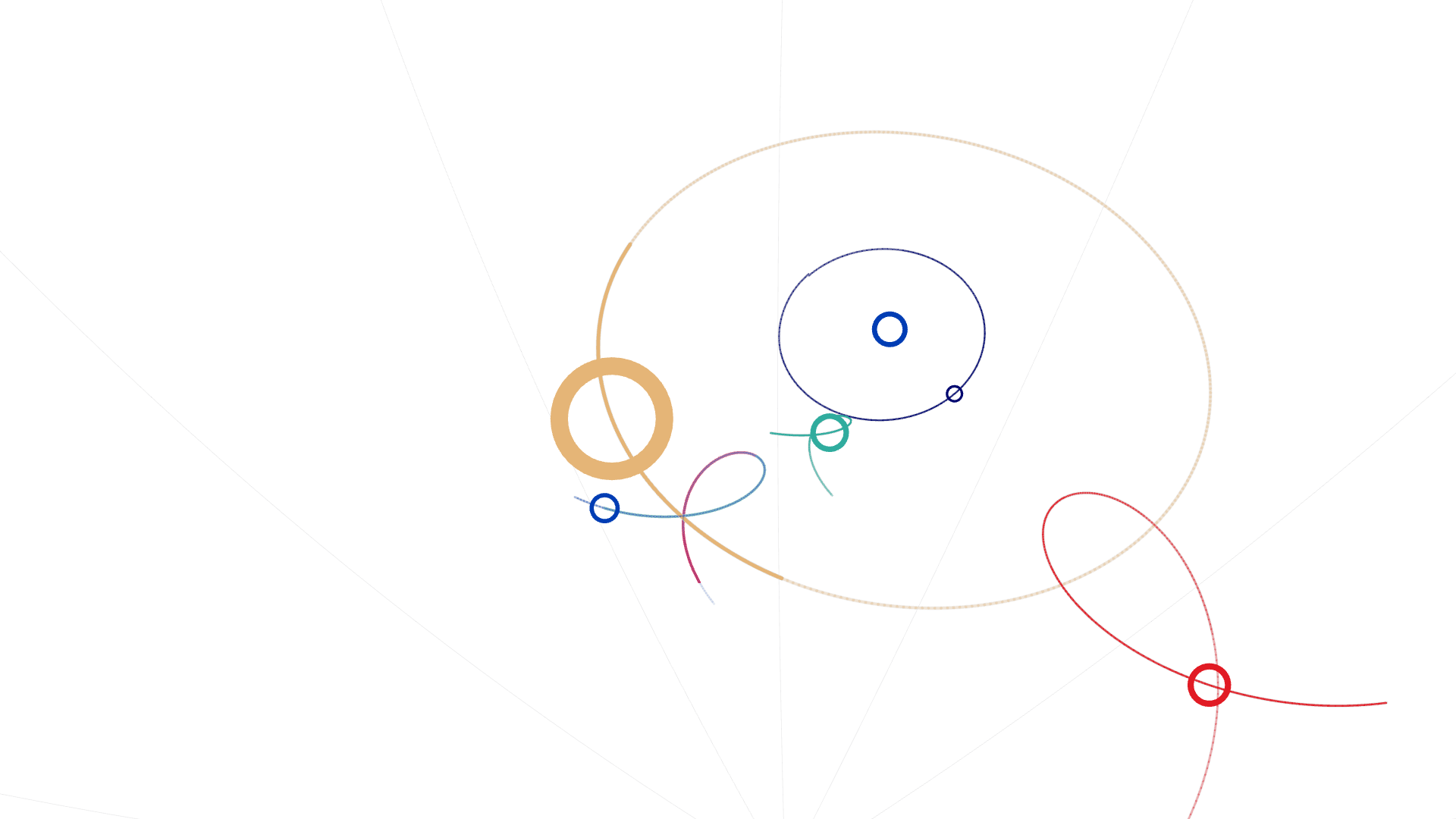
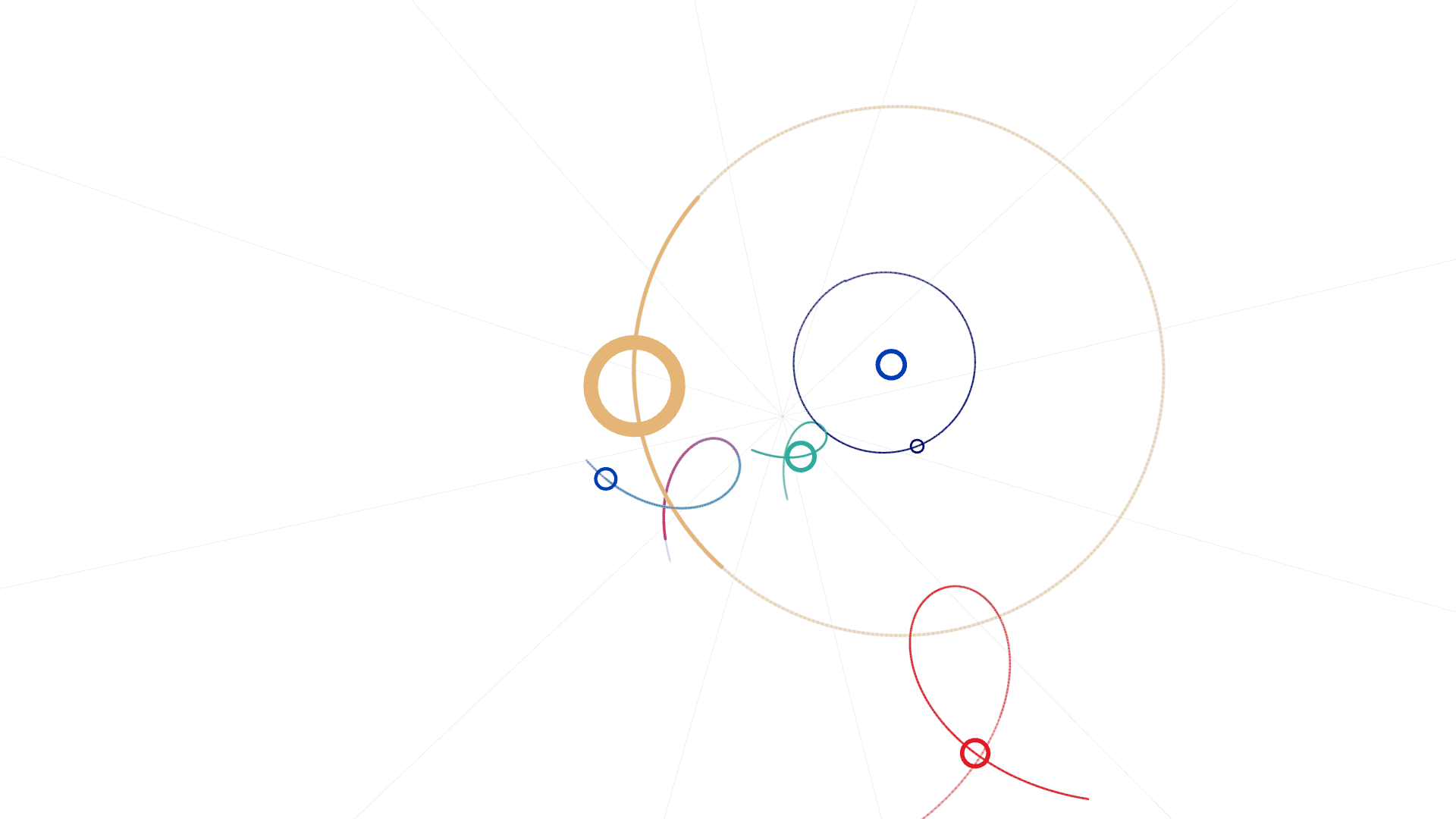
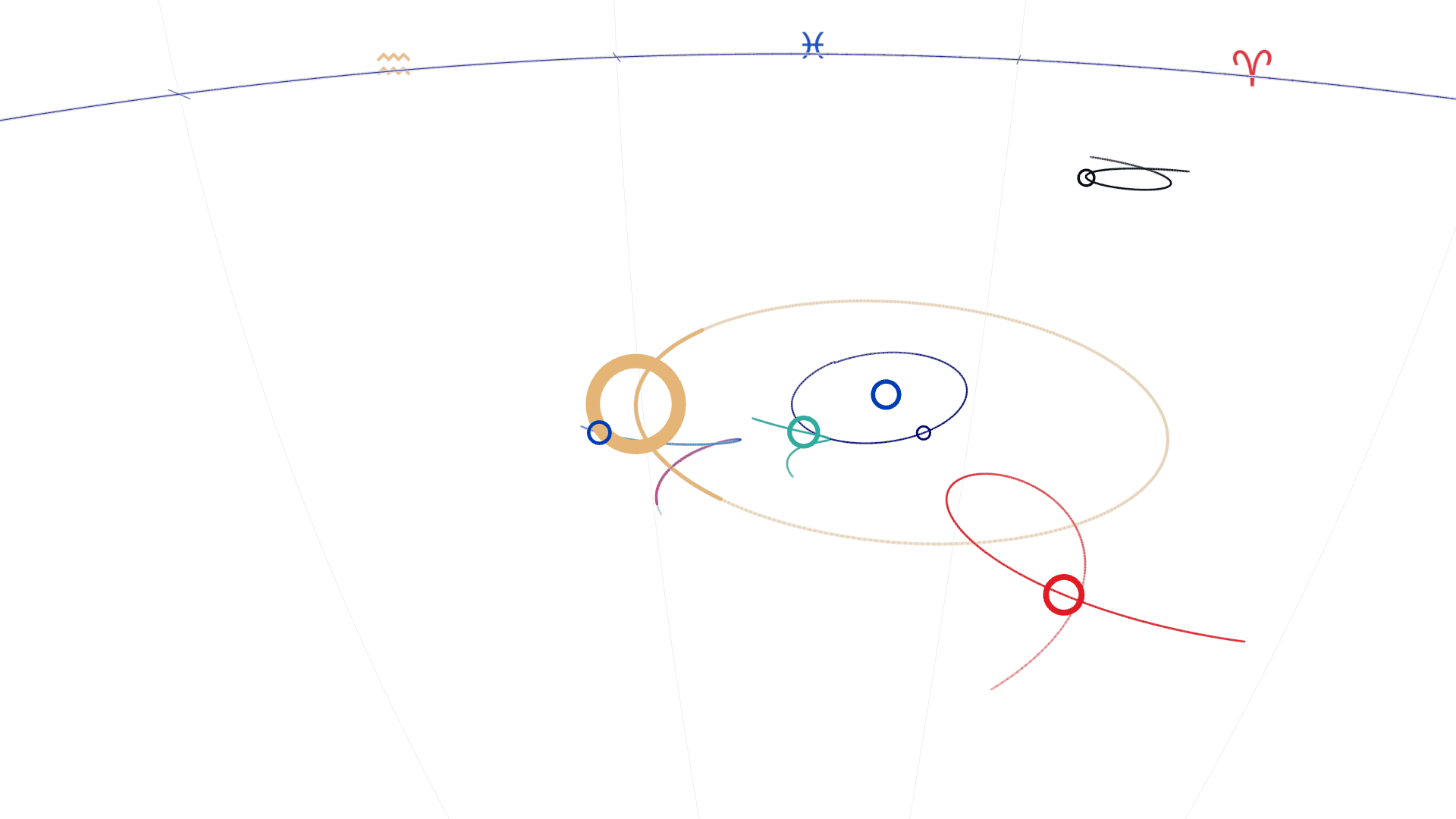
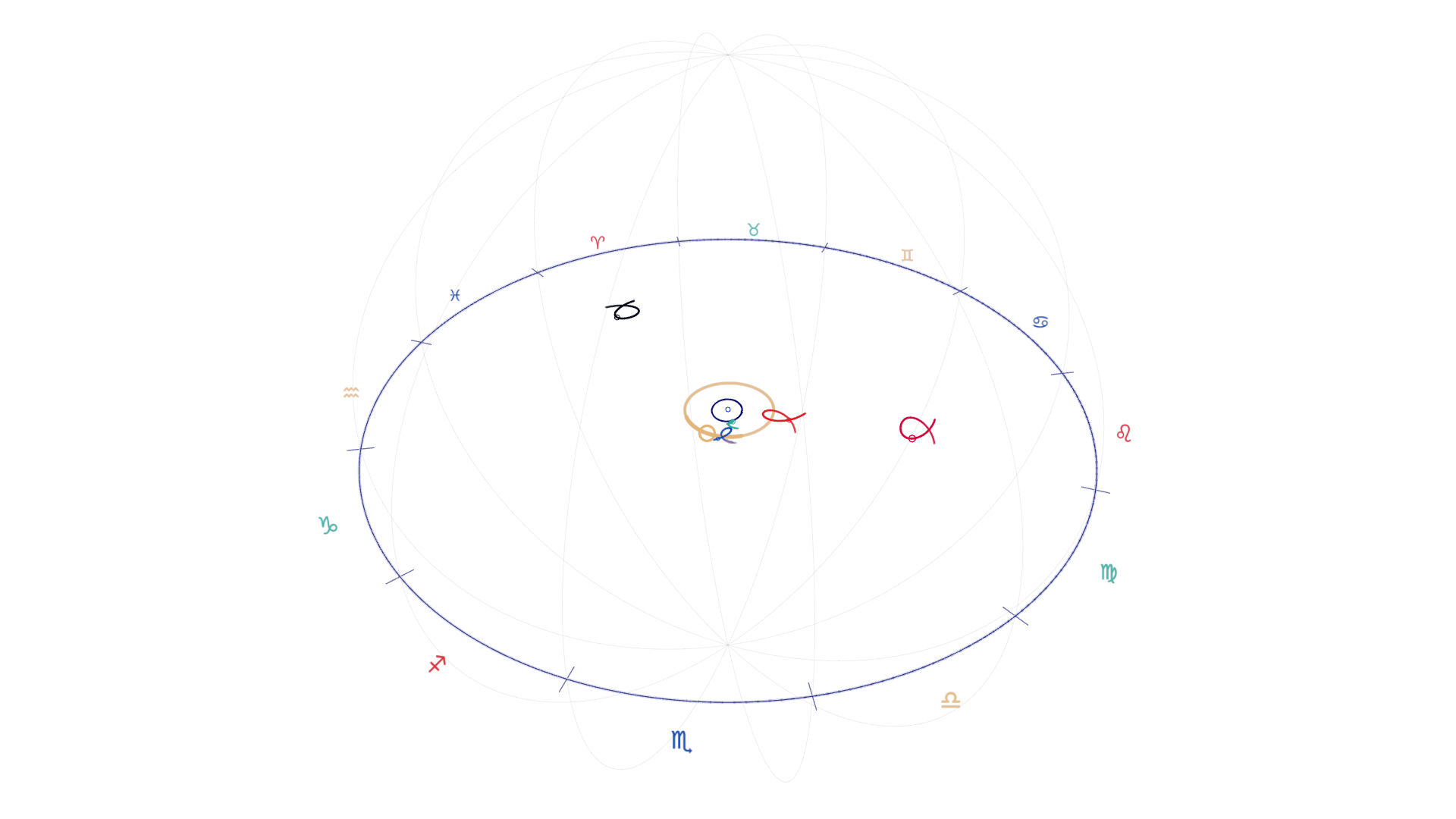
The stills and films on this page are the current Macroscope renders, captured on 17 October 2026. Every moment below can be opened at four viewpoints beside its reconstructed lemniscate.
The repeated arc
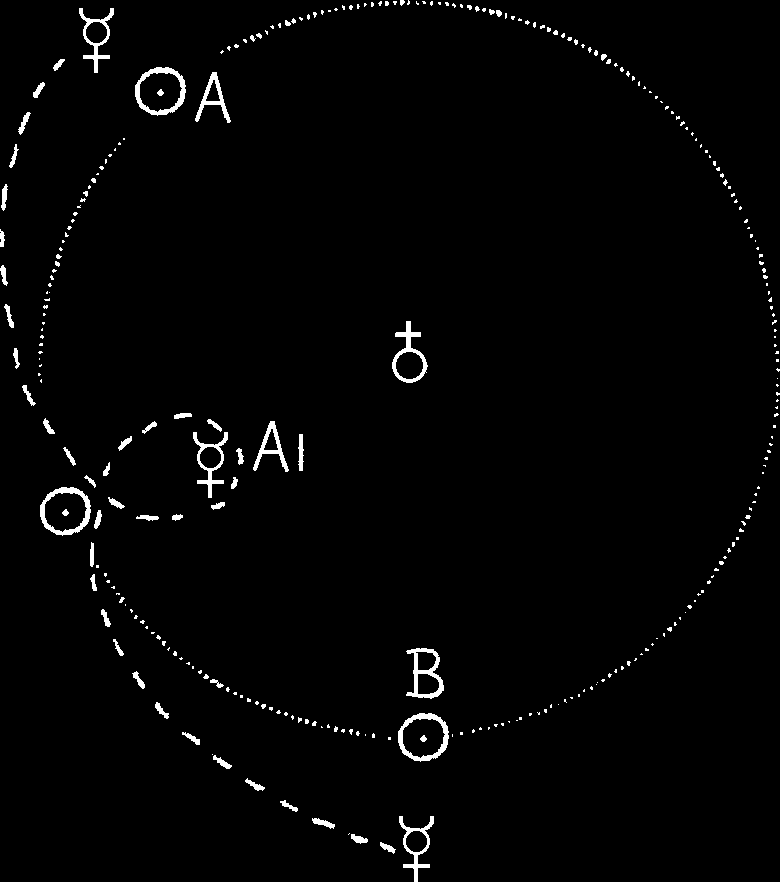
Mercury and Venus orbit inside Earth’s orbit. As Earth and the planet move, the planet’s apparent zodiacal motion slows, reaches a backward station, reverses, and later reaches a forward station. The body keeps moving in space throughout. At inferior conjunction, it lies on the near side of the Sun. Equal longitude does not require a perfect alignment in three dimensions.
The first crossing, often called pre-shadow entry, occurs when the planet reaches the degree where it will later turn direct. The final crossing, or shadow exit, occurs when it returns to the degree where it turned retrograde. “Shadow” names this repeated arc of longitude.
Our descent runs from first crossing to solar meeting. Ascent runs from solar meeting to final crossing. The backward and forward stations mark changes of apparent direction within those phases.
The sphere and the I
Astrosophy studies astronomical movement alongside spiritual understanding and human biography. Elisabeth Vreede’s astronomical letters are one example of this approach: close attention to the sky accompanies spiritual inquiry.
A sphere names a field of spiritual relationship extending beyond the visible planetary body. The I is the individuality that attends, judges, and acts. In this reading, the Solar sphere gives an image of that organizing activity. Conjunction becomes a time to examine a planetary question consciously; its calculated instant does not oblige anyone to have an inner experience.
Venus asks how we care and what we value. Mercury asks how perception becomes thought, how thought becomes speech, and whether those connections are truthful. The phases give a rhythm to the inquiry. The person remains responsible for the deed.
Venus and Mercury: the 2026 dates
All times are given in UTC, which is Coordinated Universal Time, and are rounded to the nearest minute. The longitudes are tropical, and Earth distances are given in astronomical units, where one AU is the mean distance between Earth and the Sun.
| Moment | Date in 2026 | UTC | Tropical longitude | Earth distance (AU) |
|---|---|---|---|---|
| First crossing | 14:46 | 22°52′ Libra | 0.5573 | |
| Backward station | 07:16 | 8°29′ Scorpio | 0.3353 | |
| Solar meeting | 03:44 | 0°45′ Scorpio | 0.2729 | |
| Fastest backward motion | 09:02 | 0°37′ Scorpio | 0.2729 | |
| Closest to Earth | 01:48 | 0°11′ Scorpio | 0.2728 | |
| Forward station | 00:28 | 22°52′ Libra | 0.3257 | |
| Final crossing | 18:44 | 8°29′ Scorpio | 0.5314 |
Swipe the table sideways to see the longitude and distance columns.
| Moment | Date in 2026 | UTC | Tropical longitude | Earth distance (AU) |
|---|---|---|---|---|
| First crossing | 09:09 | 5°02′ Scorpio | 1.1298 | |
| Backward station | 07:13 | 20°59′ Scorpio | 0.7855 | |
| Closest to Earth | 13:34 | 13°32′ Scorpio | 0.6726 | |
| Fastest backward motion | 07:24 | 12°34′ Scorpio | 0.6734 | |
| Solar meeting | 14:24 | 12°11′ Scorpio | 0.6741 | |
| Forward station | 15:54 | 5°02′ Scorpio | 0.8122 | |
| Final crossing | 06:16 | 20°59′ Scorpio | 1.2048 |
Swipe the table sideways to see the longitude and distance columns.
Descent and ascent
| Sphere | Descent: first crossing to solar meeting | Ascent: solar meeting to final crossing | Question for the I |
|---|---|---|---|
| Venus | August 31 – October 24, 2026 | October 24 – December 15, 2026 | What can I freely affirm in my caring, and how can I act on it? |
| Mercury | October 4 – November 4, 2026 | November 4 – November 30, 2026 | What can I understand and say truthfully, and what remains unknown? |
Backward motion crosses the solar meeting, so part of it belongs to descent and part to ascent. The phase turns at conjunction, and the minimum Earth distance falls on a different day, on October 25 for Venus and on November 3 for Mercury.
Venus: warmth and relationship
Venus repeats the arc from 22°52′ Libra to 8°29′ Scorpio. Descent begins on August 31, 2026 and turns to ascent at the solar meeting on October 24, 2026. The final crossing falls on December 15, 2026, in UTC.
Modern Western astrology often approaches Venus retrograde through affection, beauty, money, and values. Michael R. Meyer’s humanistic cycle interpretation distinguishes the closing evening-star phase before inferior conjunction from the renewing morning-star phase afterward. Evening-star Venus and morning-star Venus describe that school’s interpretation.
Our Venus vocabulary emphasizes warmth, devotion, kinship, and the harmonization of soul. Devotion means sustained attention to the worth of what we meet. In his lecture of July 27, 1923, Steiner describes the Venus sphere receiving and transforming intimate earthly experience. That image informs the inquiry here; the two-phase practice is our own.
Descent: August 31 to October 24, 2026
During descent, look at how a relationship is sustained. Where does your time go? What do you give freely, and what do you give because refusal feels difficult? Venus’s backward station on October 3 falls within this phase.
Consider a friendship in which you are always available. You may find real affection alongside a fear of disappointing the other person. Seeing both gives you something specific to work with. The repeated planetary arc provides a rhythm for returning to the question; the friendship provides the evidence.
Solar meeting: October 24, 2026, 03:44 UTC
Venus meets the Sun at 0°45′ Scorpio. This is the turn from descent to ascent. Ask what you can freely affirm in your caring and what needs to change. A feeling may become a commitment, a boundary, a work of beauty, or an act of care through the participation of the I.
Venus reaches its minimum Earth distance on October 25, about 22 hours after conjunction. Nearness and solar meeting are different events.
Ascent: October 24 to December 15, 2026
Venus remains retrograde until November 14. There is time to reconsider how an insight should be expressed before forward motion resumes.
In the friendship, a change might be an honest refusal made with care, followed by a way of meeting that both people can sustain. At the final crossing on December 15, look at what actually changed. Did affection become easier to give freely? Did a boundary make a better encounter possible?
Warmth can slip into idealization or into calculation. Devotion asks us to stay attentive to the other person while taking responsibility for our own choices.
Mercury: thinking and conscience
Mercury repeats 5°02′ to 20°59′ Scorpio. Its descent runs from October 4 to November 4, 2026; ascent continues to November 30, 2026.
Modern Western astrology associates Mercury retrograde with reviewing communication, plans, agreements, and understanding. In the humanistic tradition developed by Rudhyar and presented by Meyer, the phase before inferior conjunction is Epimethean-retrograde; the phase afterward is Promethean-retrograde. The original descriptions concern natal types. Using them as prompts for a shared cycle is an adaptation.
Our words are mediation and conscience. Mediation carries perception into a concept, understanding into speech, or one person’s experience into another’s hearing. Conscience asks whether that connection has been made truthfully.
Descent: October 4 to November 4, 2026
Write down what you think you understand and the evidence for it. After the backward station on October 24, return to the assumptions within that account. Meyer’s description of this phase offers a parallel inquiry into received knowledge.
Take the thought, “They ignored my message because they do not care.” The observation is that you have not received an answer. The explanation is an inference. Keeping those apart may change what you say next.
Solar meeting: November 4, 2026, 14:24 UTC
Mercury meets the Sun at 12°11′ Scorpio. Ask what you can now say truthfully and what remains unknown. The I can examine a thought, correct it, and decide how to express it.
Meyer’s description of this phase associates it with a new direction of thought. Any new understanding still needs to answer to evidence and conscience. Mercury’s minimum Earth distance occurs on November 3, about 25 hours before the meeting.
Ascent: November 4 to 30, 2026
Mercury remains retrograde until November 13. Use that interval to reformulate what you want to communicate.
In the unanswered-message example, you might say, “I have not heard back, and I am unsure how to understand that.” This leaves room for an answer. At the final crossing on November 30, review the connection: did clearer speech help, and did listening change your understanding?
Mercury’s work asks for thinking that can move without losing its care for what has been perceived.
When the two rhythms overlap
On October 24, 2026, Venus meets the Sun at 03:44 UTC. Mercury turns backward at 07:13 UTC, about three and a half hours later.
From Venus’s meeting until Mercury’s meeting on November 4, Venus is in ascent and Mercury is in descent. You may be ready to affirm a relationship while still working out how to speak within it. Keep the two questions distinct long enough to understand each.
Mercury turns forward on November 13 at 15:54 UTC, and Venus follows on November 14 at 00:28 UTC, about eight and a half hours later. Because the two stations fall so close together, these dates are a good time to review feeling and thinking side by side.
Nearness and intensity
Venus approaches Earth from about 0.3353 AU at the backward station to 0.2729 AU at conjunction. Its minimum is about 0.2728 AU. Mercury approaches from about 0.7855 AU at its backward station to a minimum of about 0.6726 AU, then reaches conjunction at about 0.6741 AU.
These distances describe the configuration of the planets. Near the solar meeting, glare can also make a planet difficult to see, even though it is close to Earth.
If late descent feels concentrated, record the situation as well as the feeling. What keeps returning? What in the relationship or conversation accounts for its urgency? For Venus, that may be an attachment you can no longer leave unexamined. For Mercury, it may be an explanation that no longer fits what you perceive.
At the meeting, the question turns toward action. What can you value more freely, understand more accurately, or take responsibility for? The answer has to come from the life being lived.
A practice of observation
Choose one planet and one real question. Return to both at first crossing, backward station, solar meeting, forward station, and final crossing. Record the astronomical changes alongside what happens in the relationship, thought, or conversation.
Include days when there is no apparent correspondence. Note explanations that arise independently of the planetary rhythm. For Venus, follow an act of caring from feeling into form. For Mercury, follow a thought from assumption through examination into speech.
Reading the curve
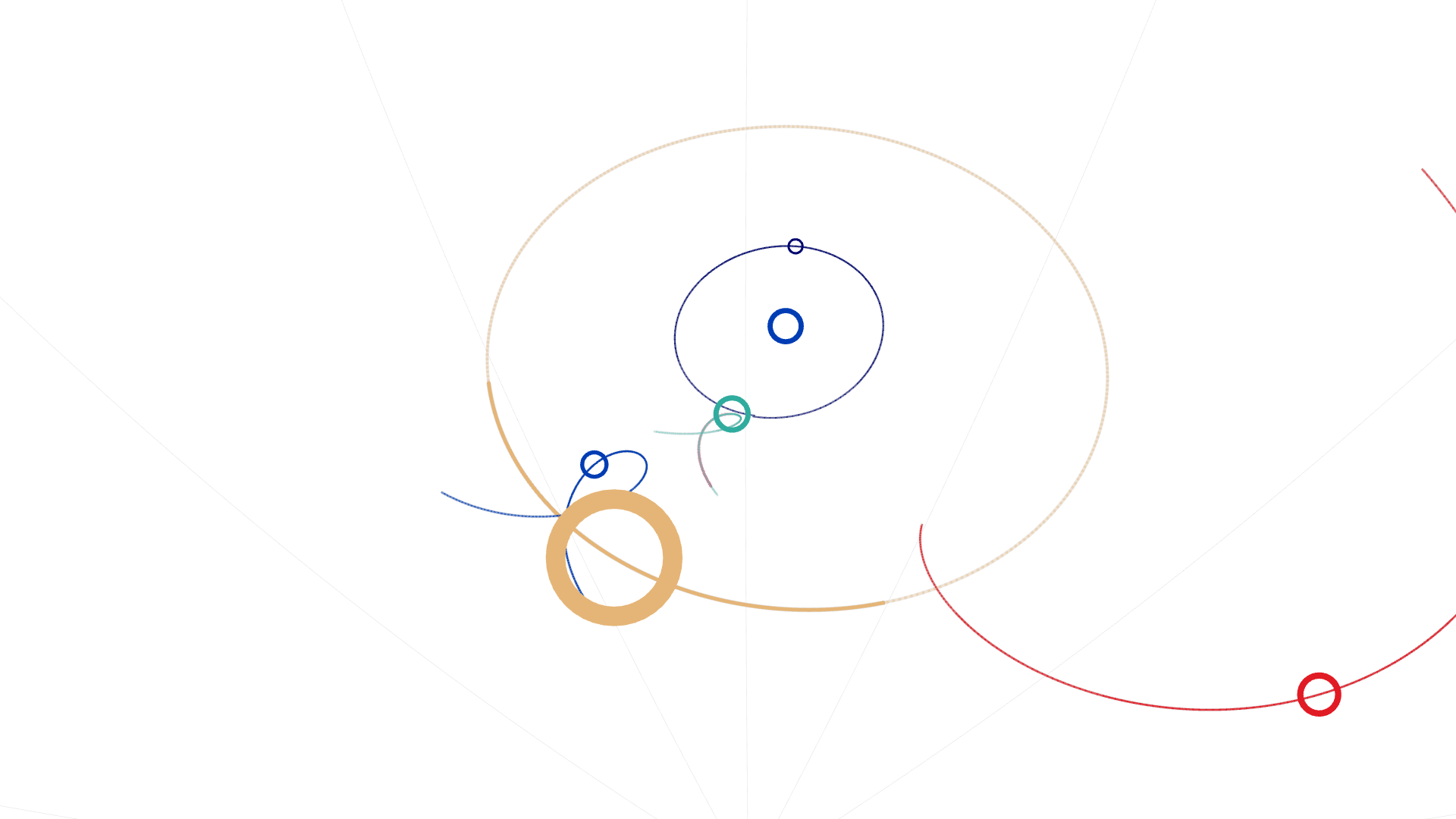
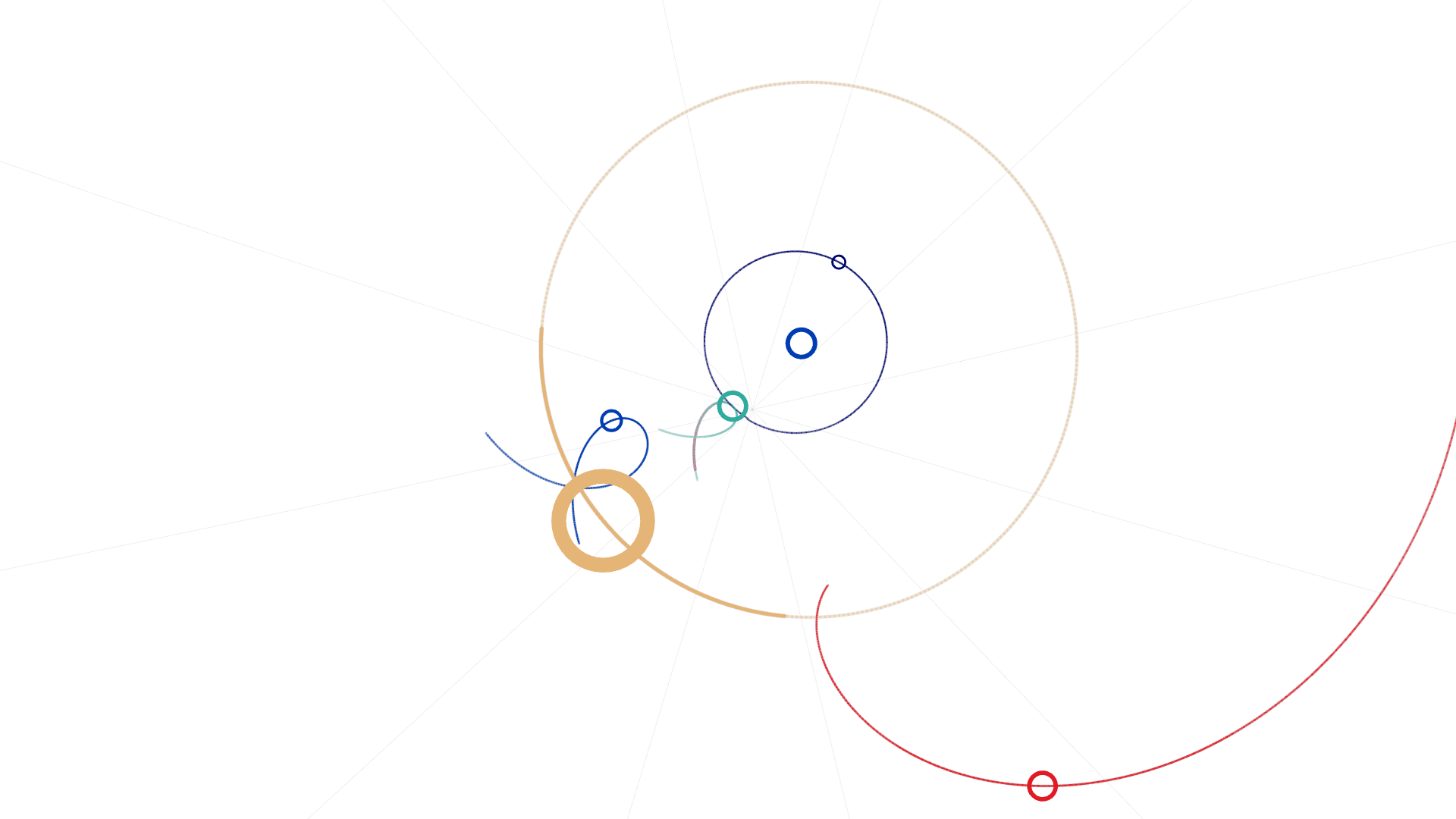
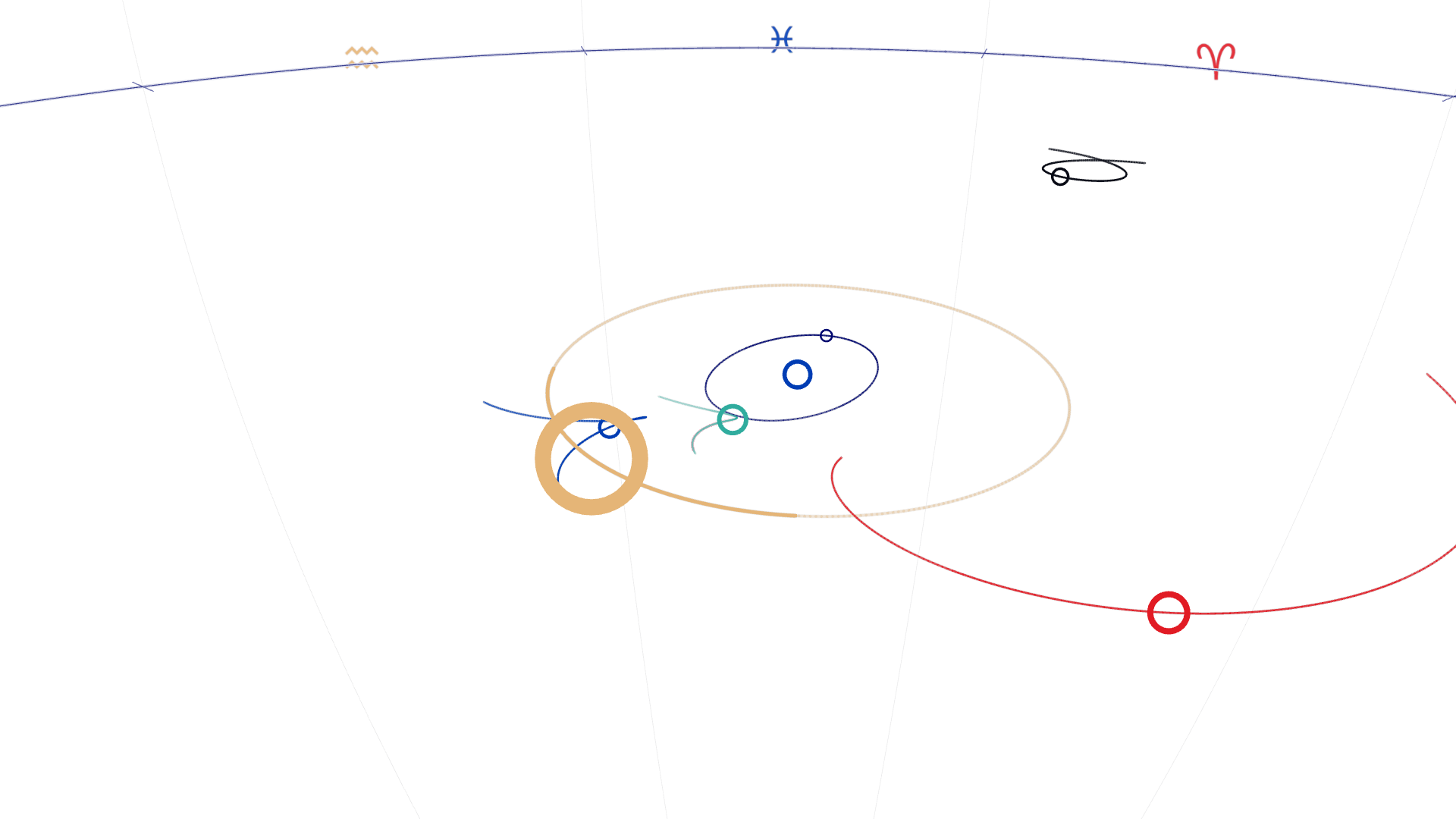
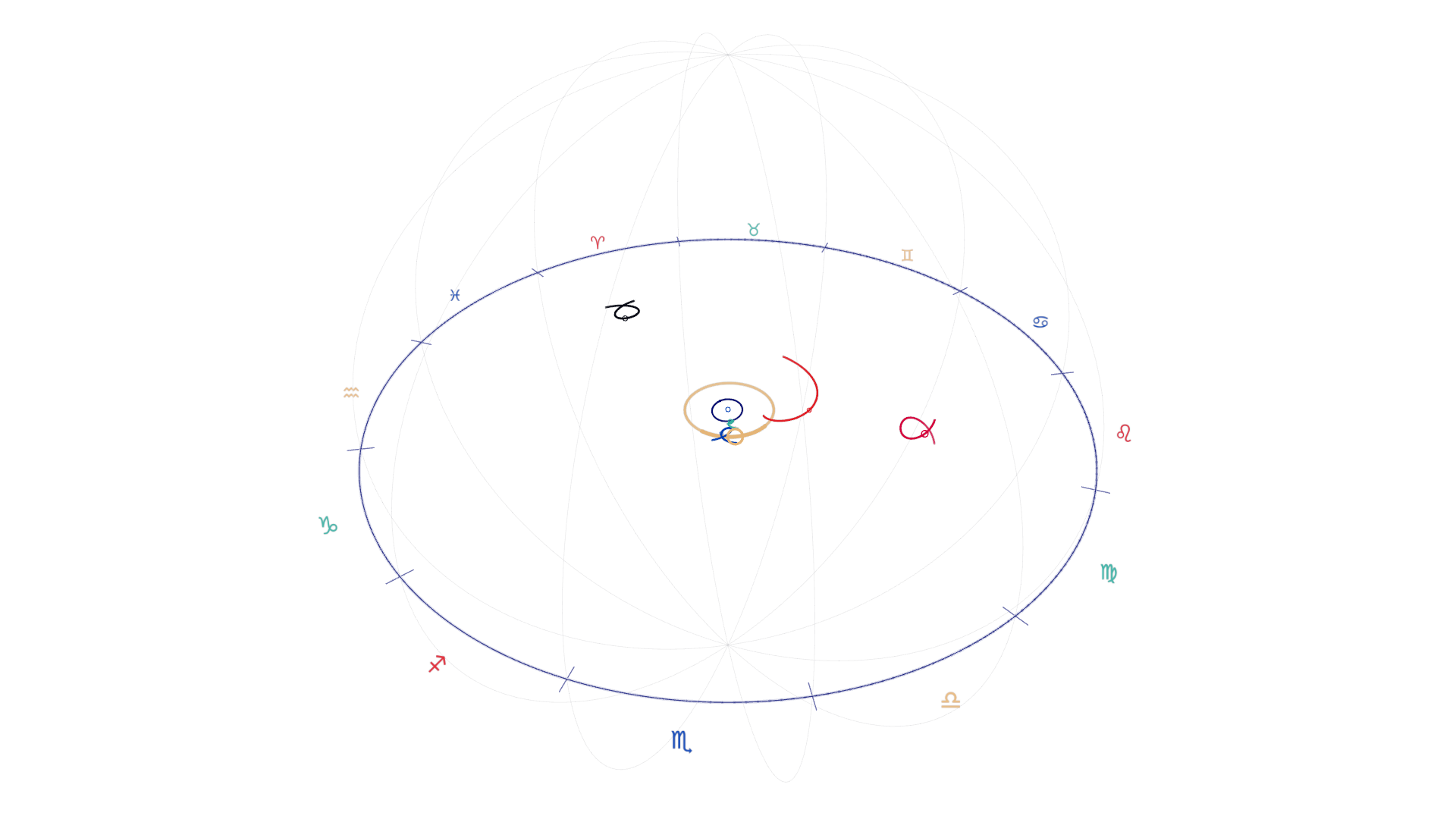
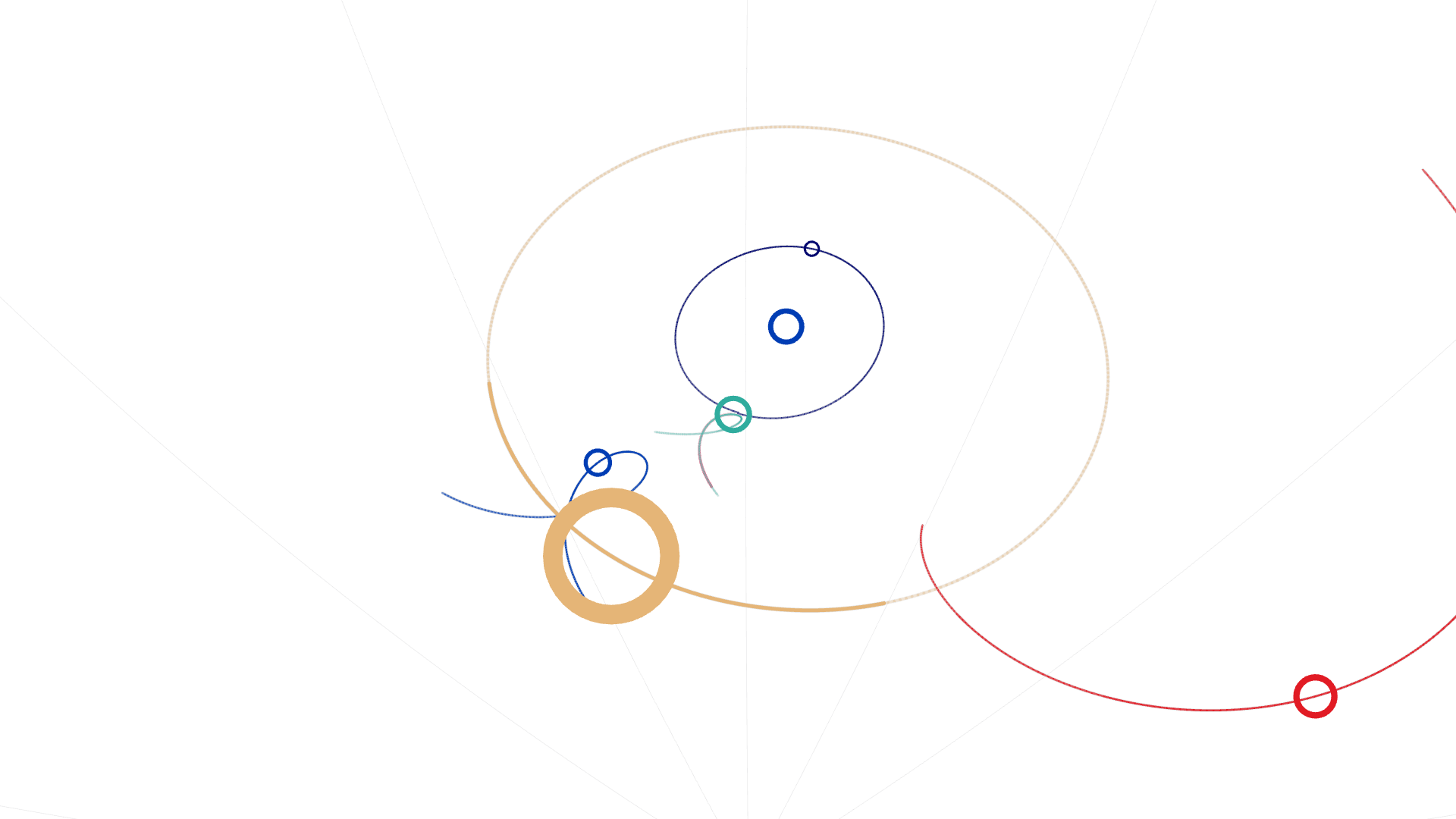
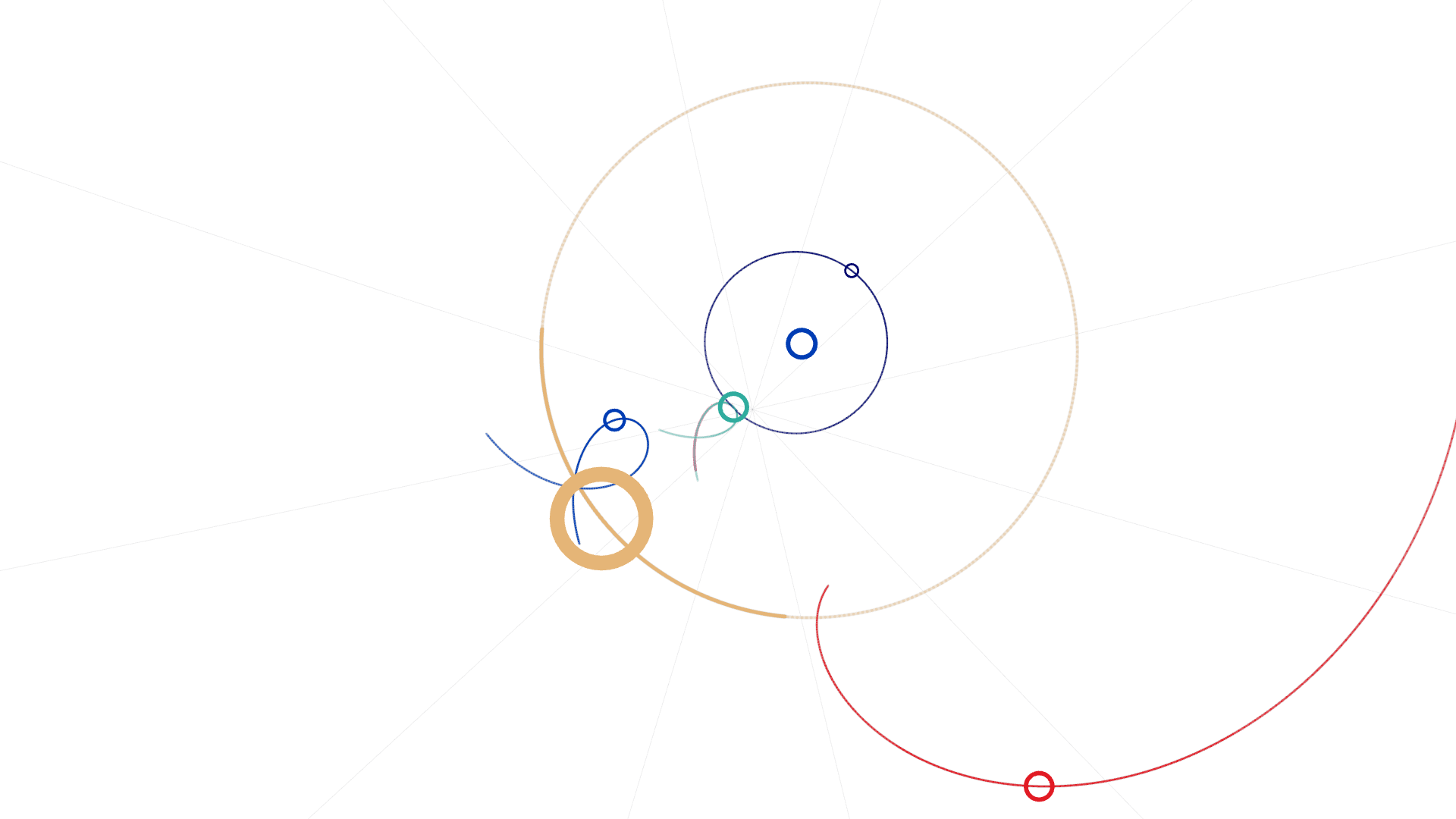
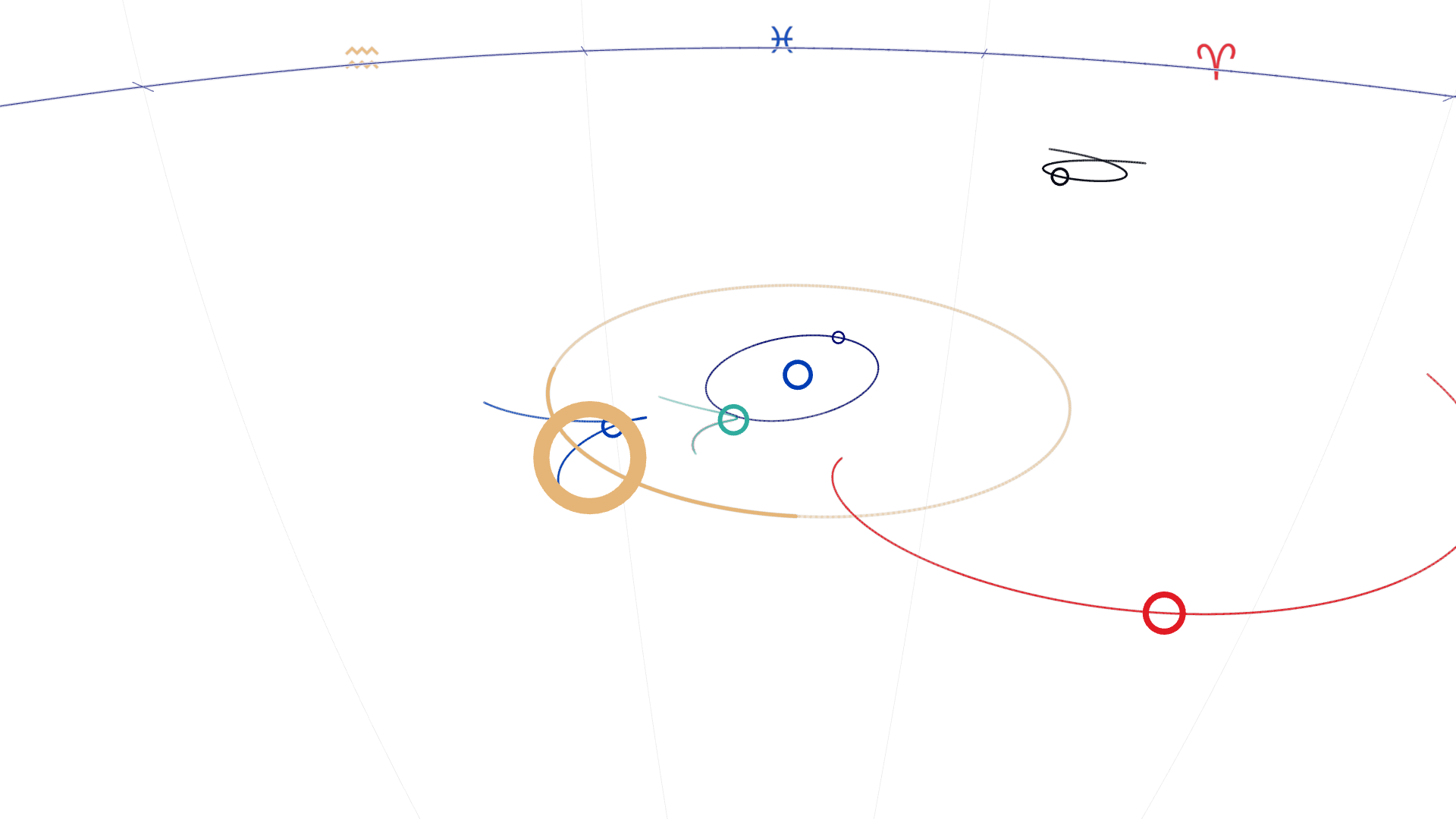
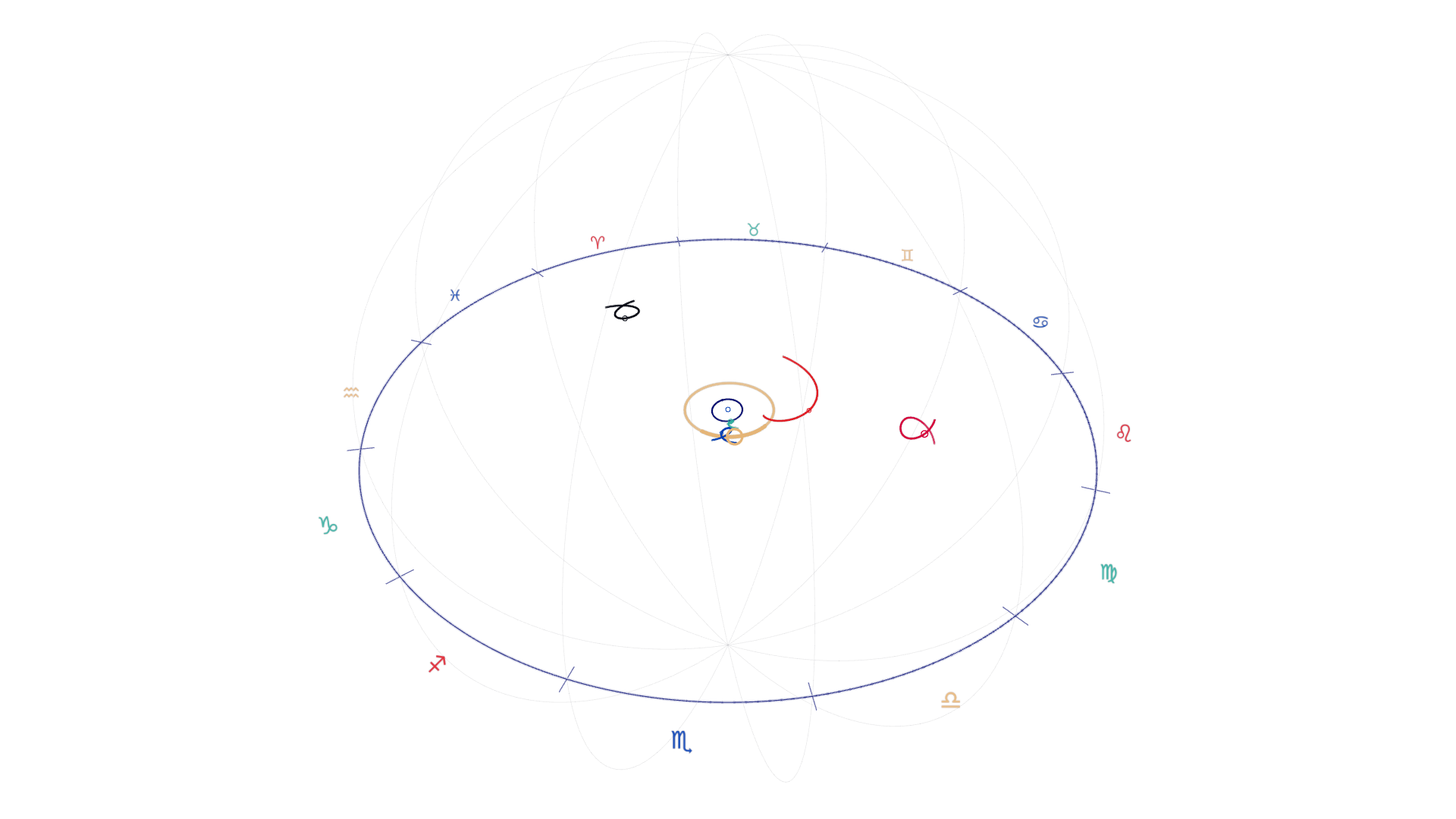
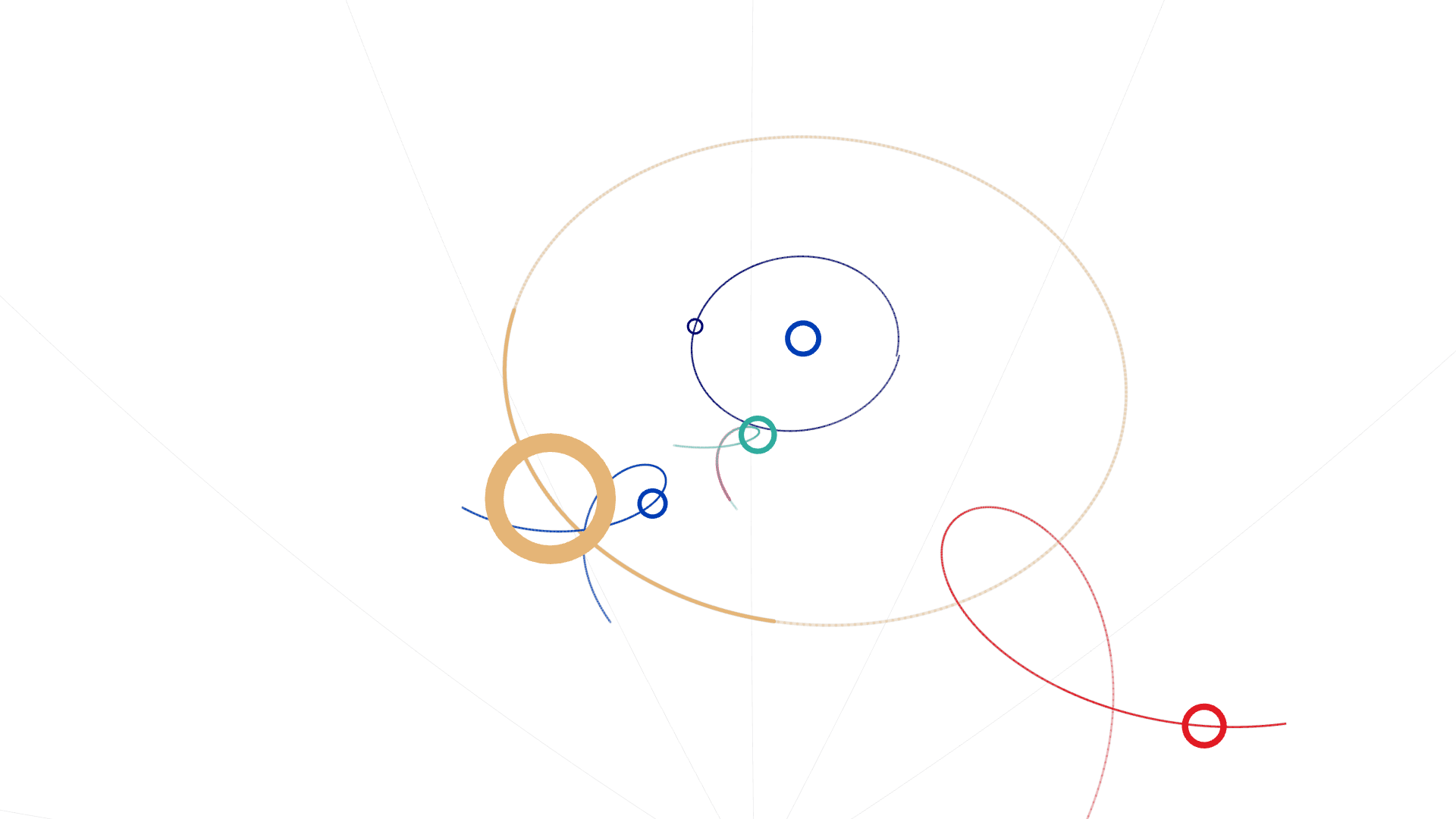
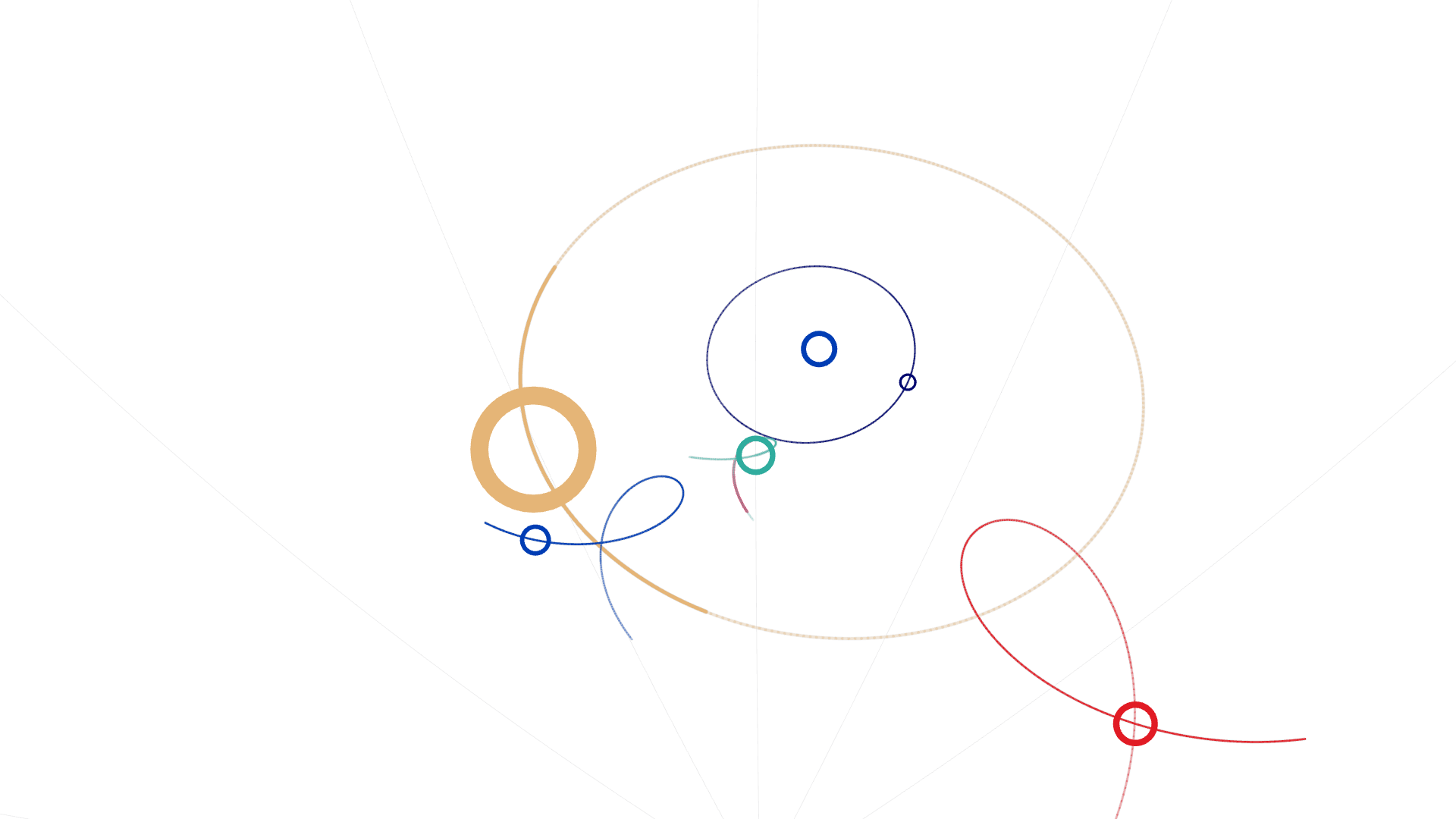
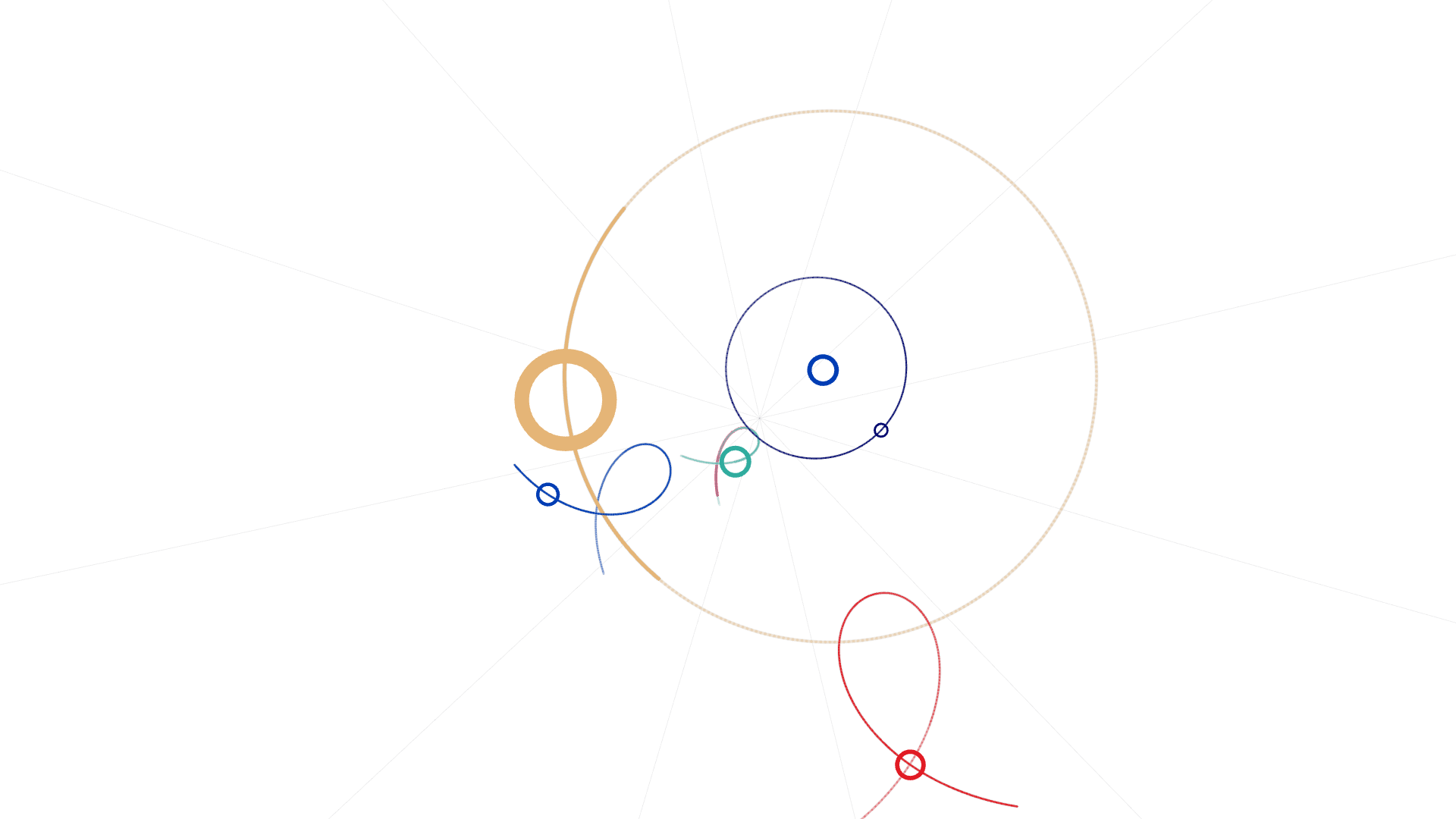
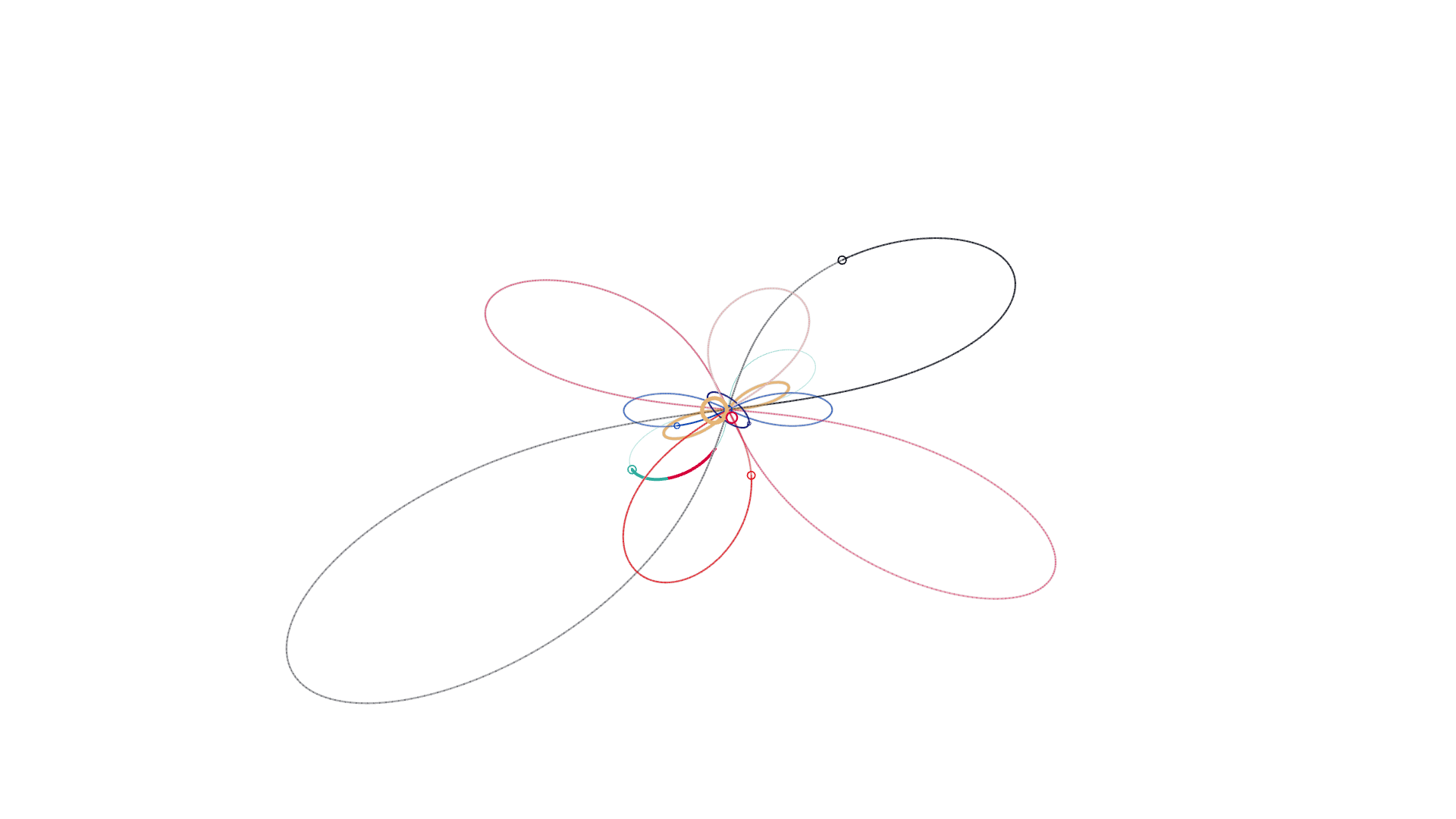
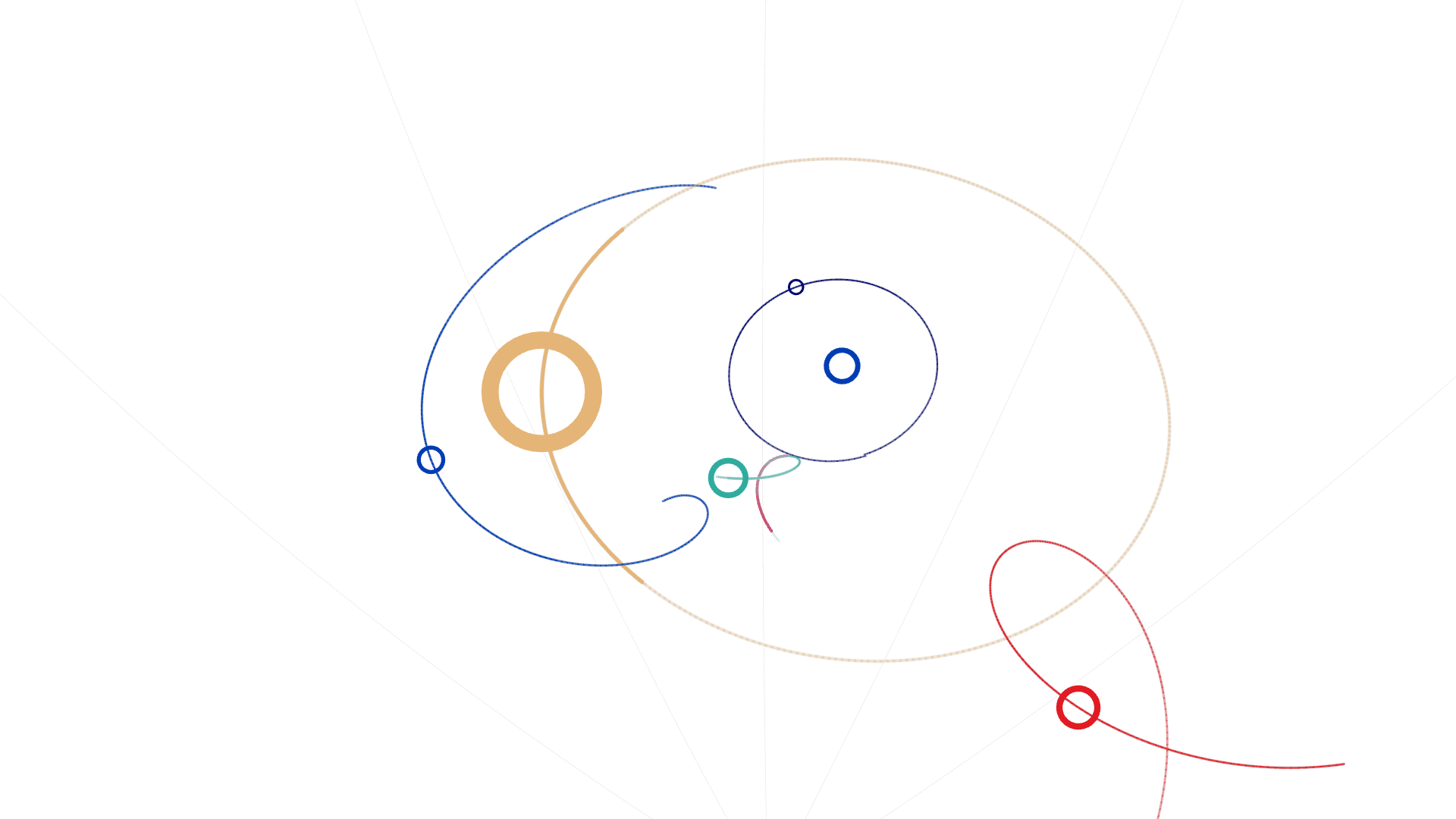
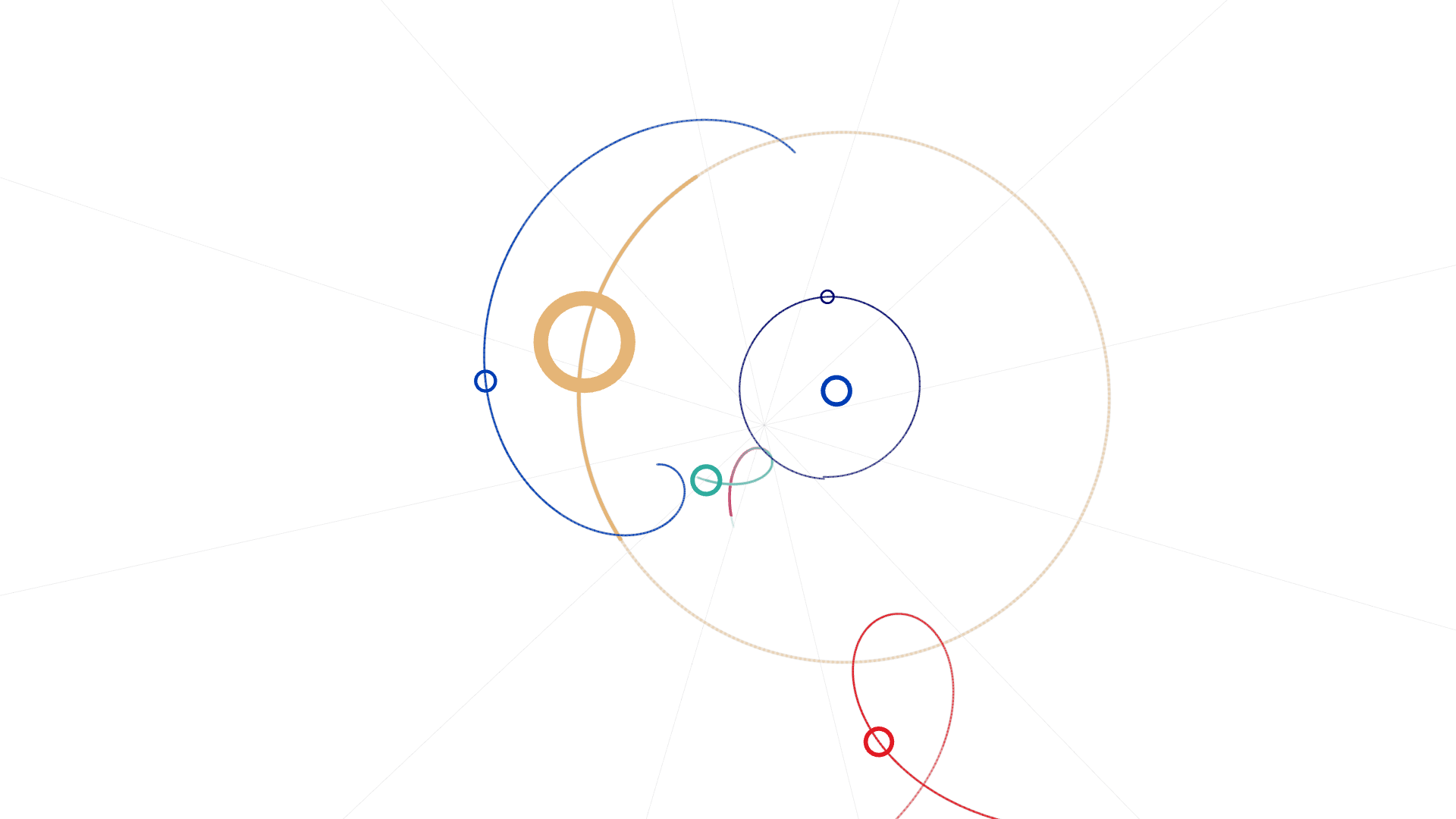
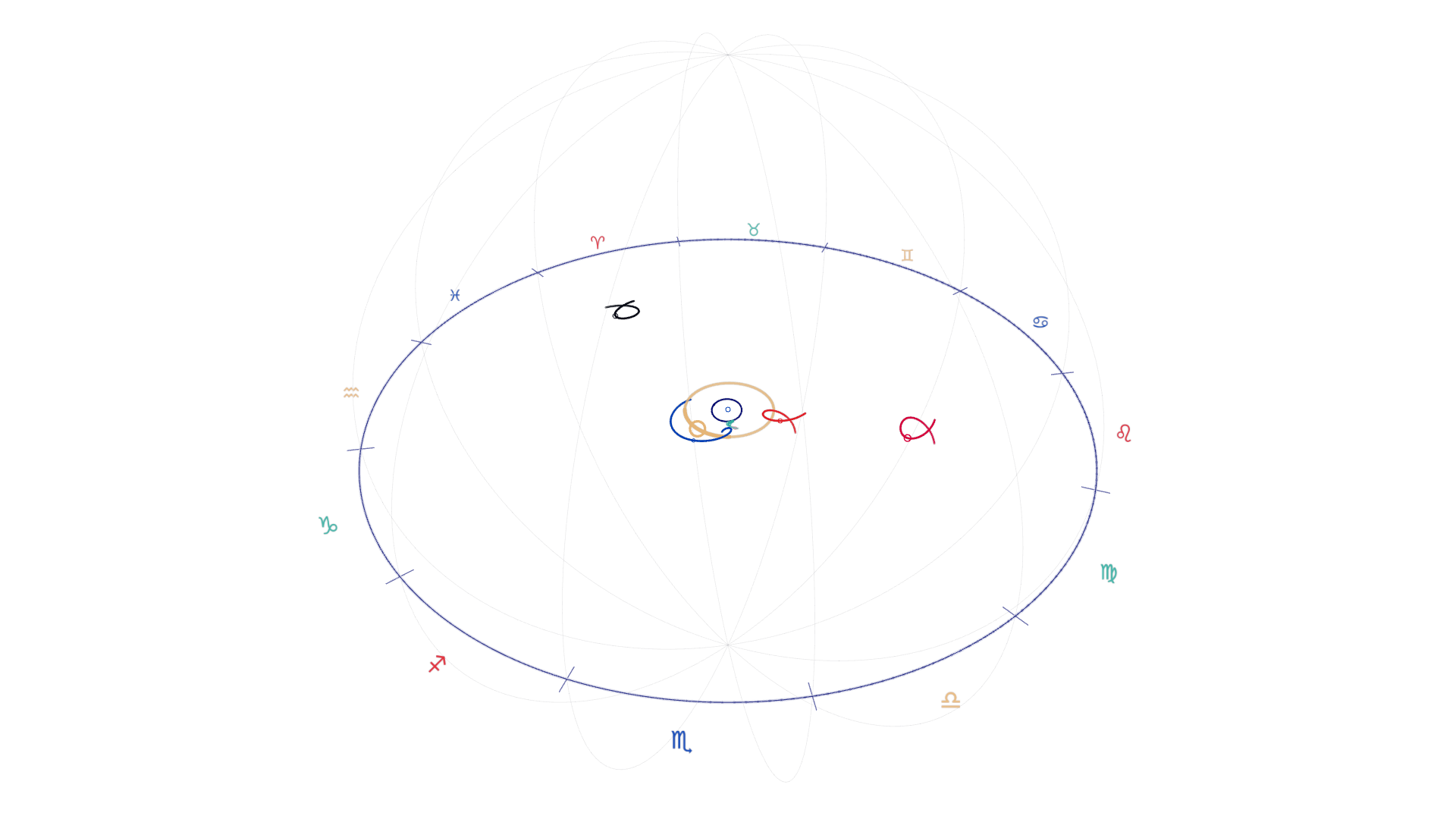
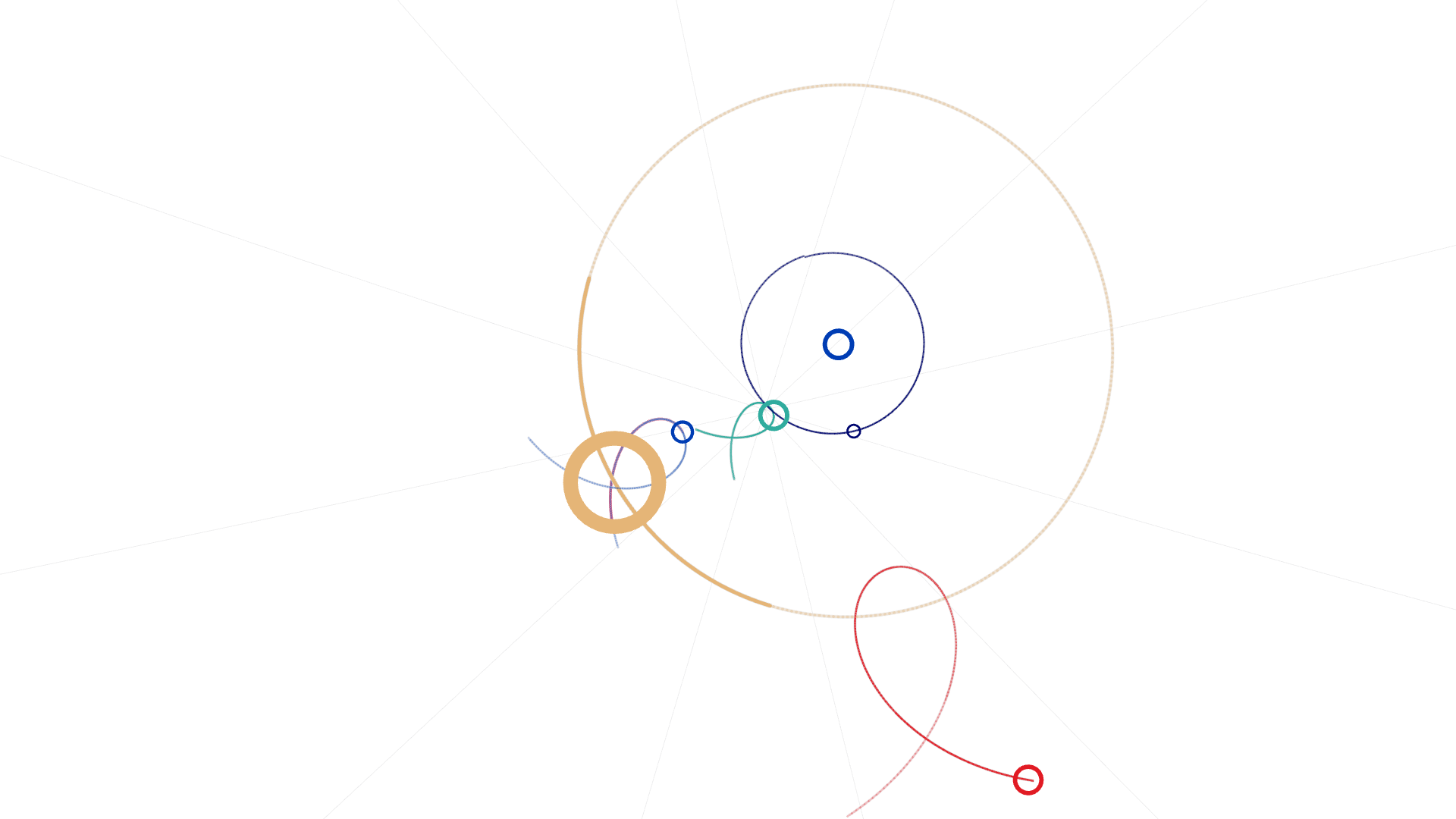
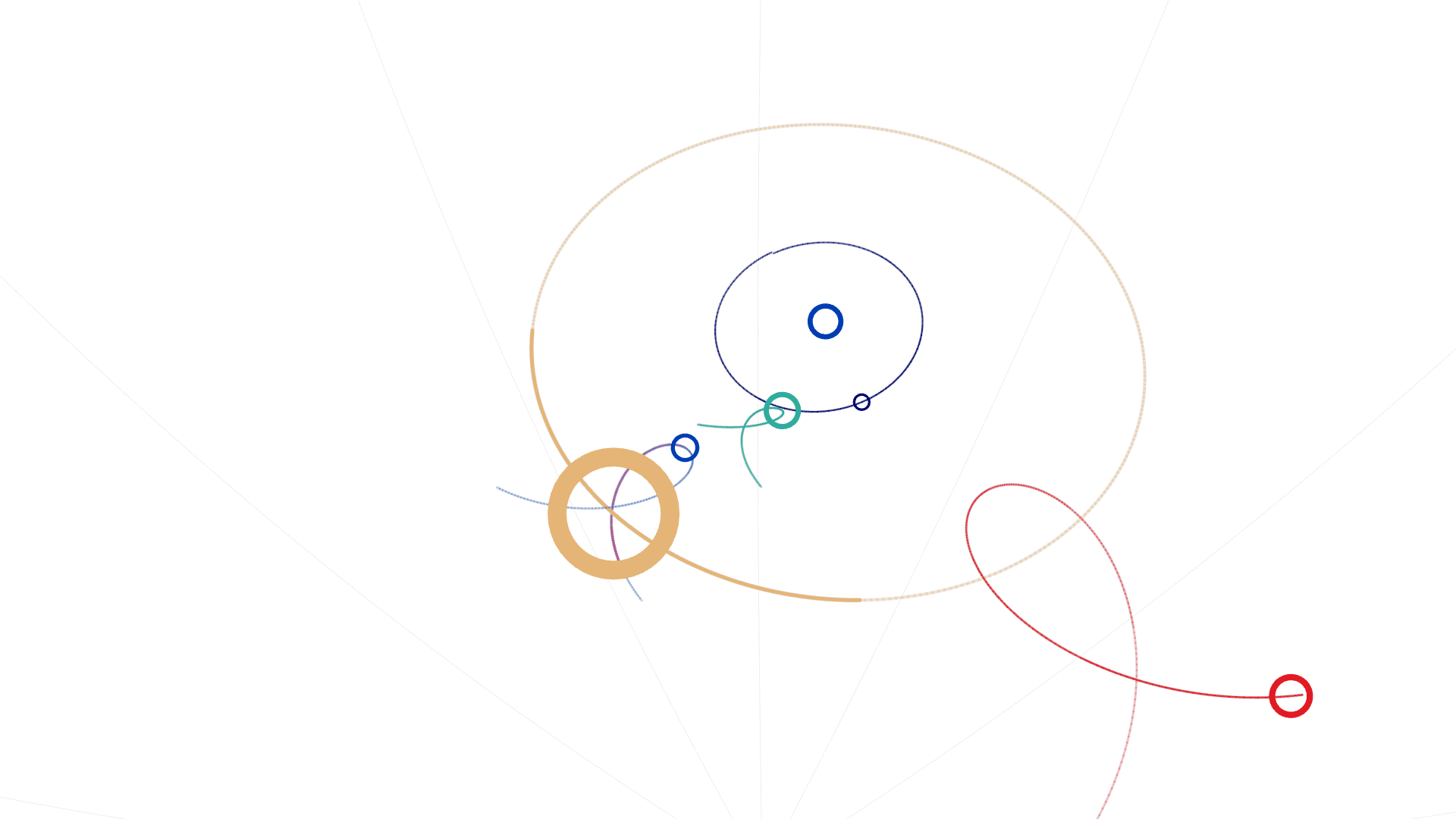
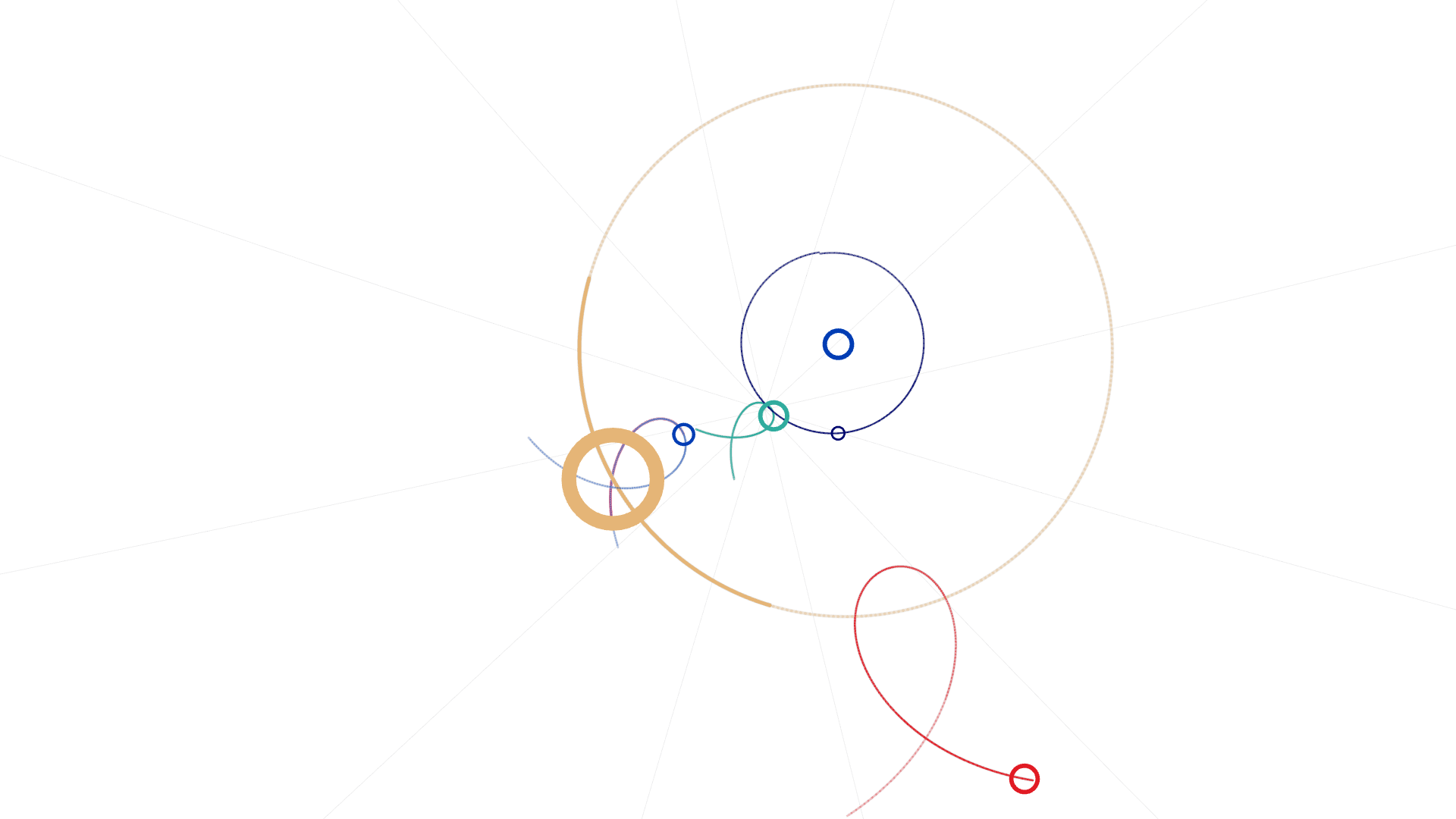
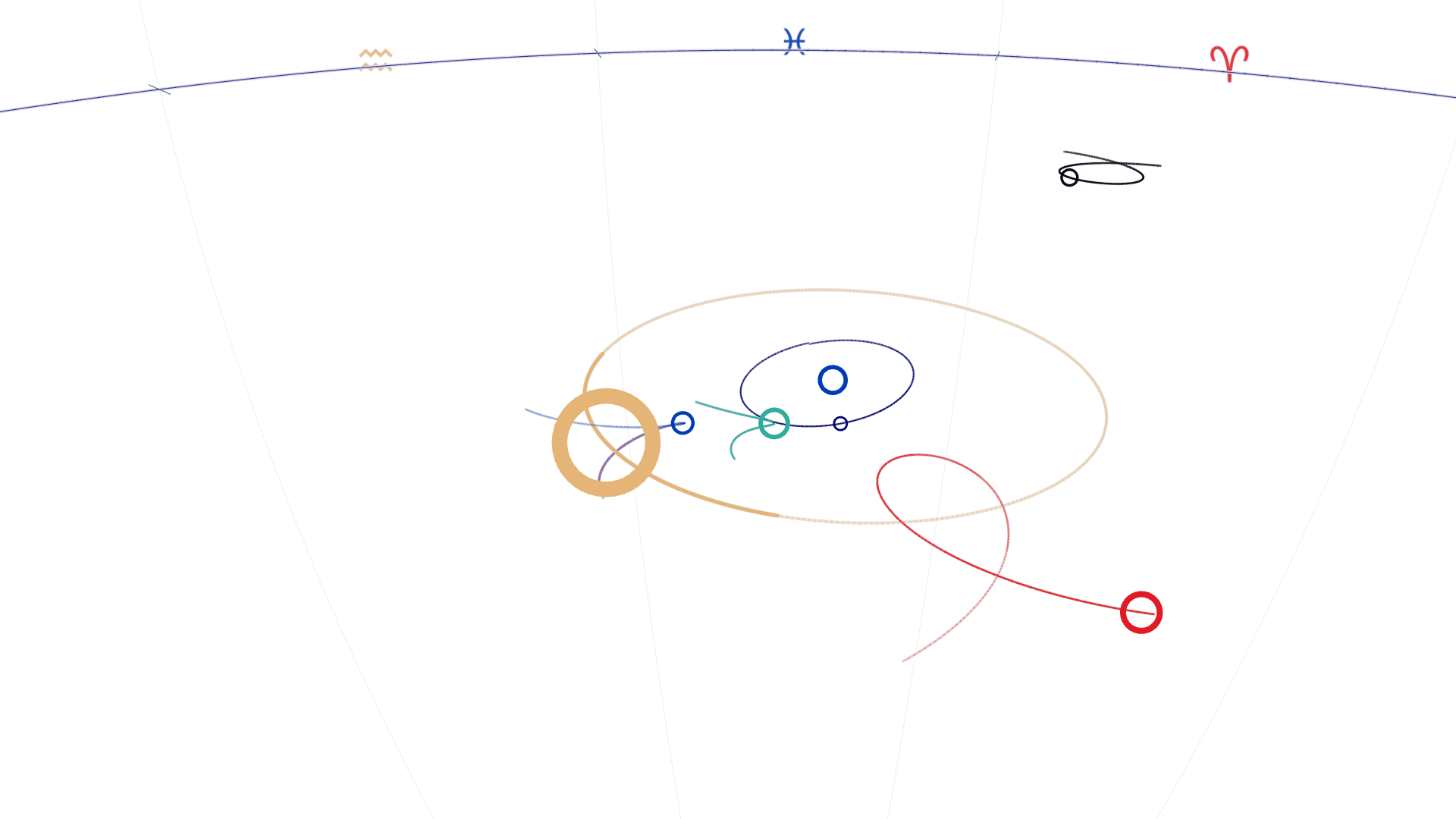
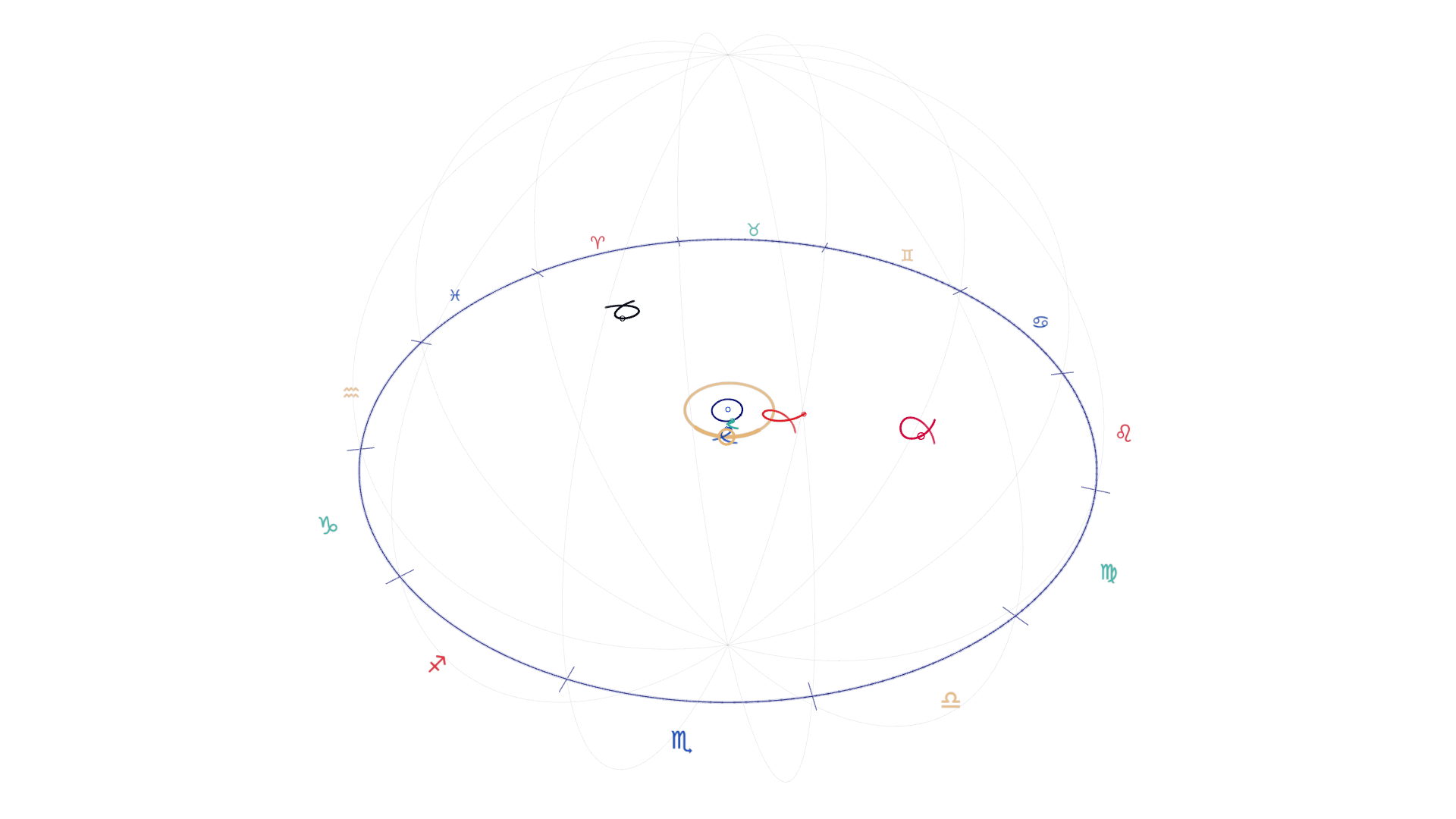
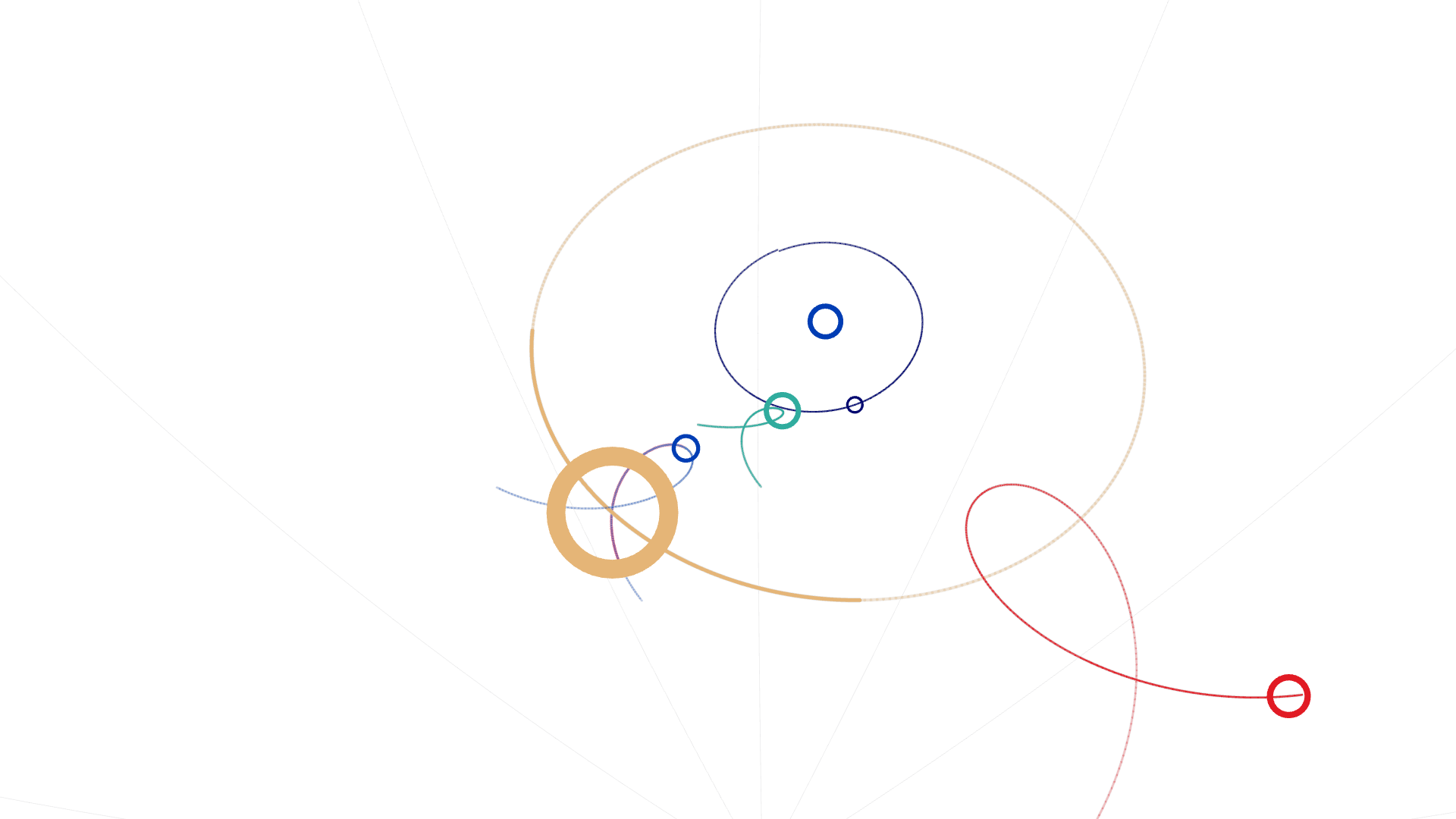
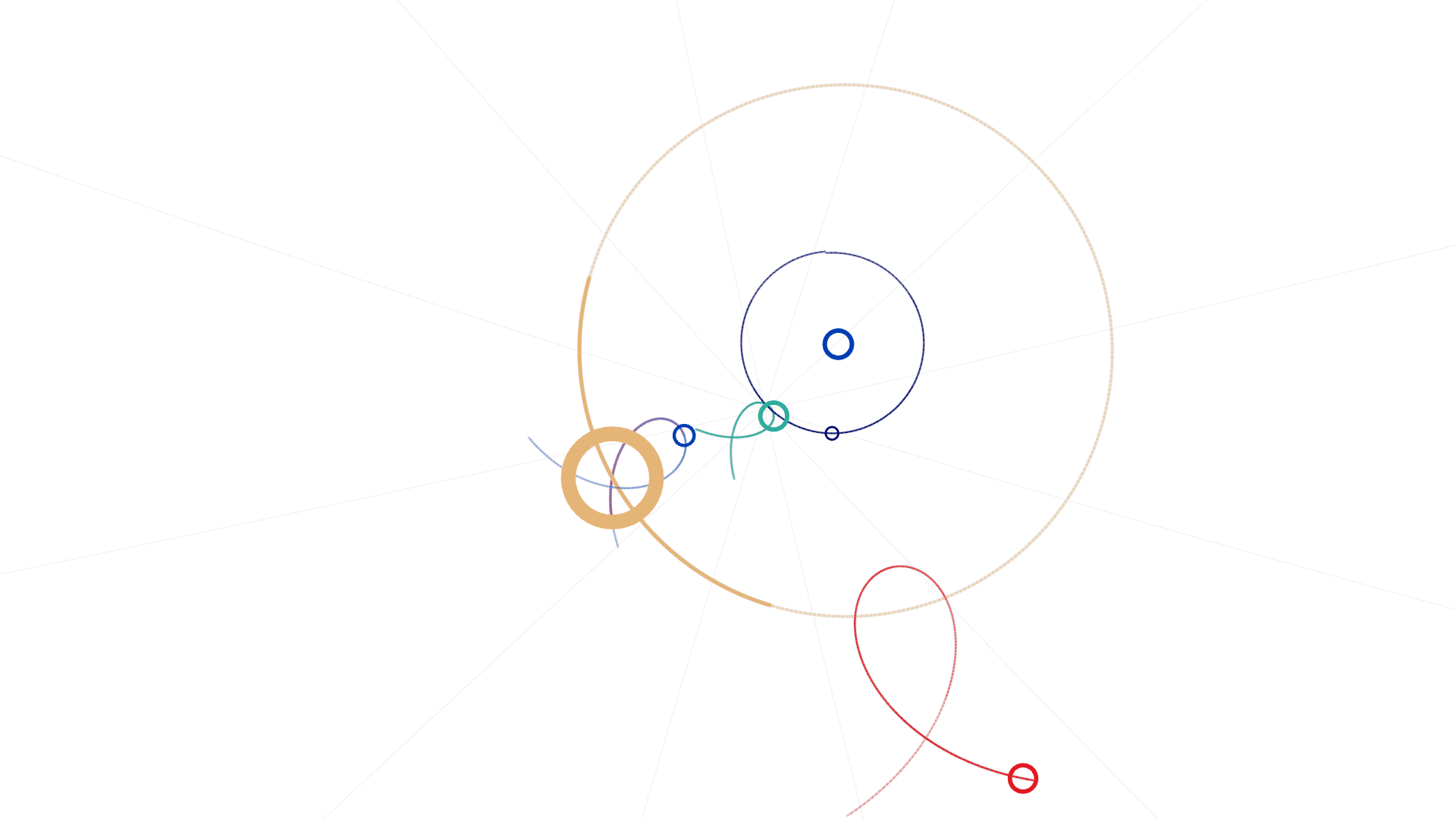
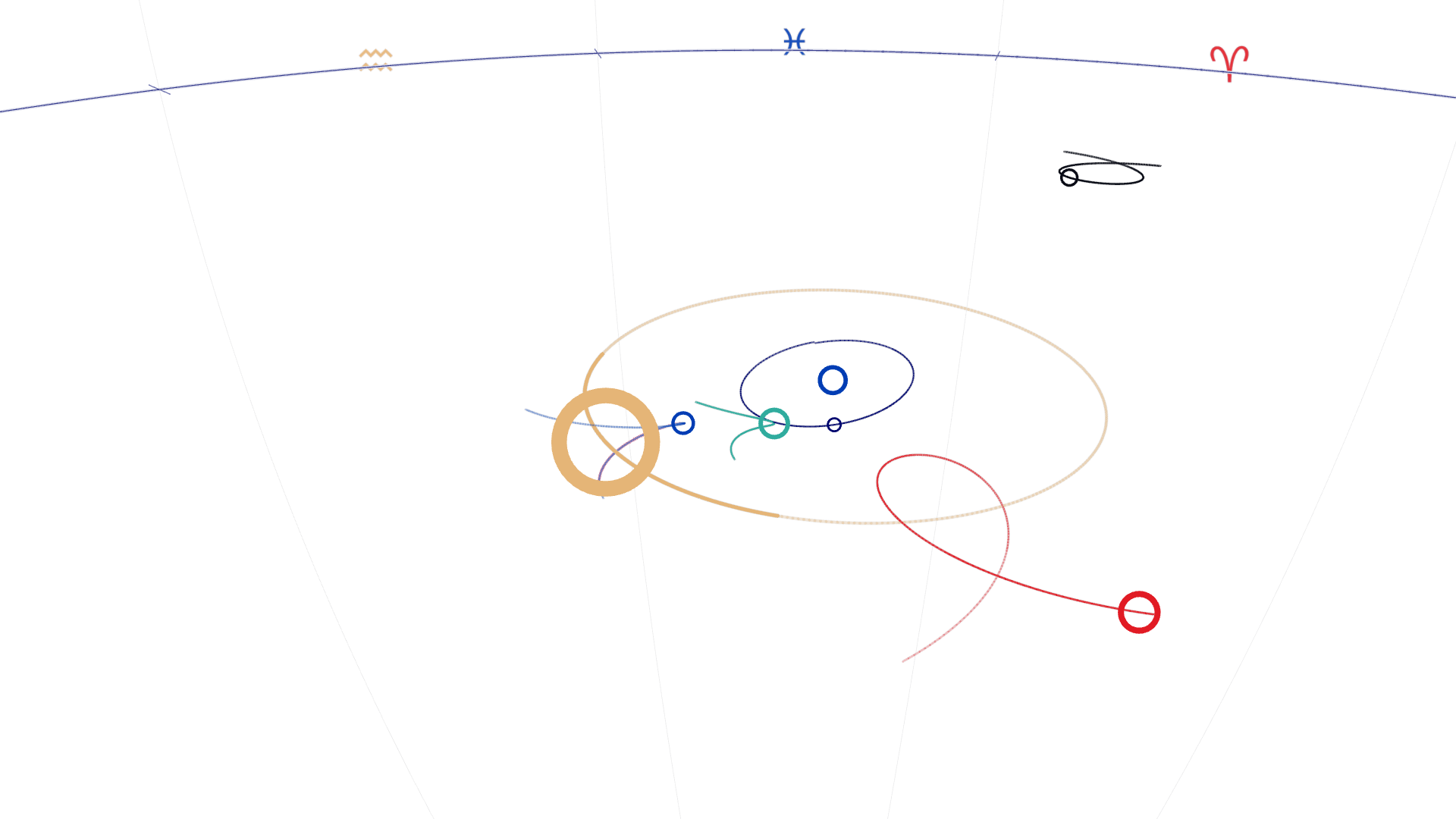
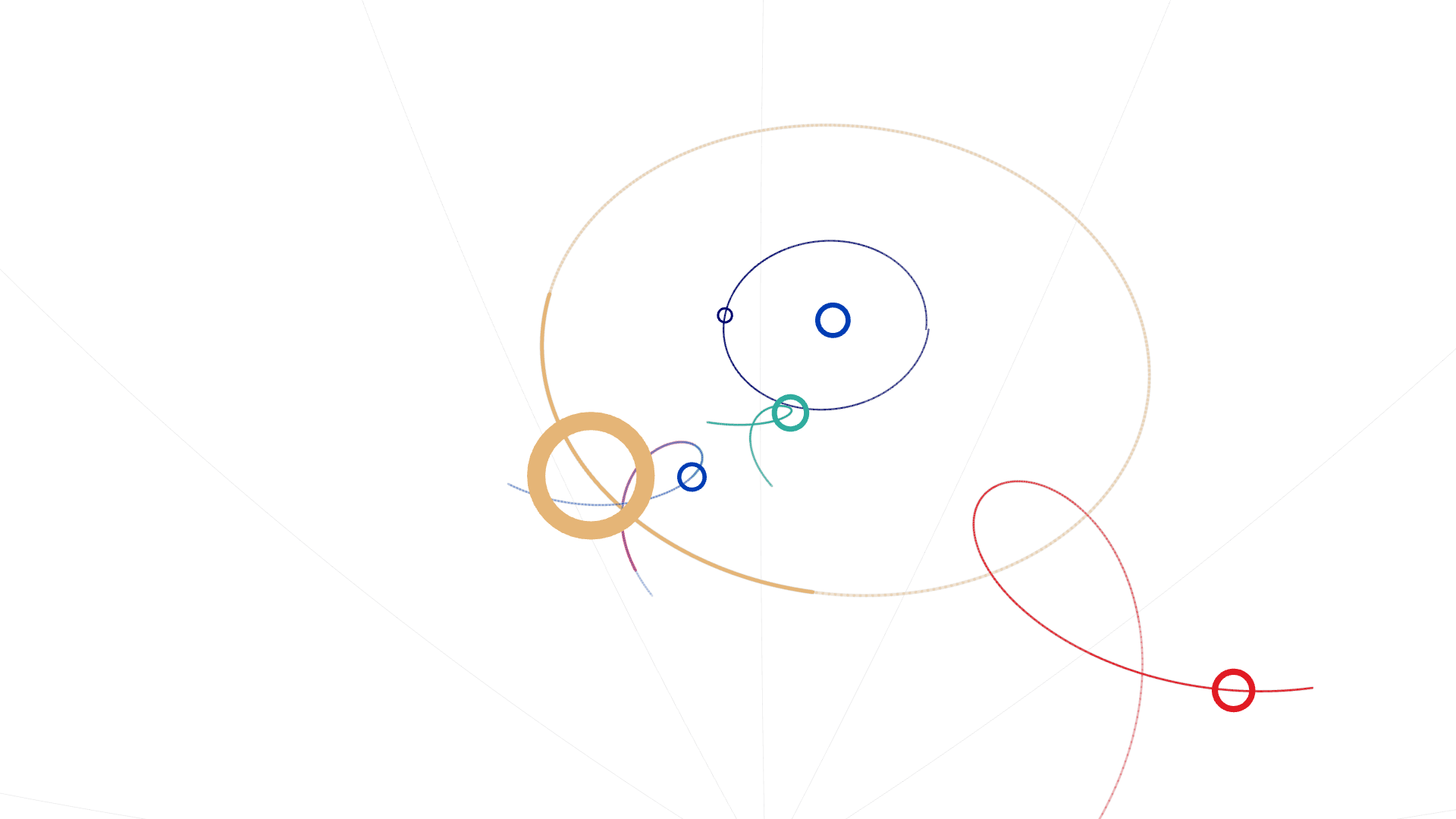
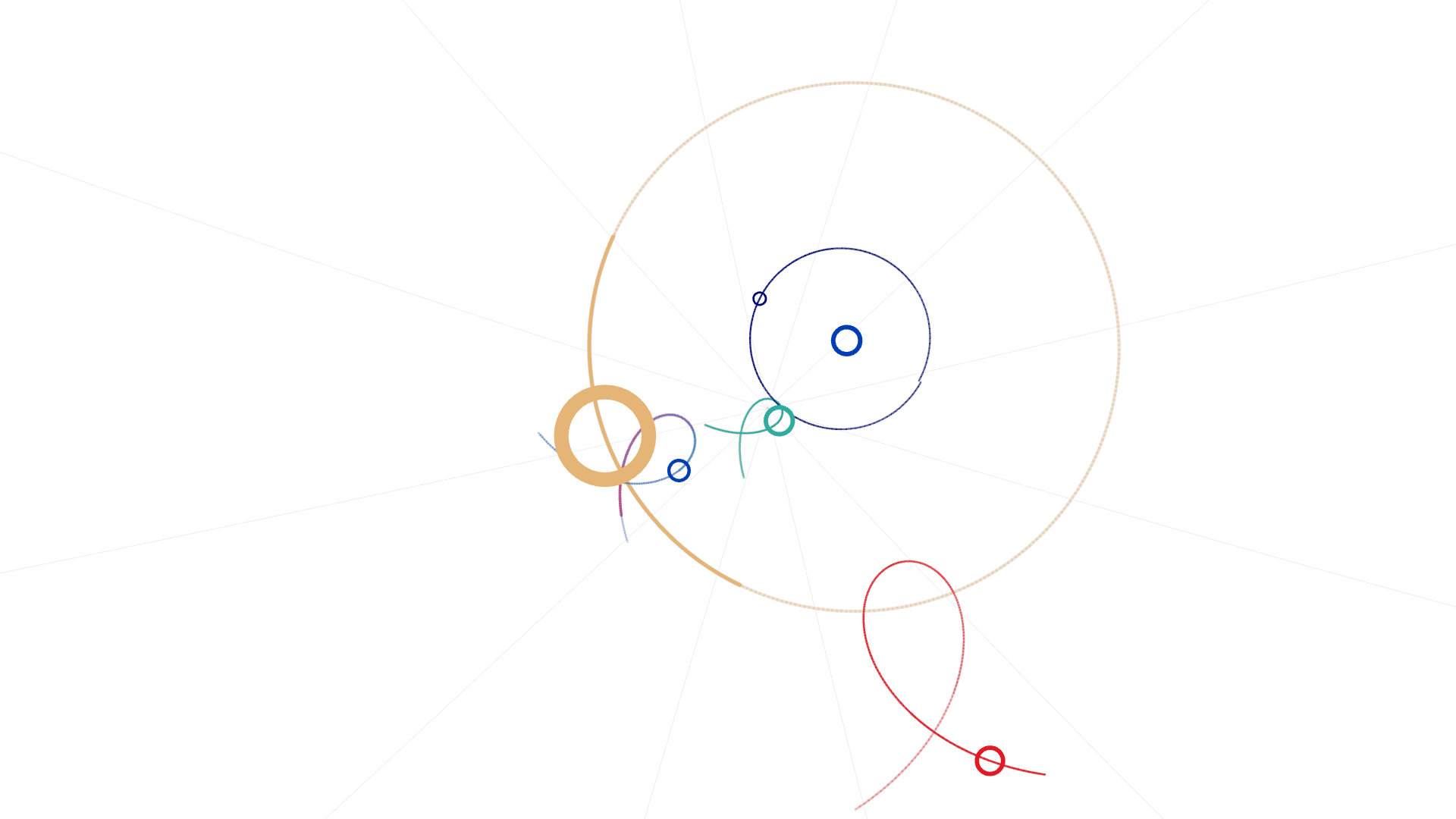
In the films, crimson traces descent and teal traces ascent. The color changes at inferior conjunction. Retrograde therefore continues into the teal phase before the forward station.
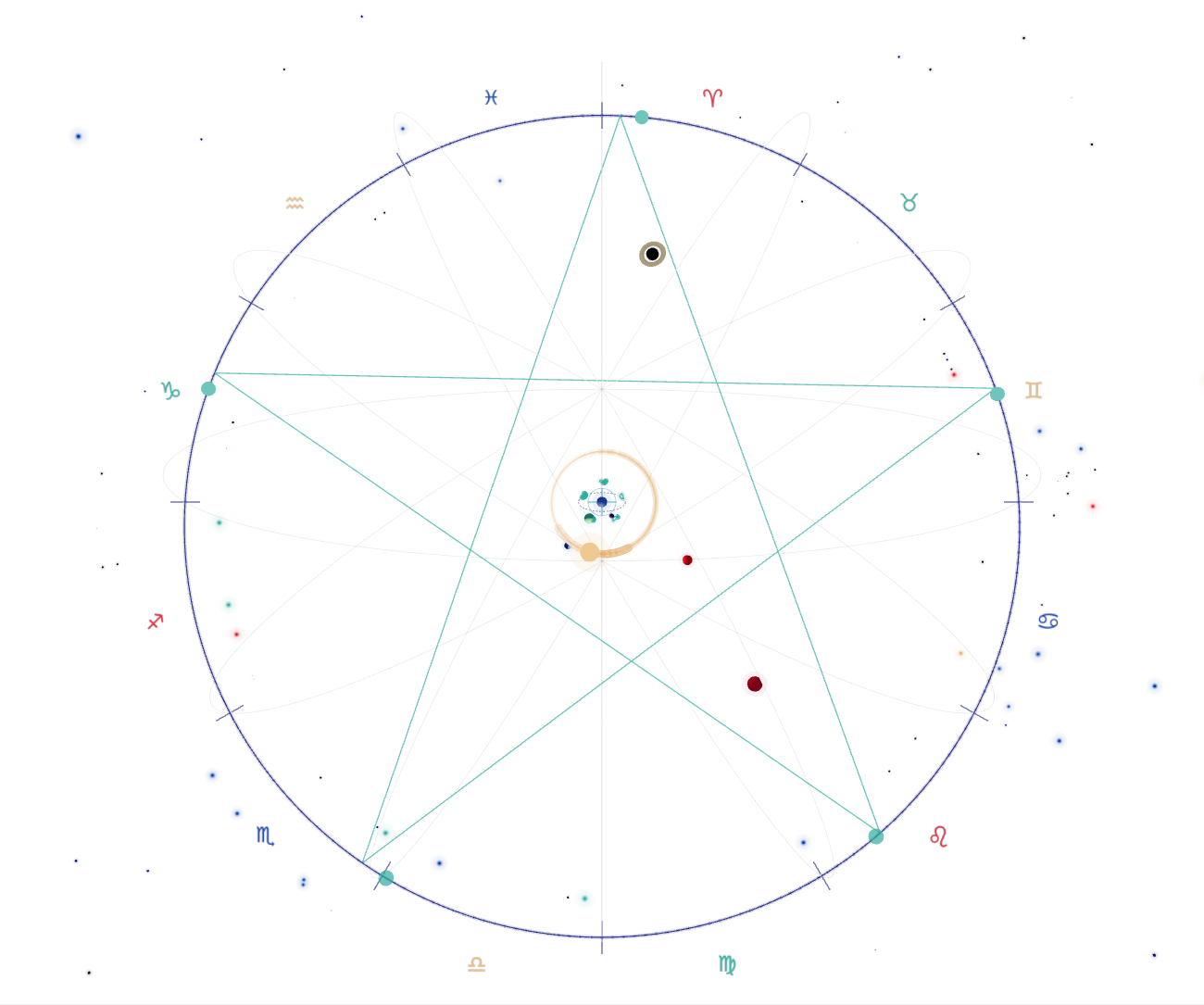
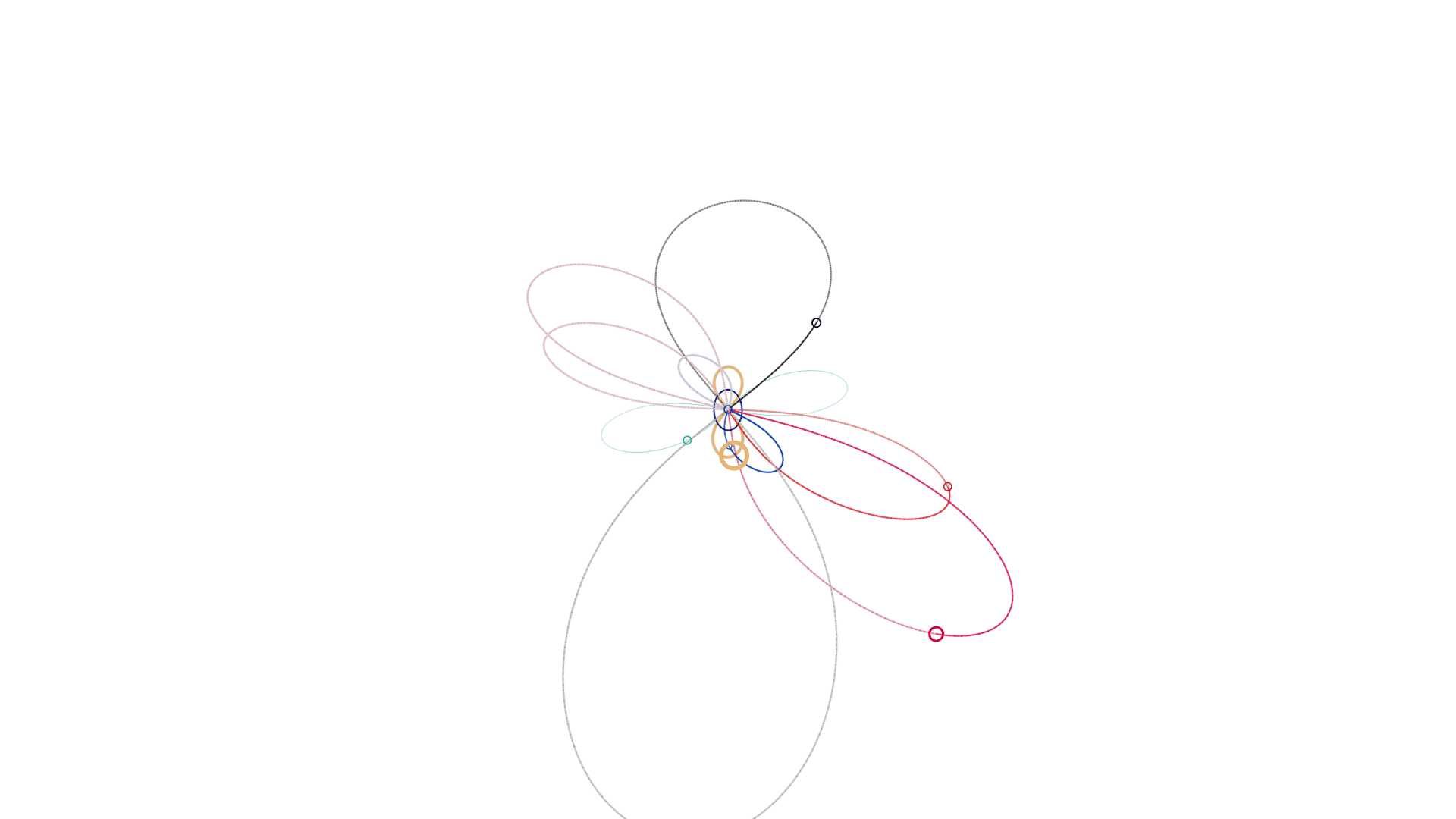
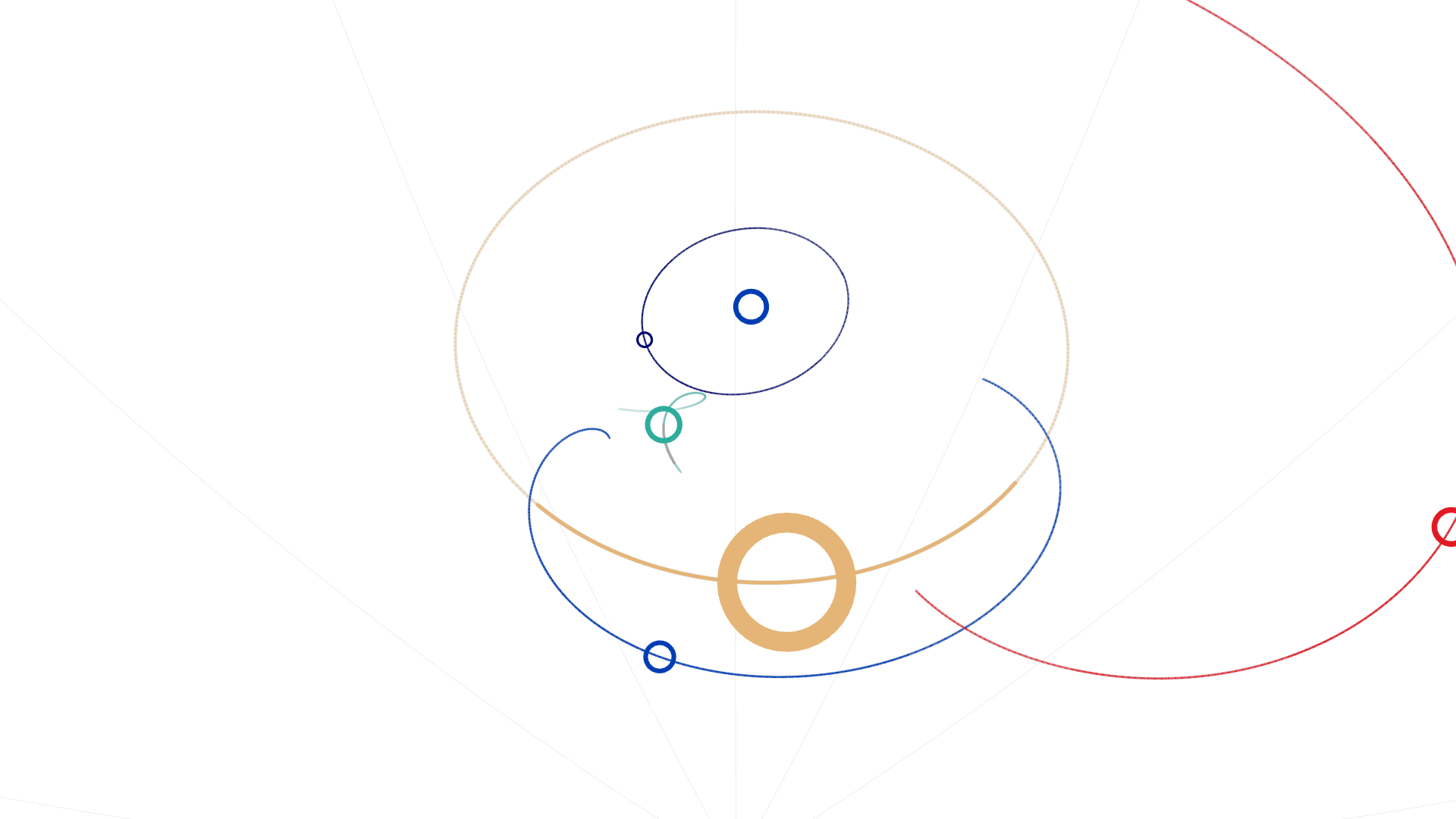
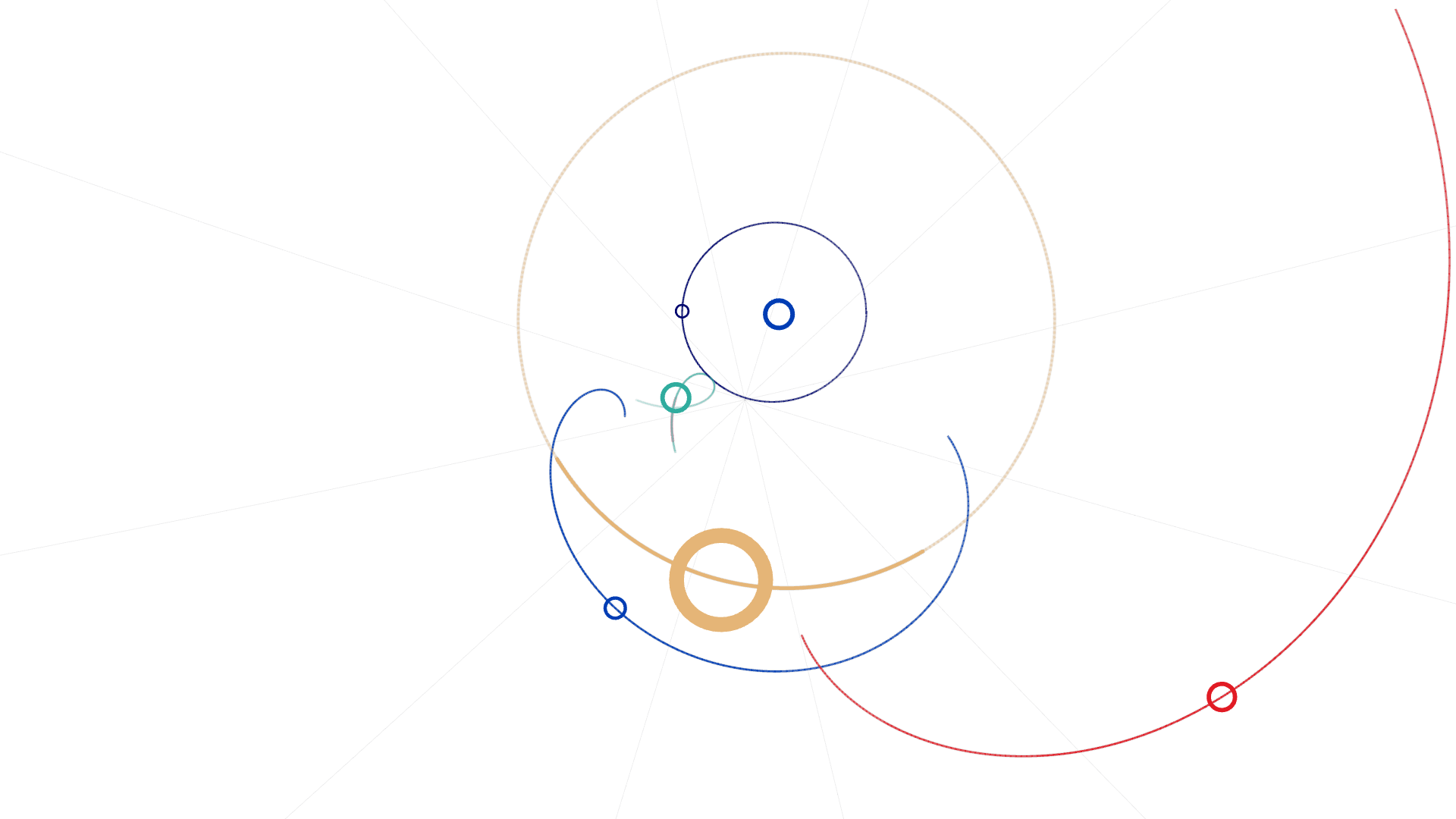
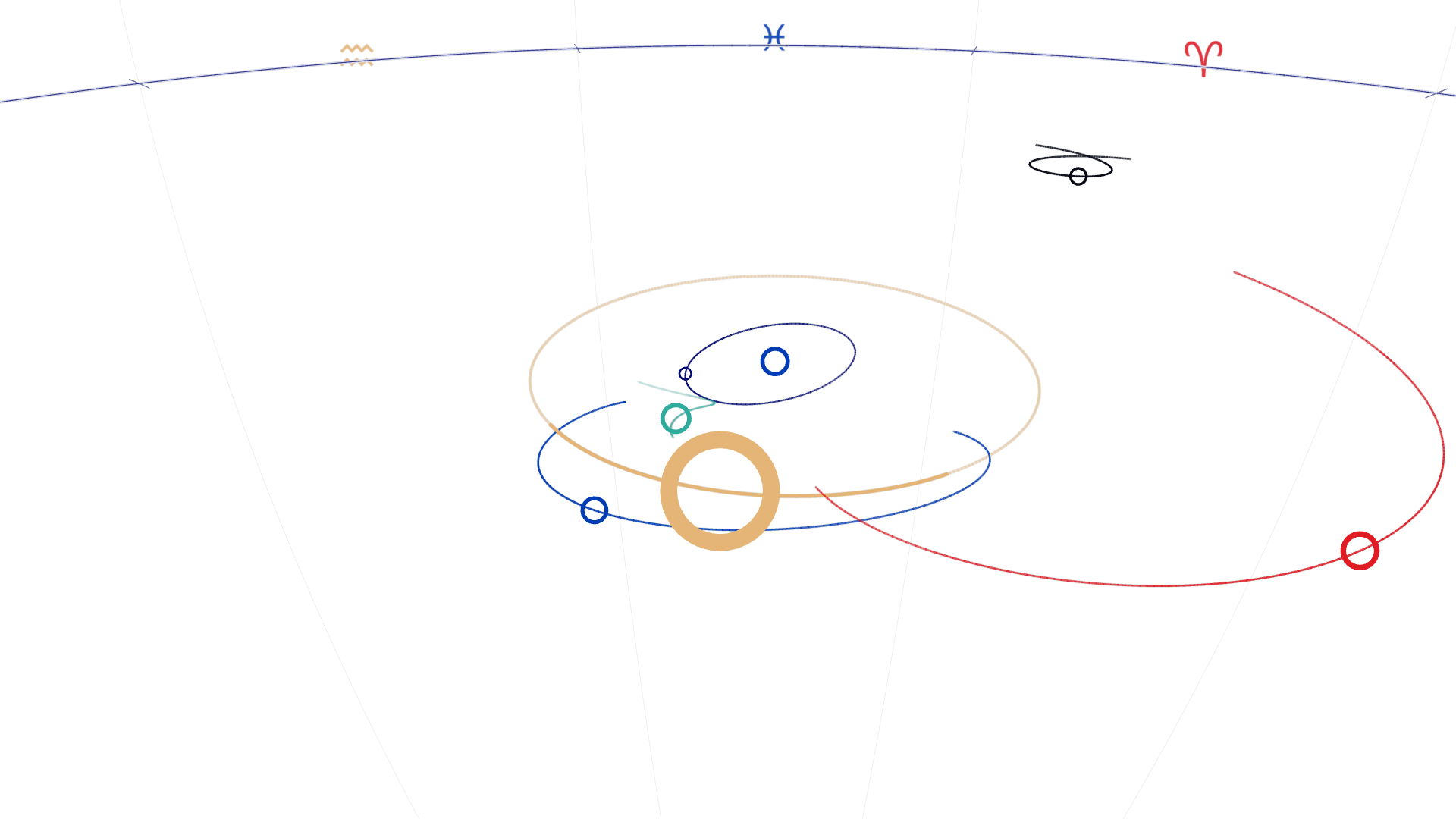
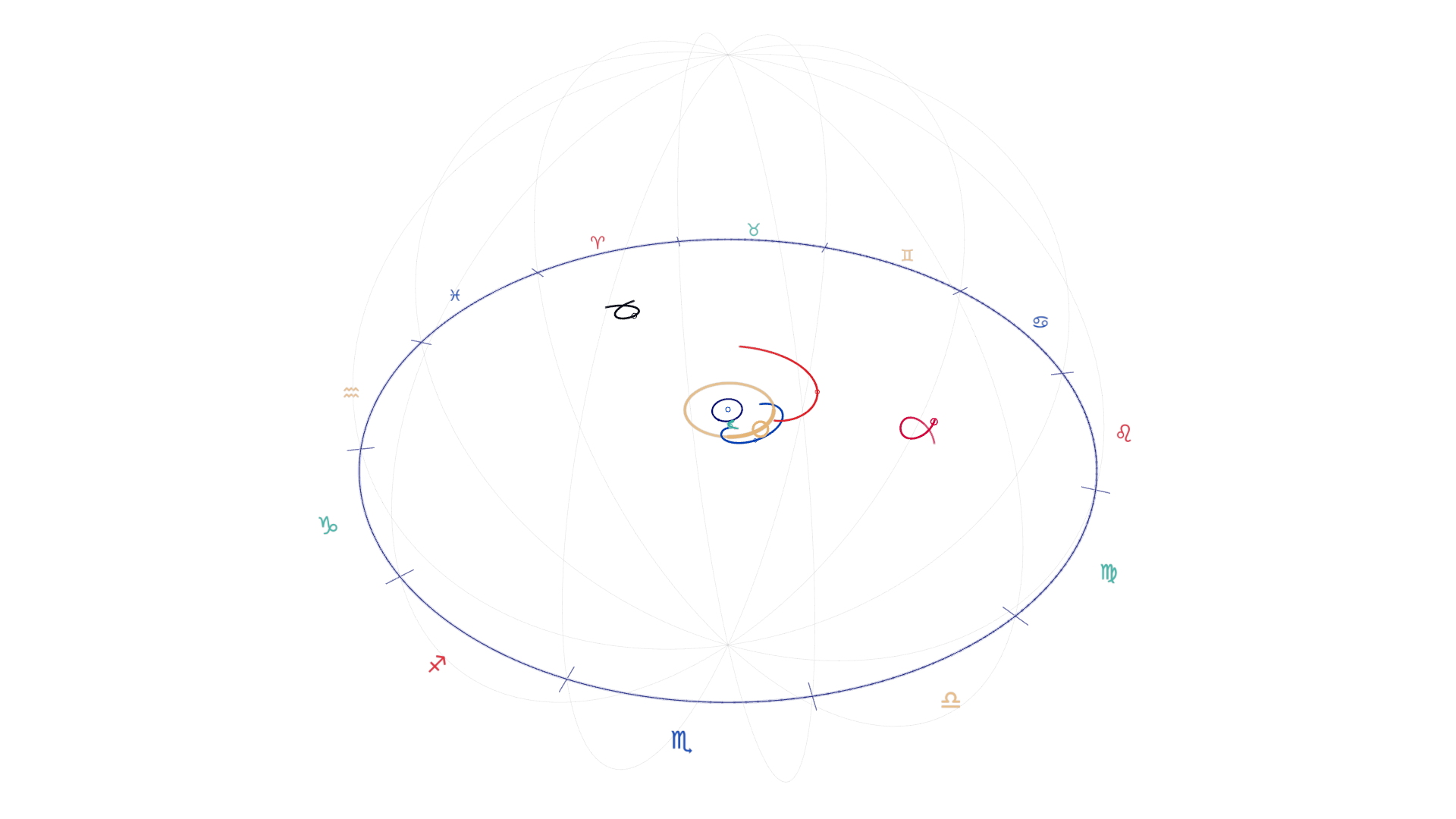
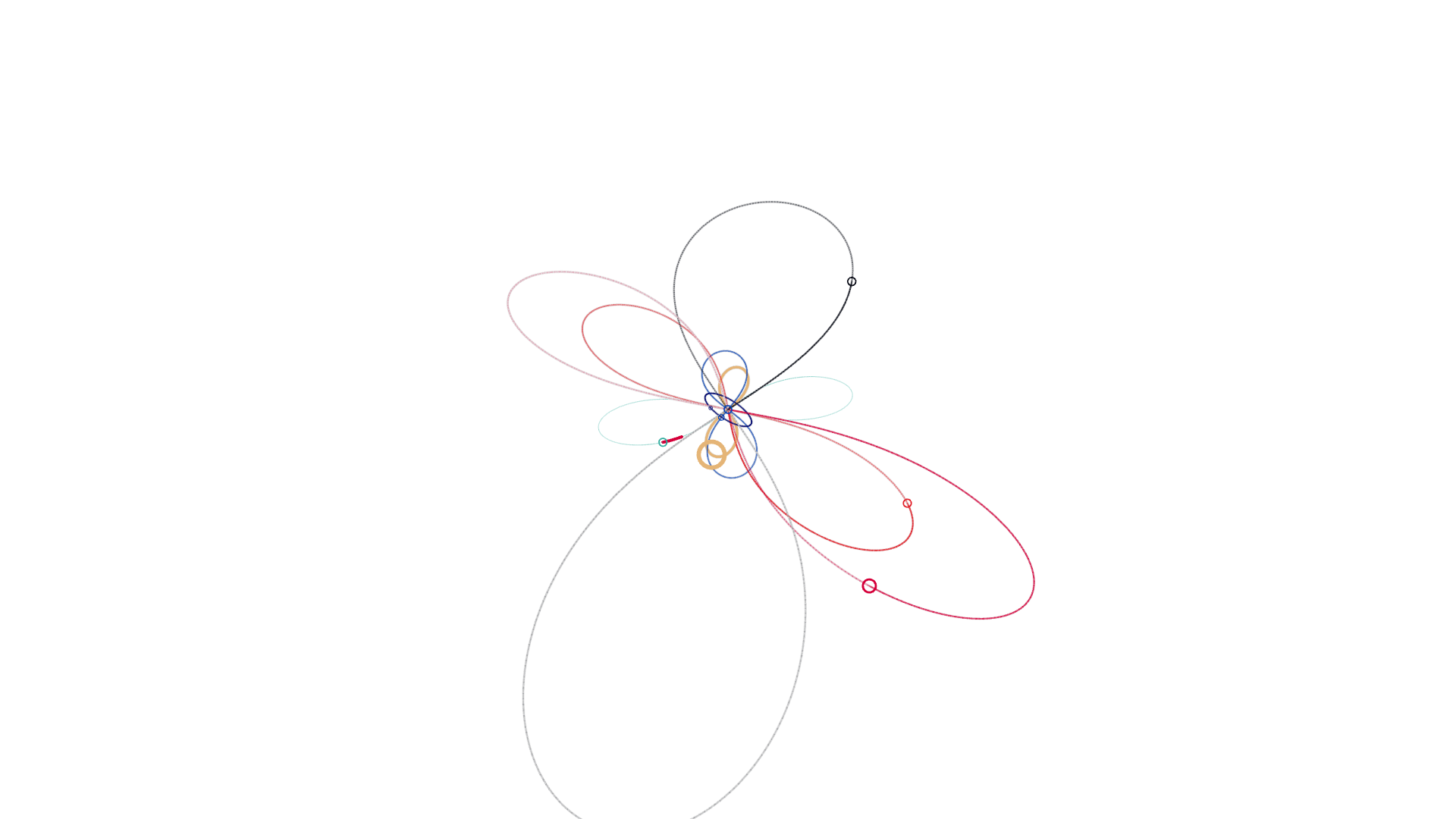
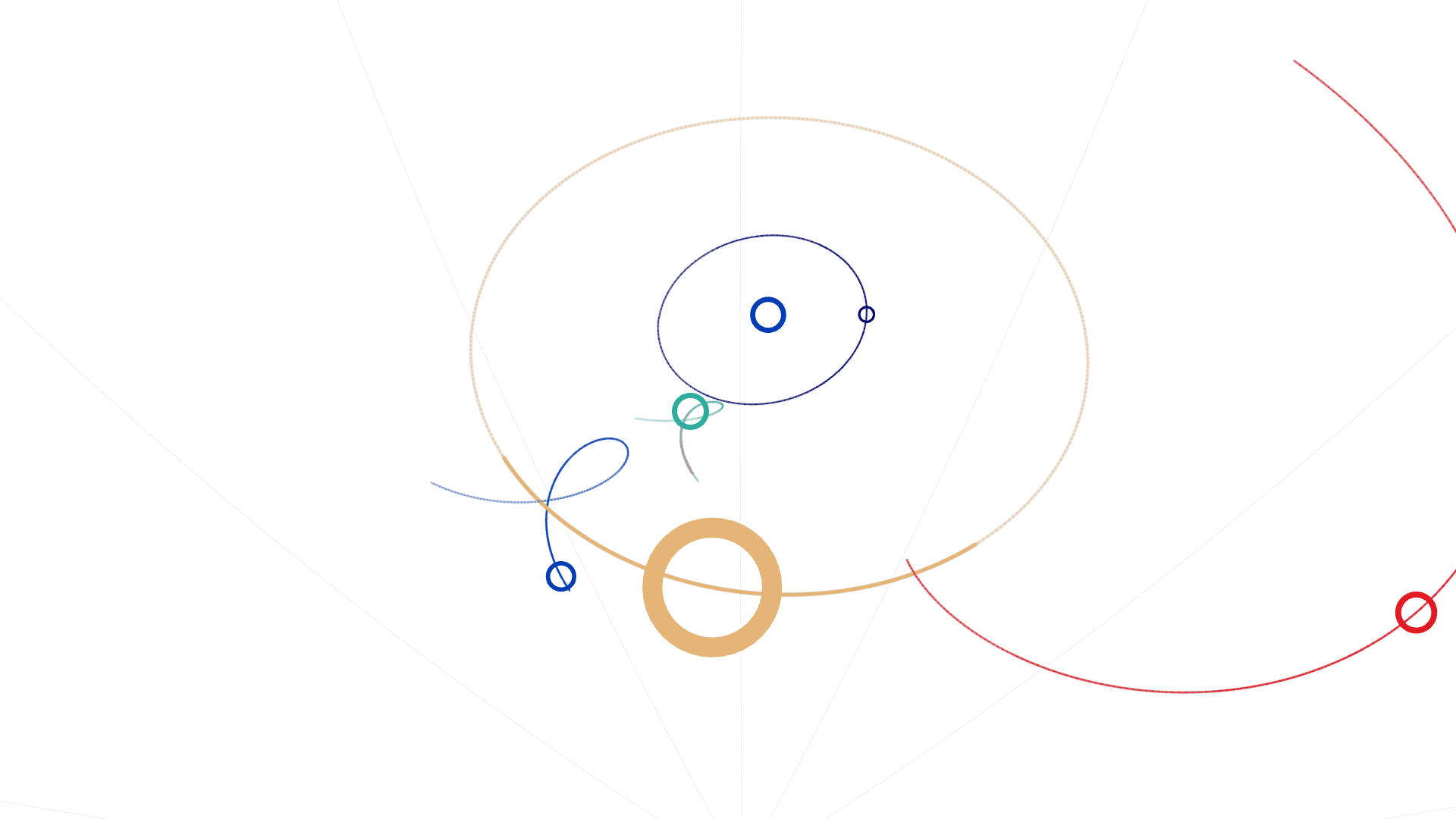
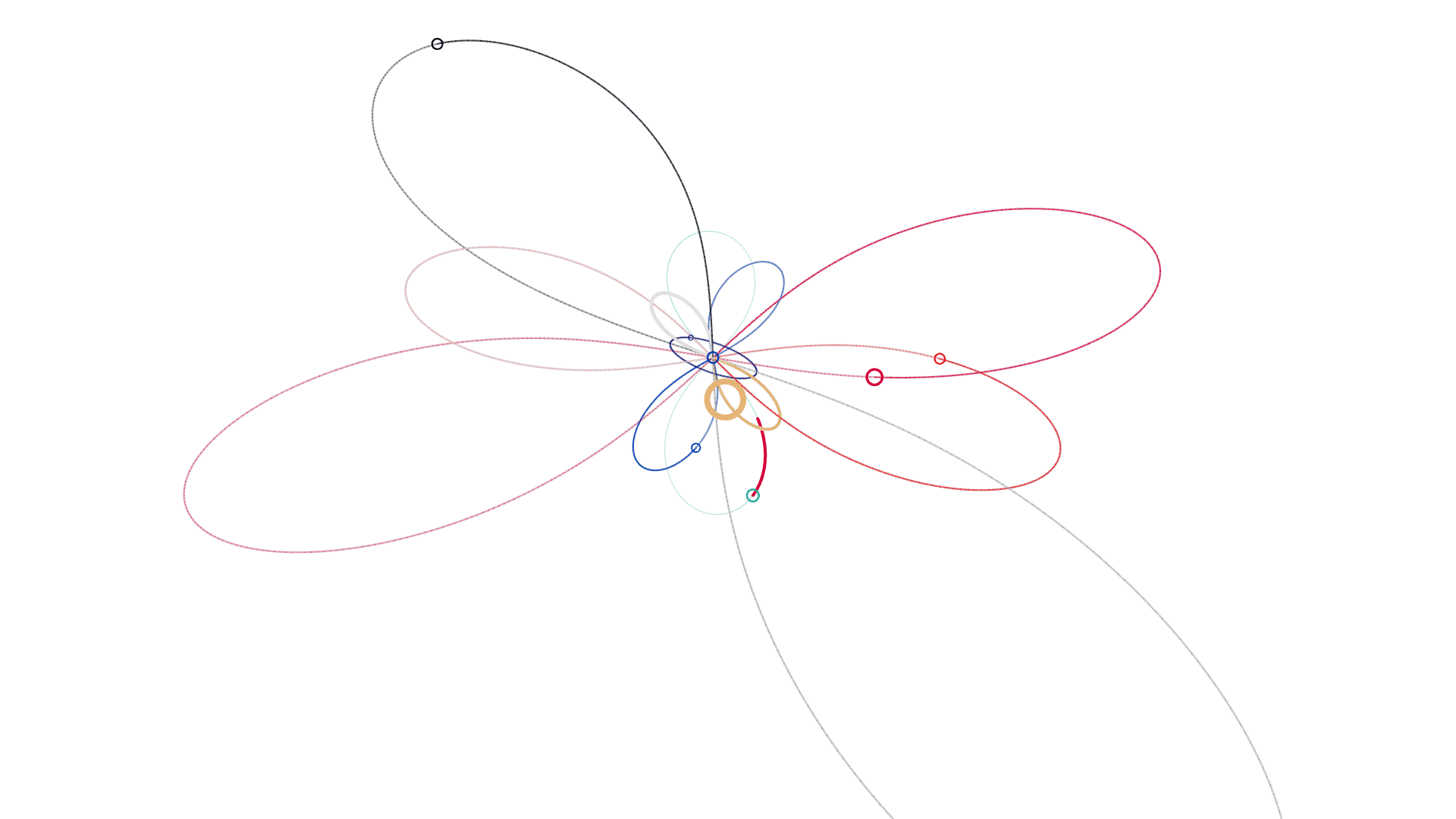
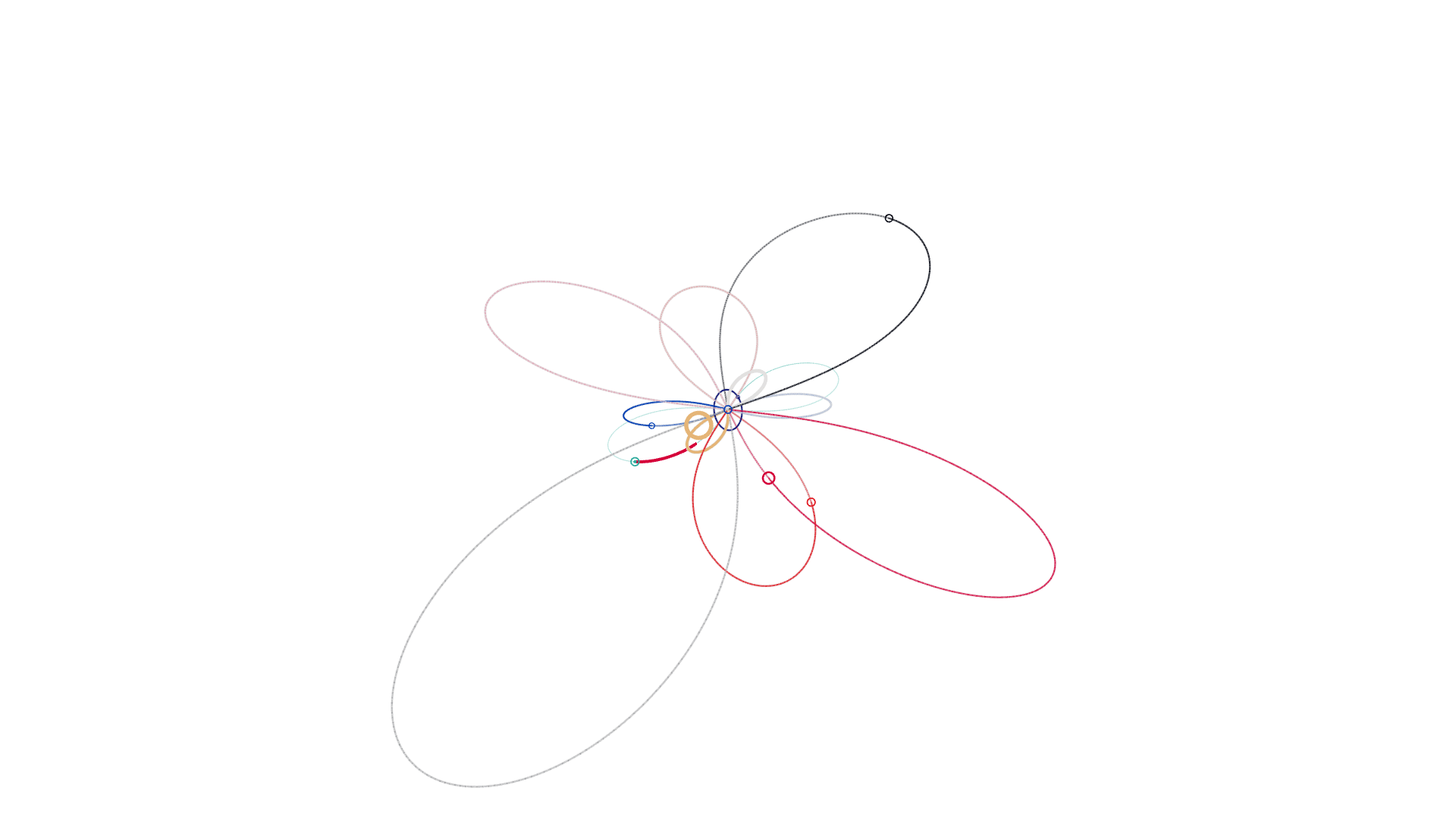
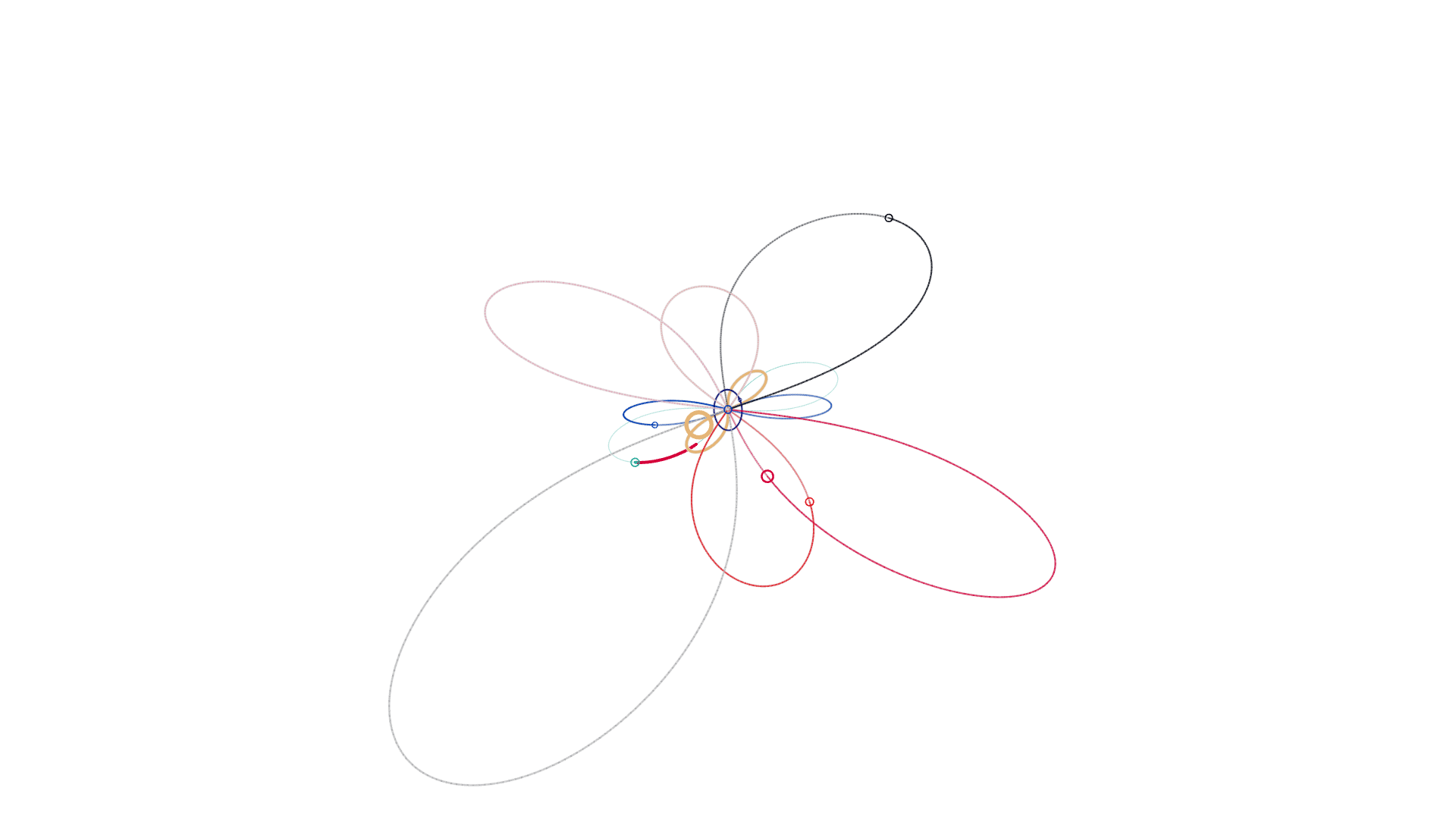
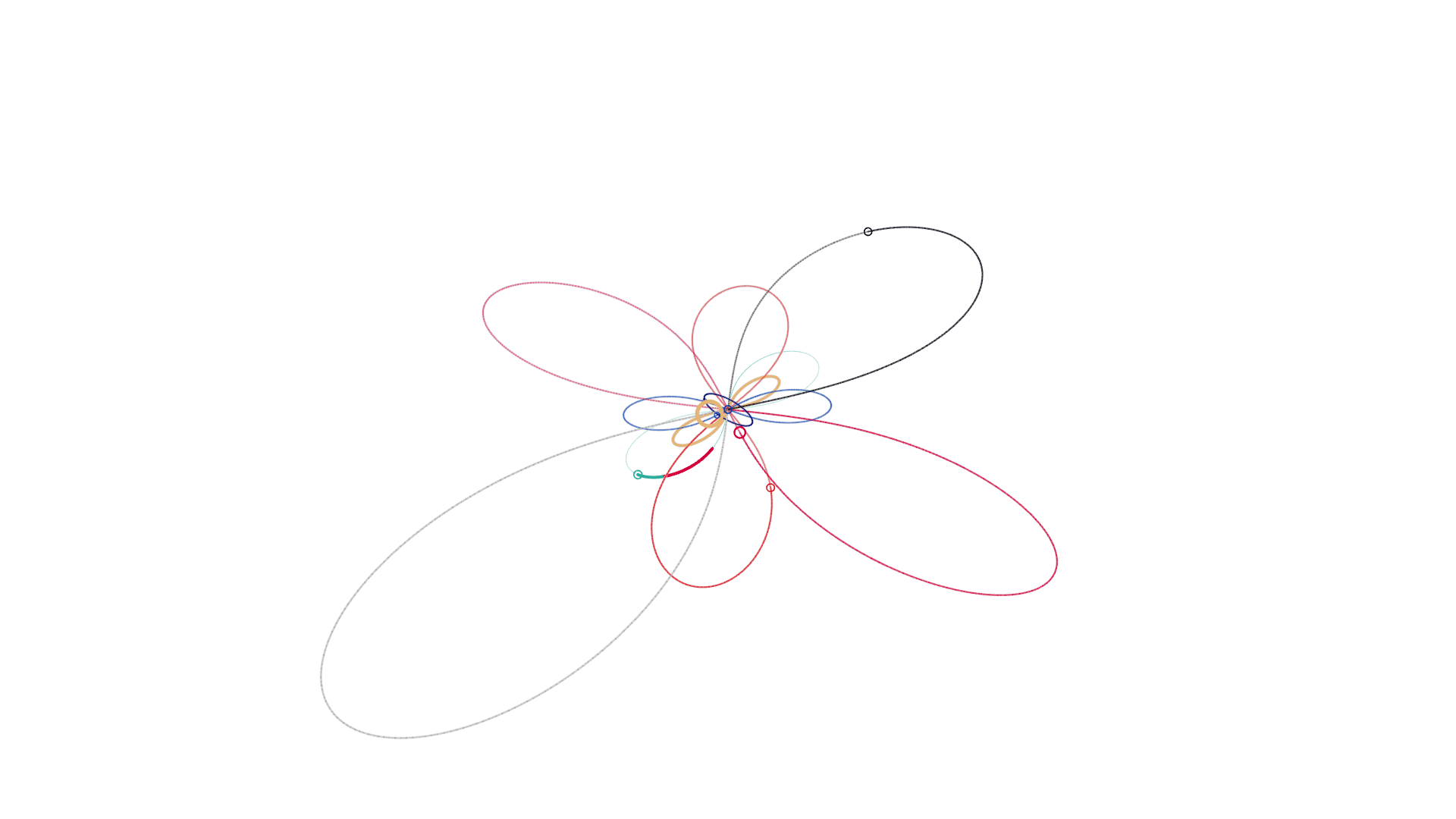
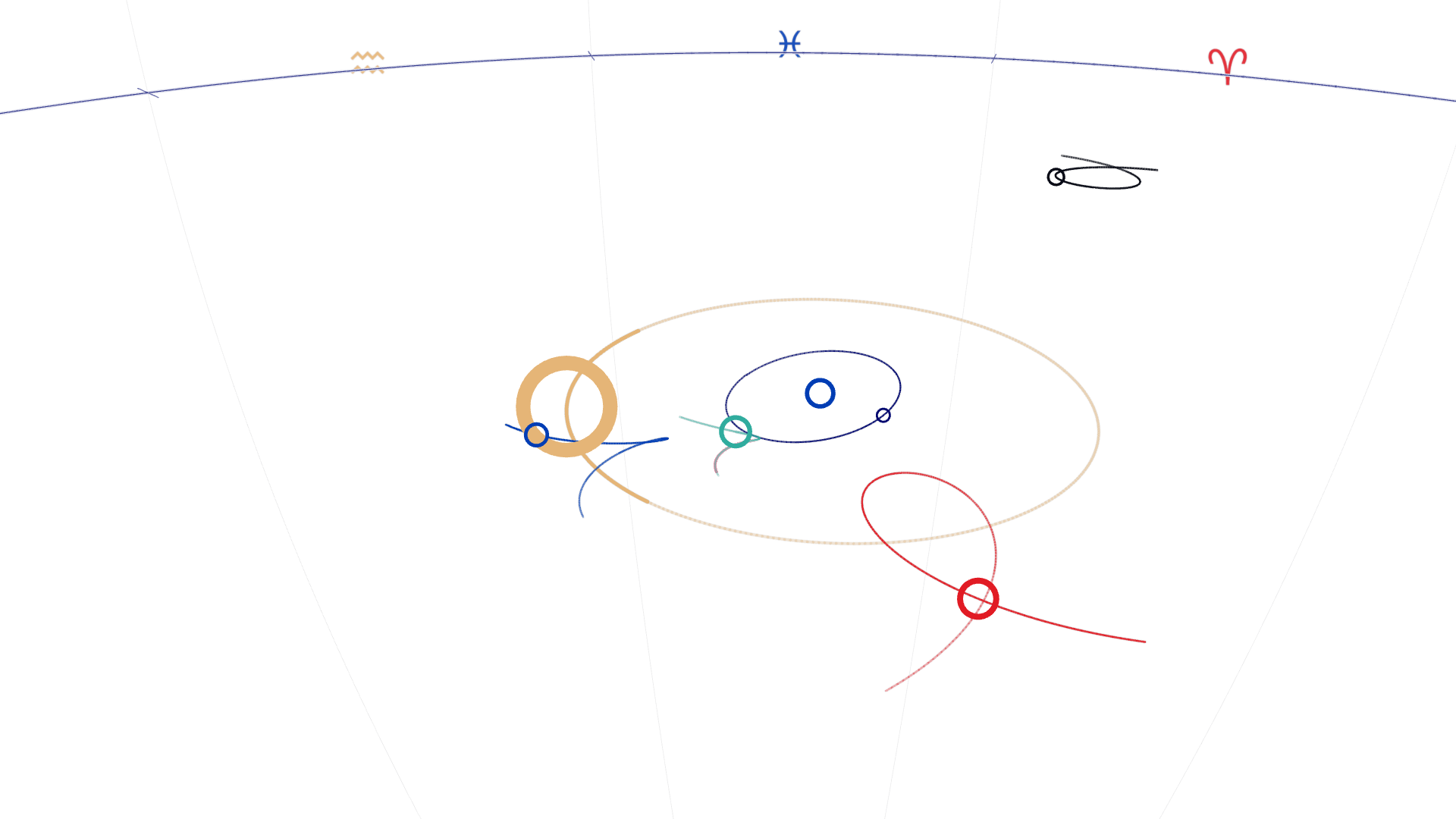
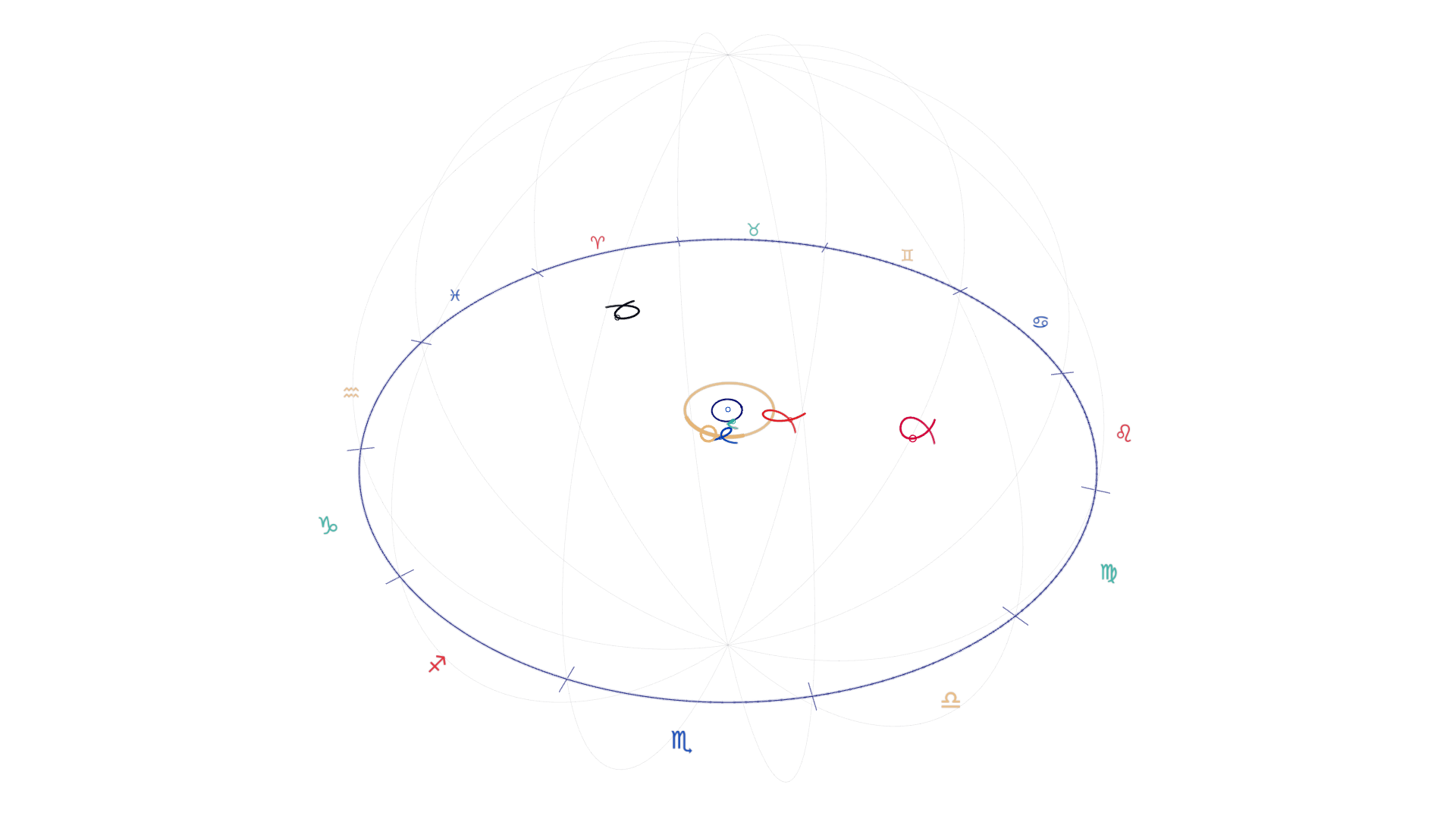
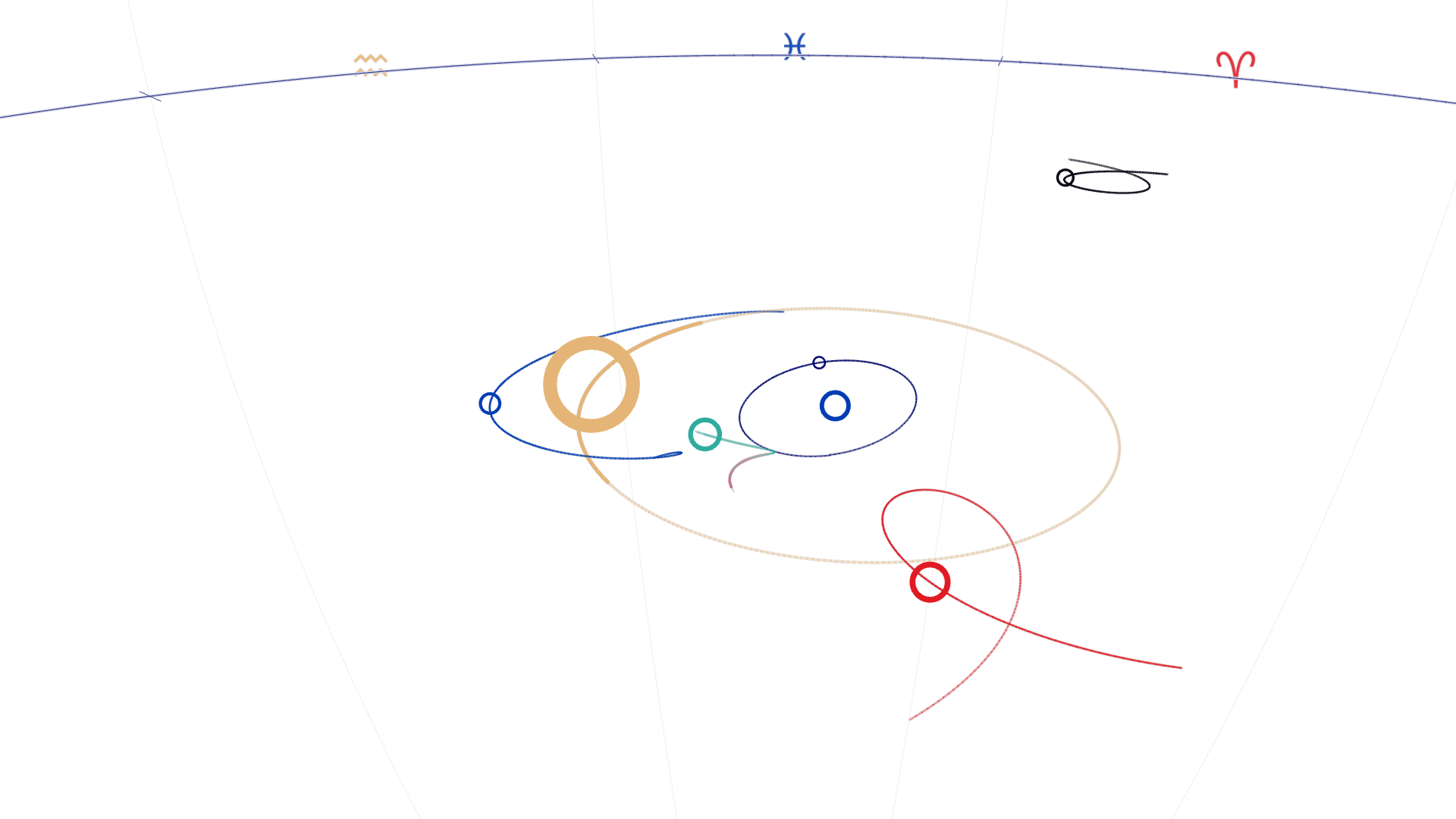
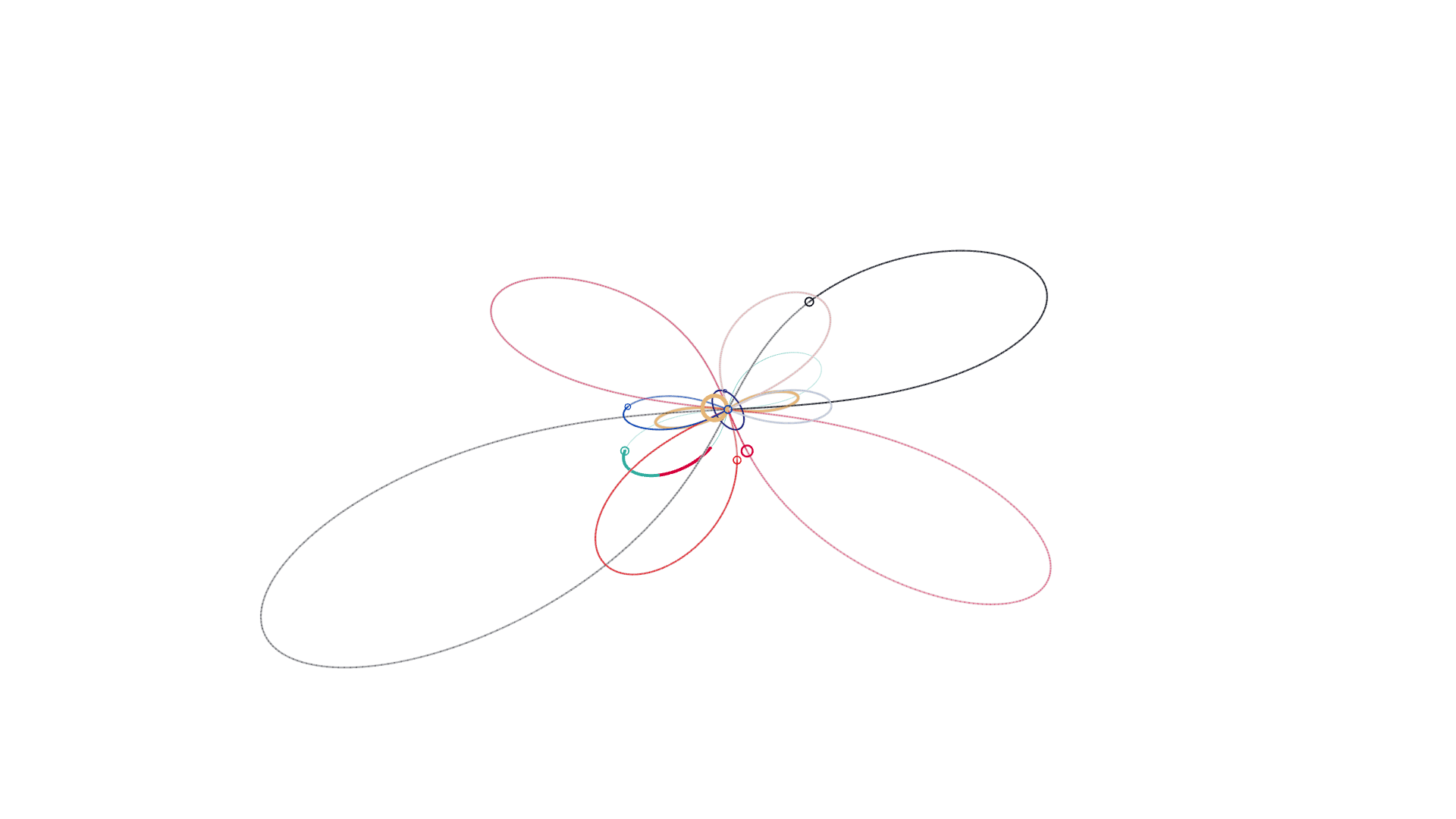
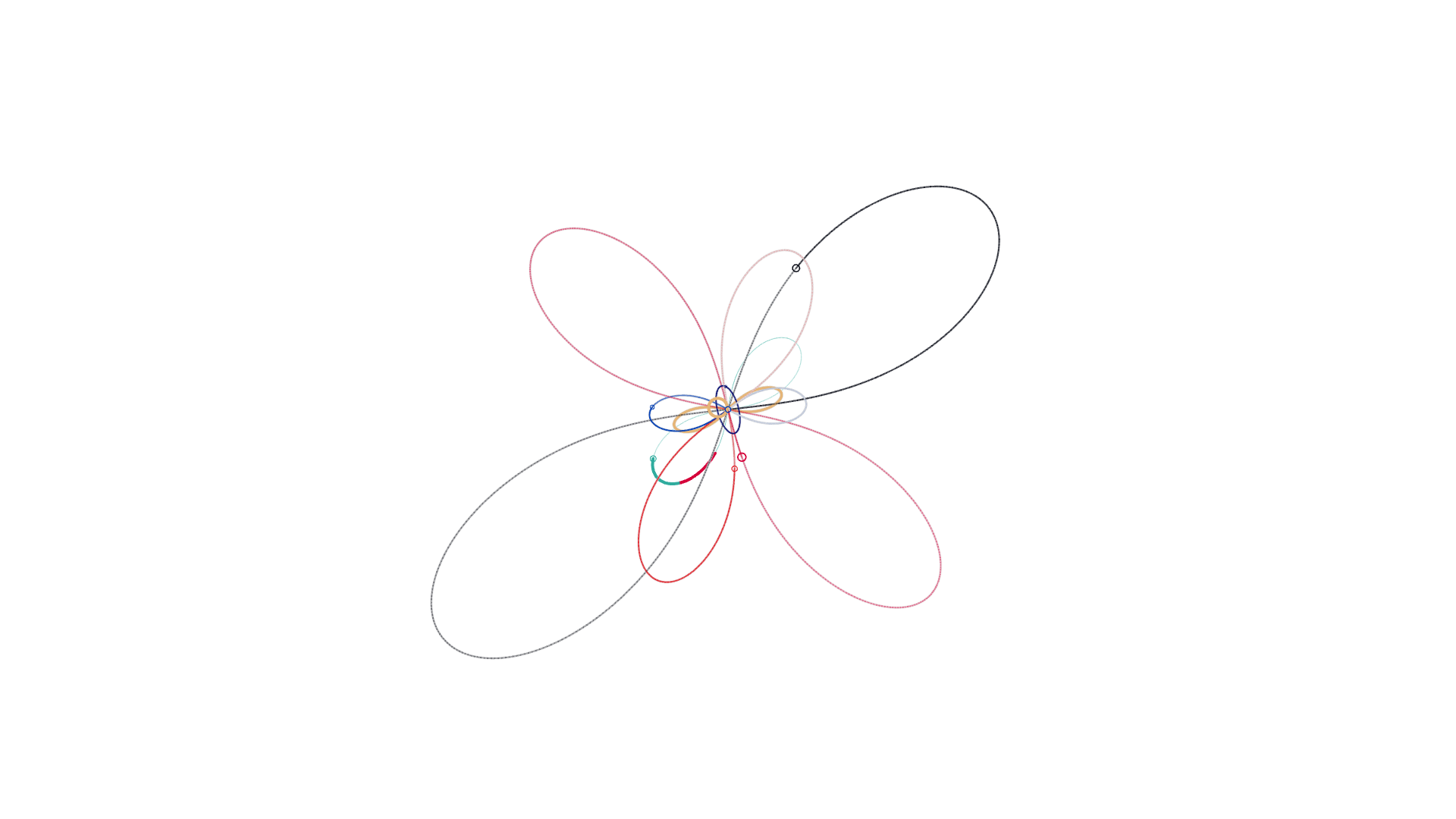
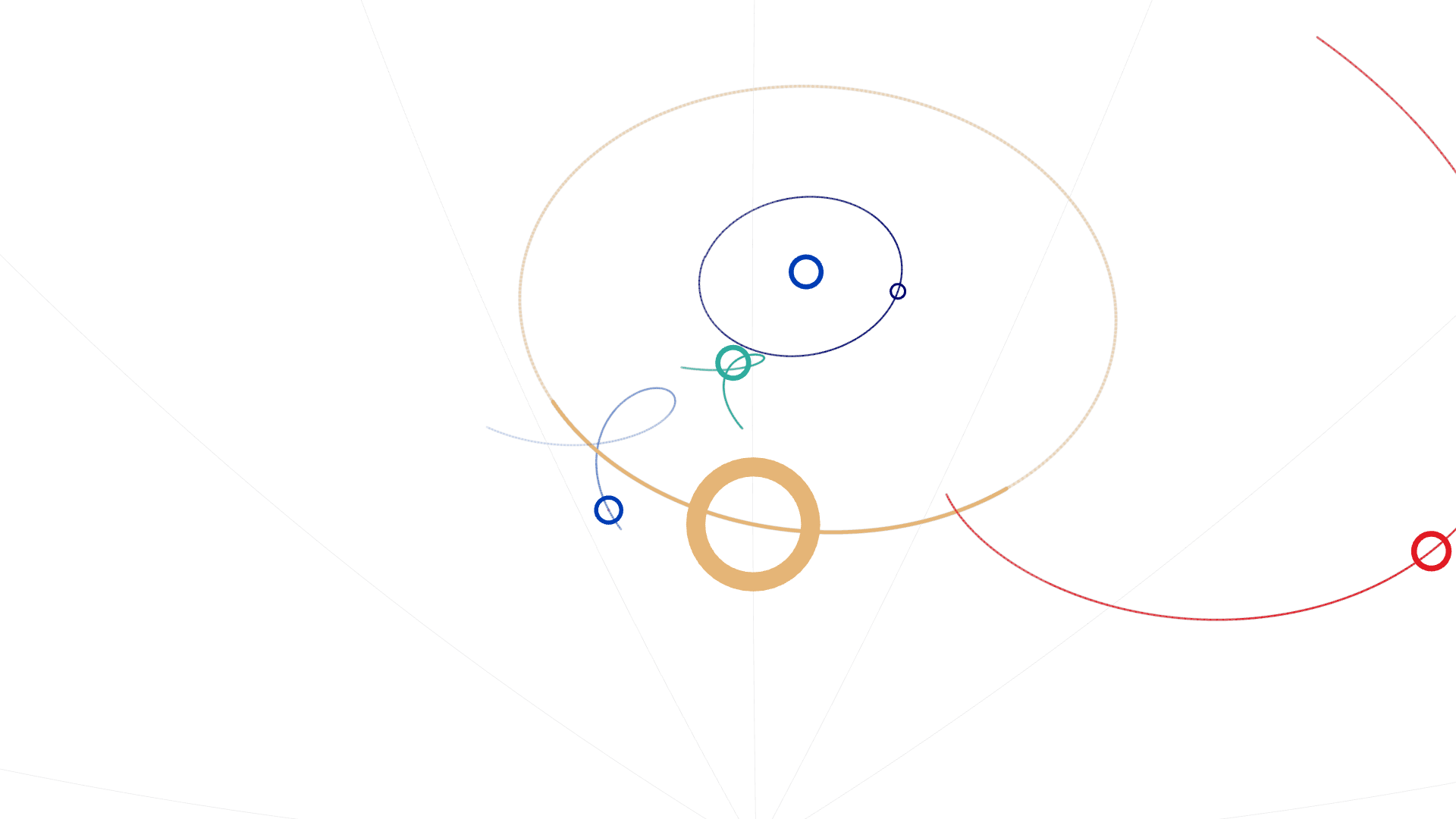
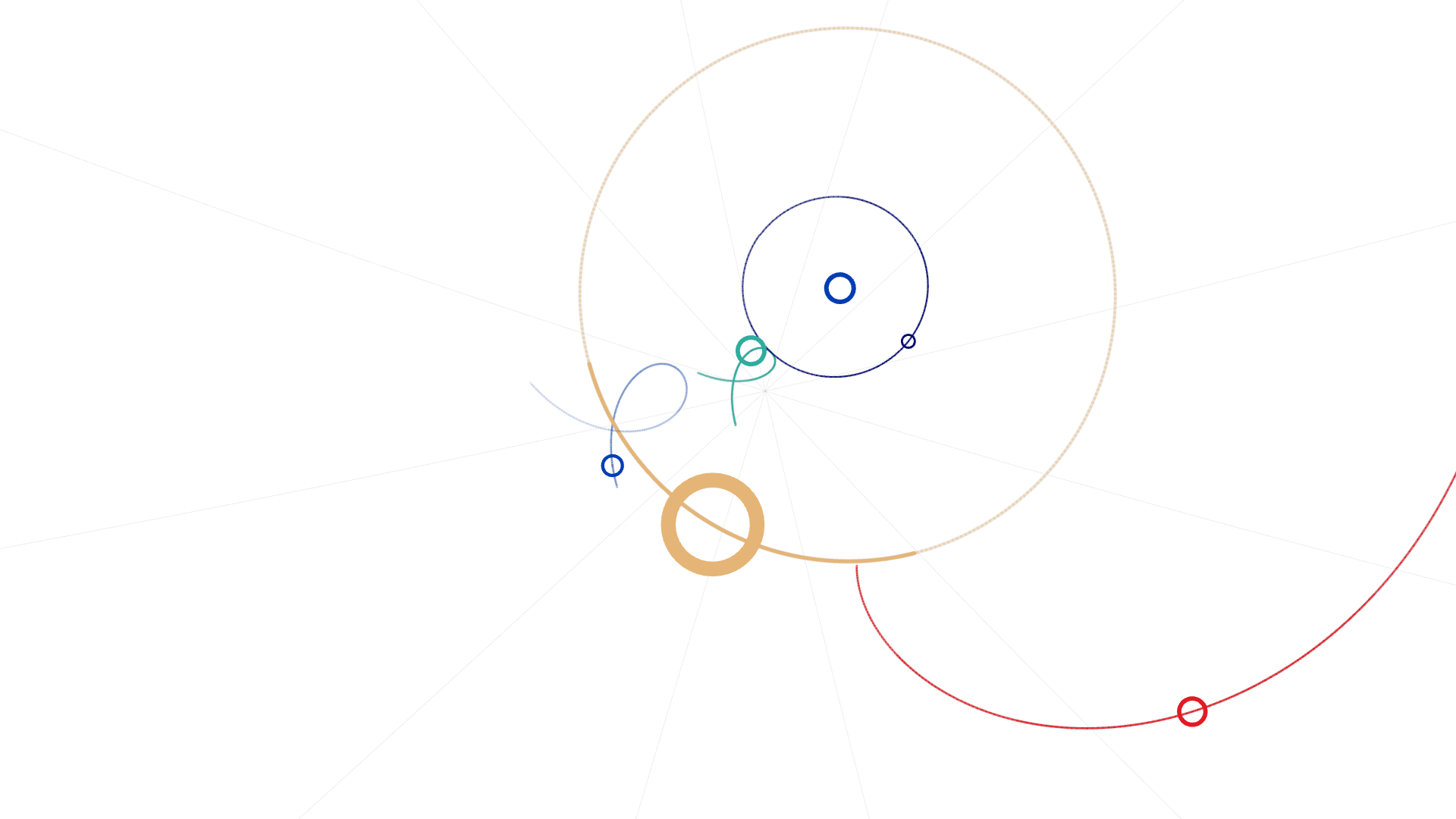
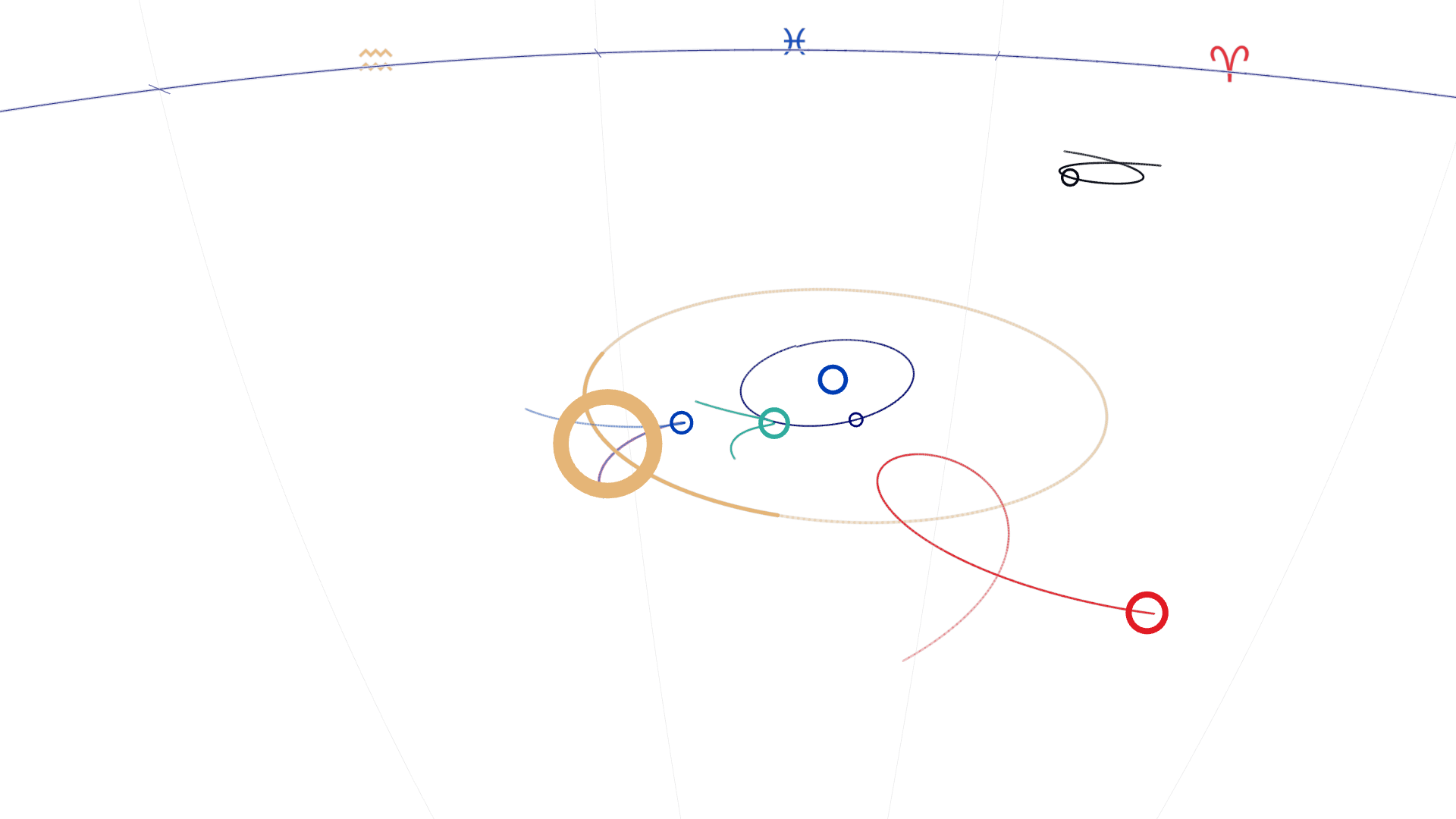
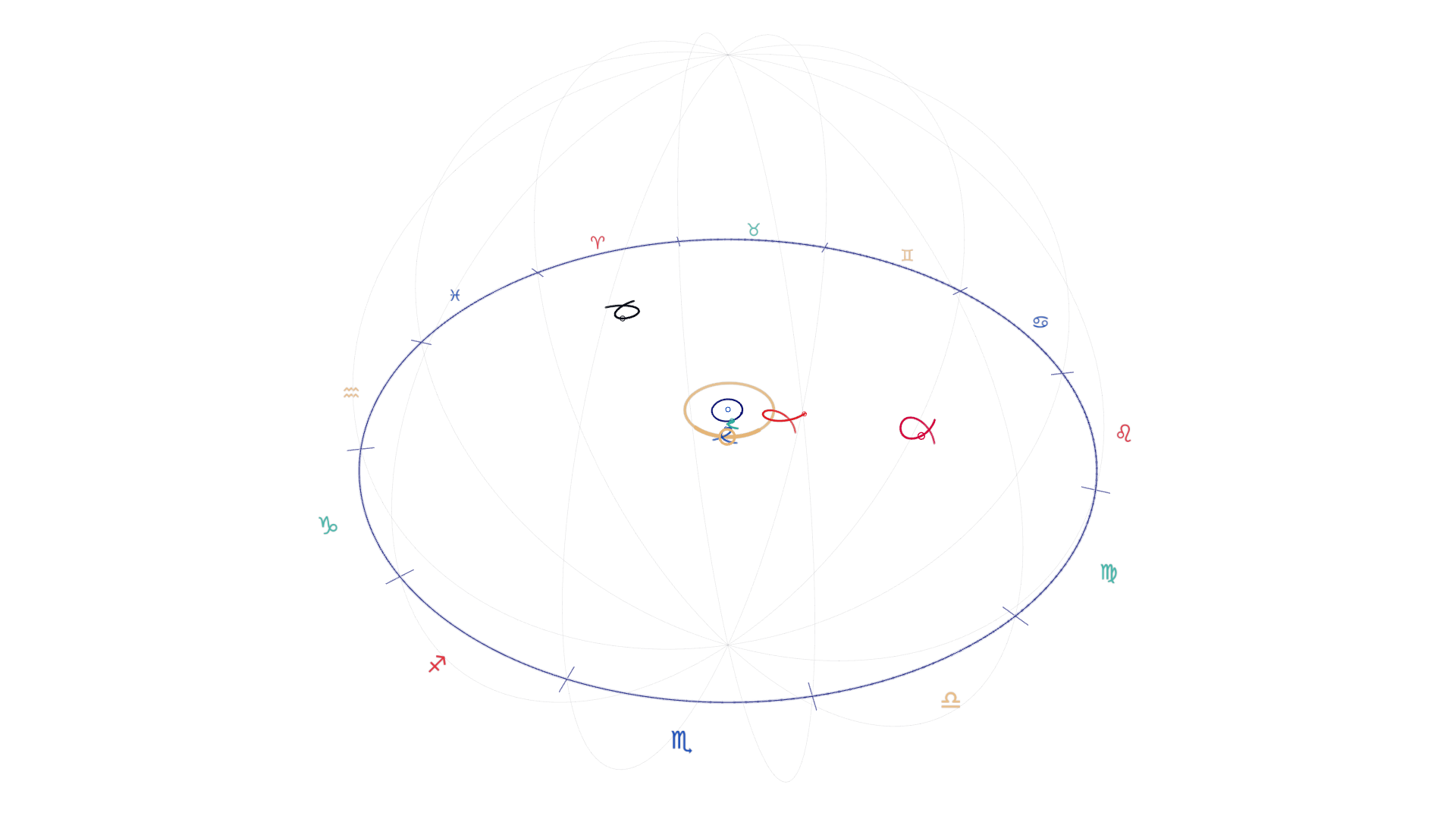
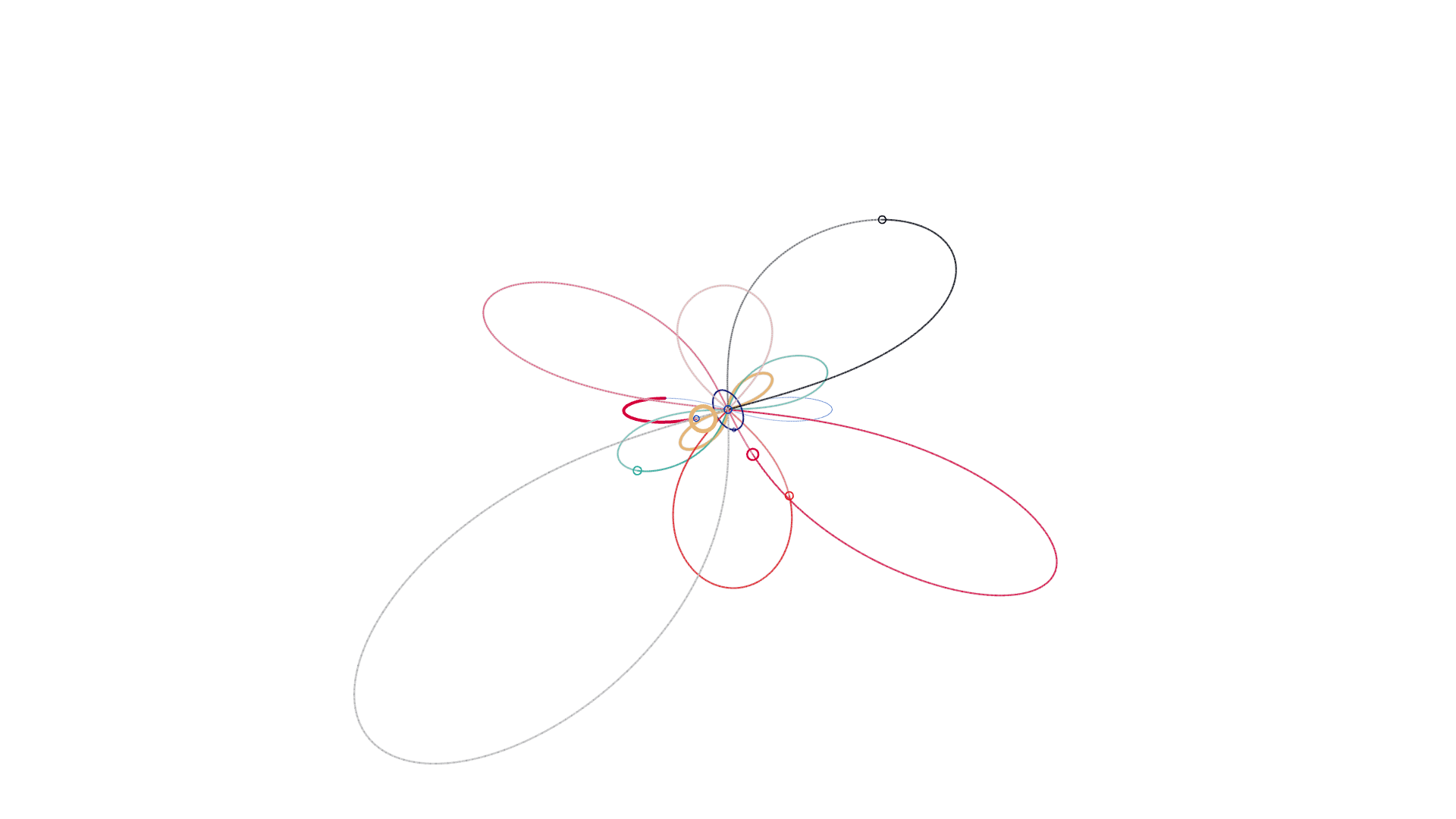
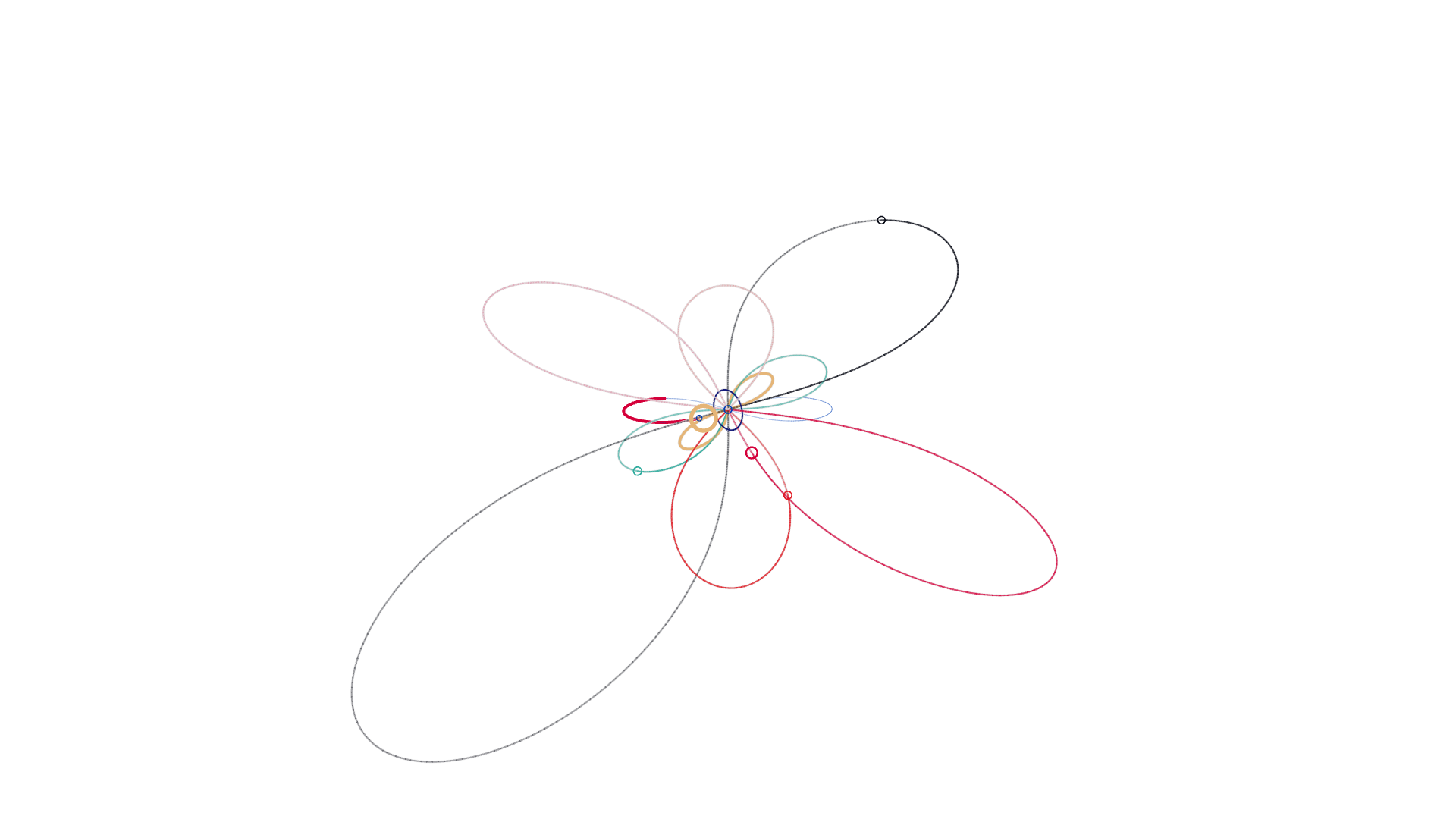
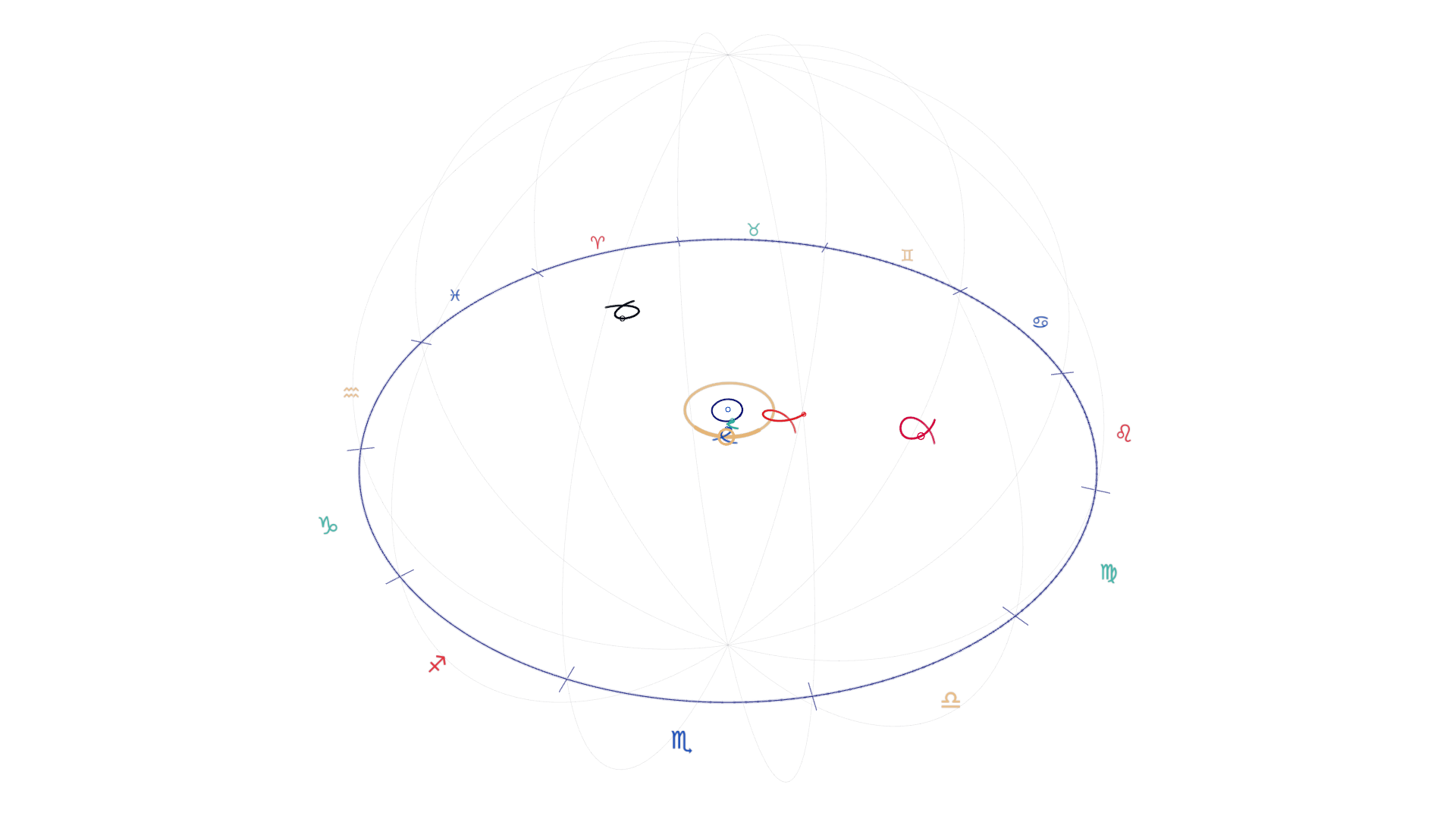
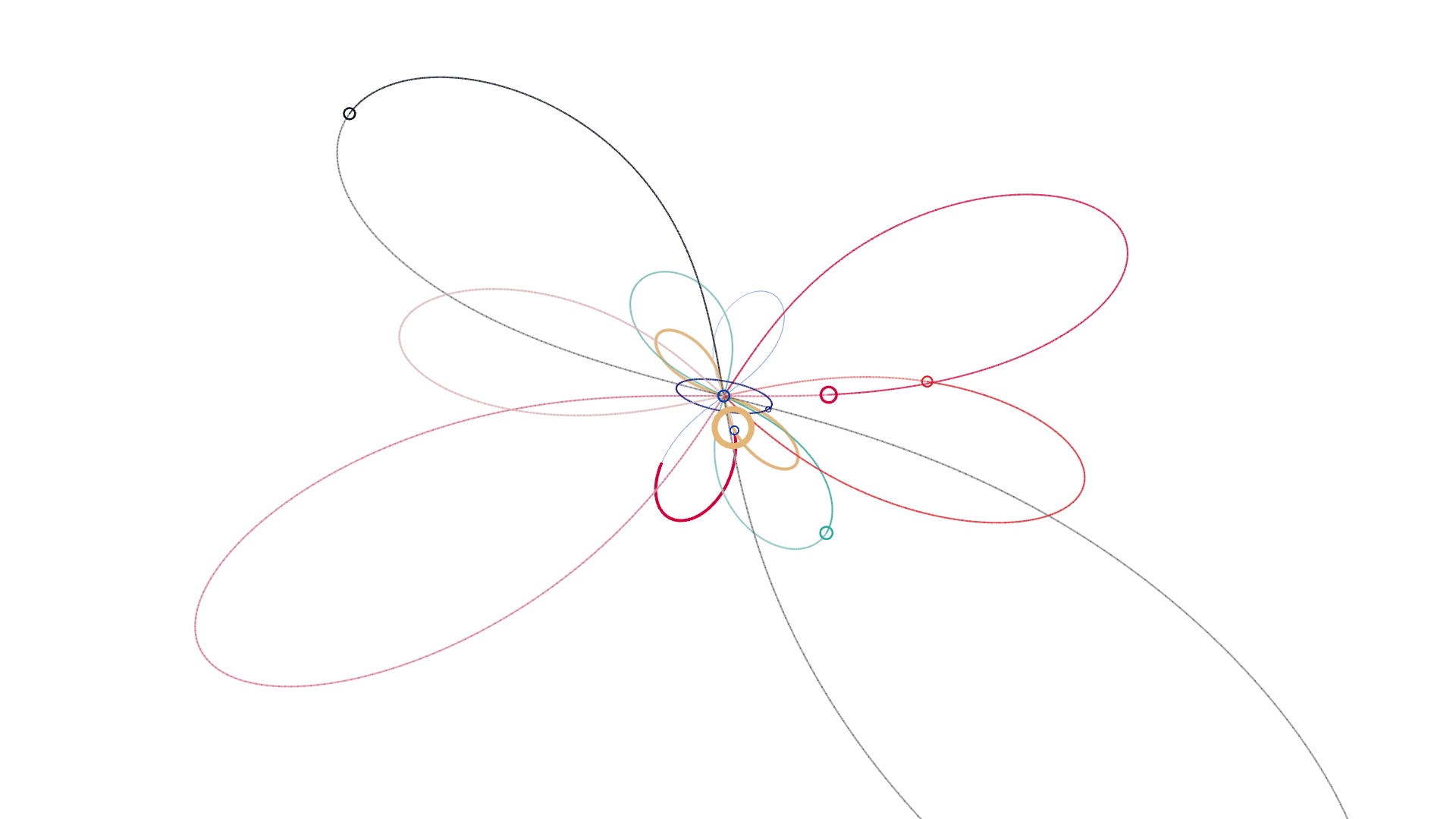
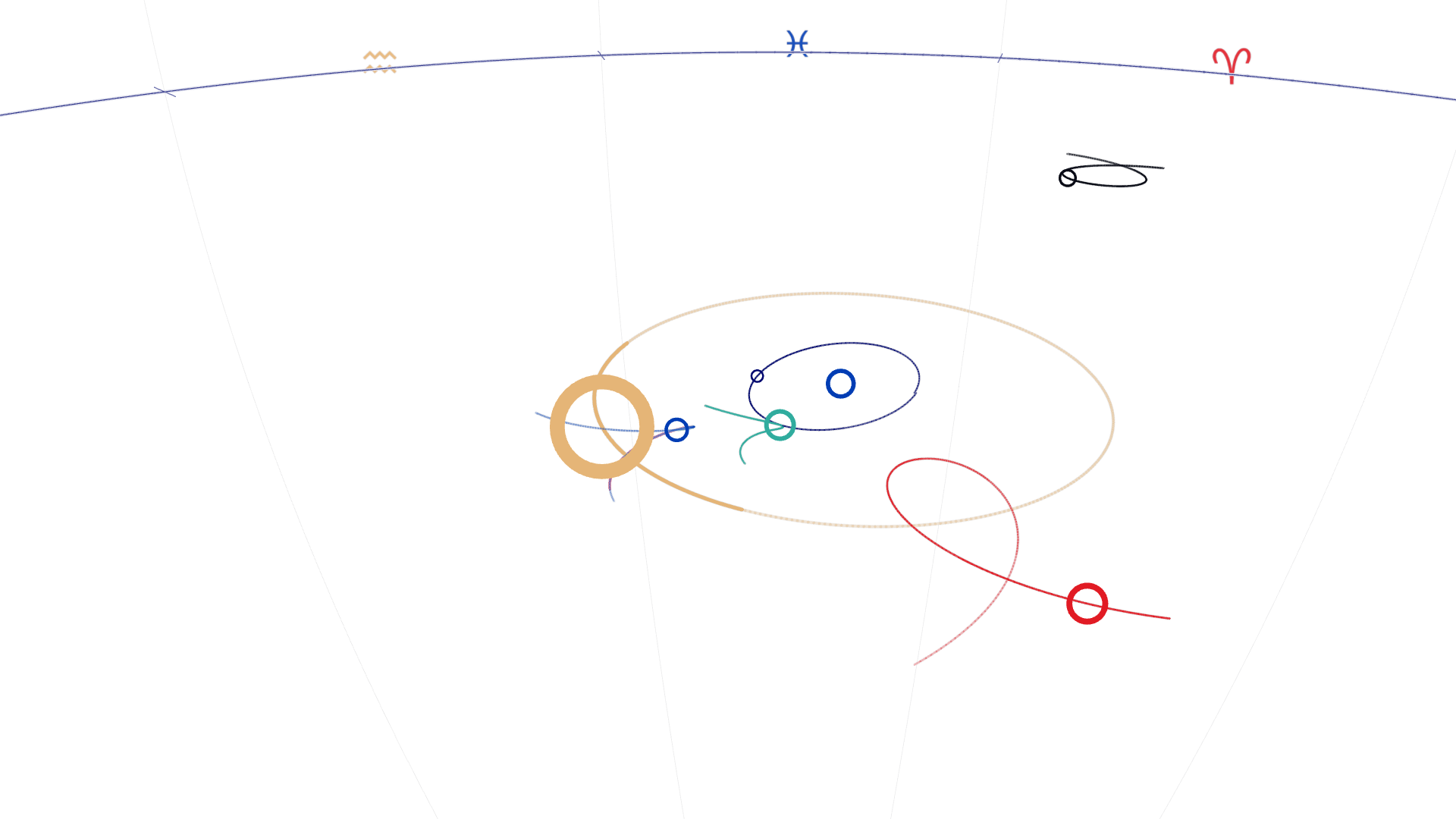
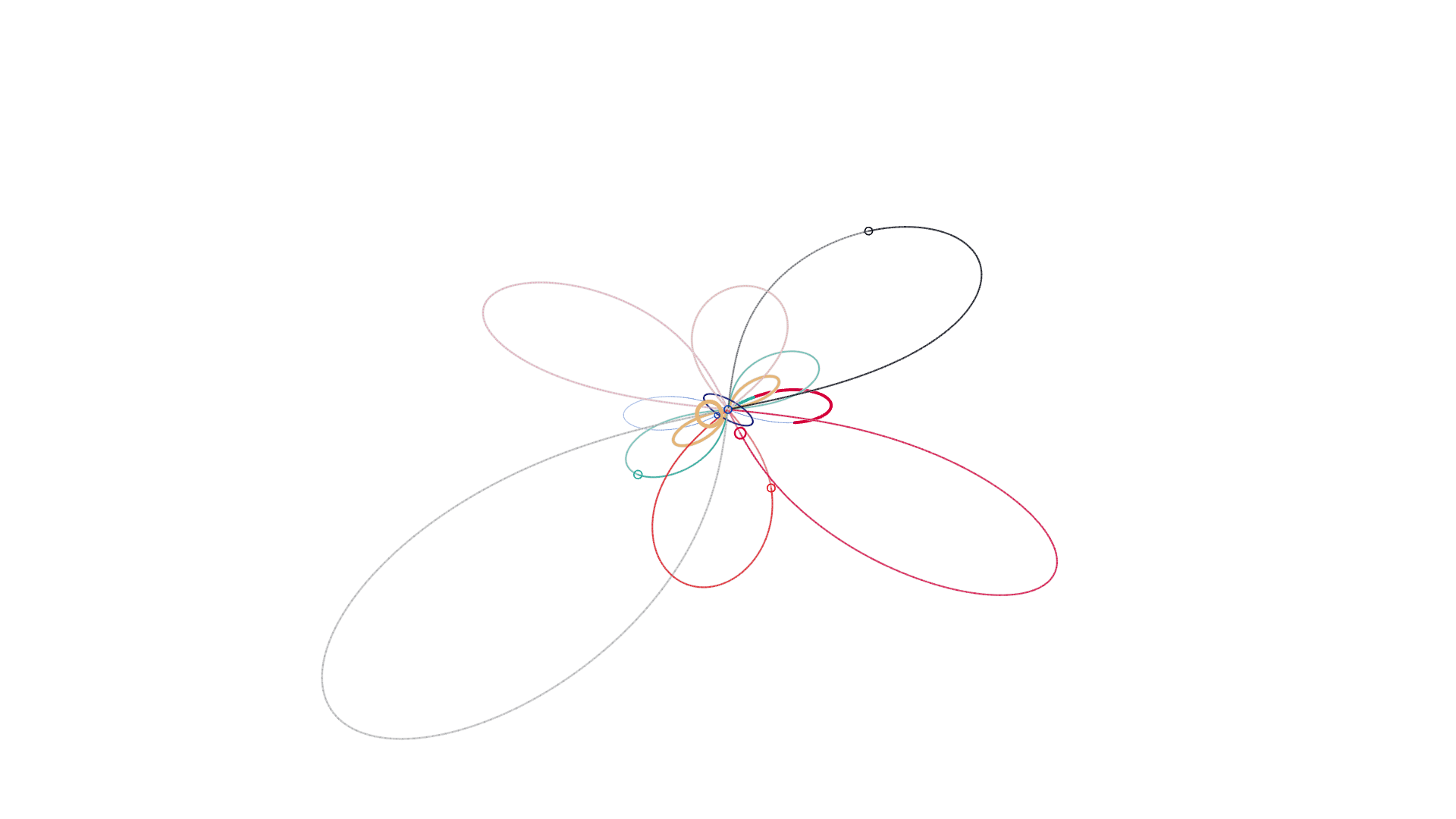
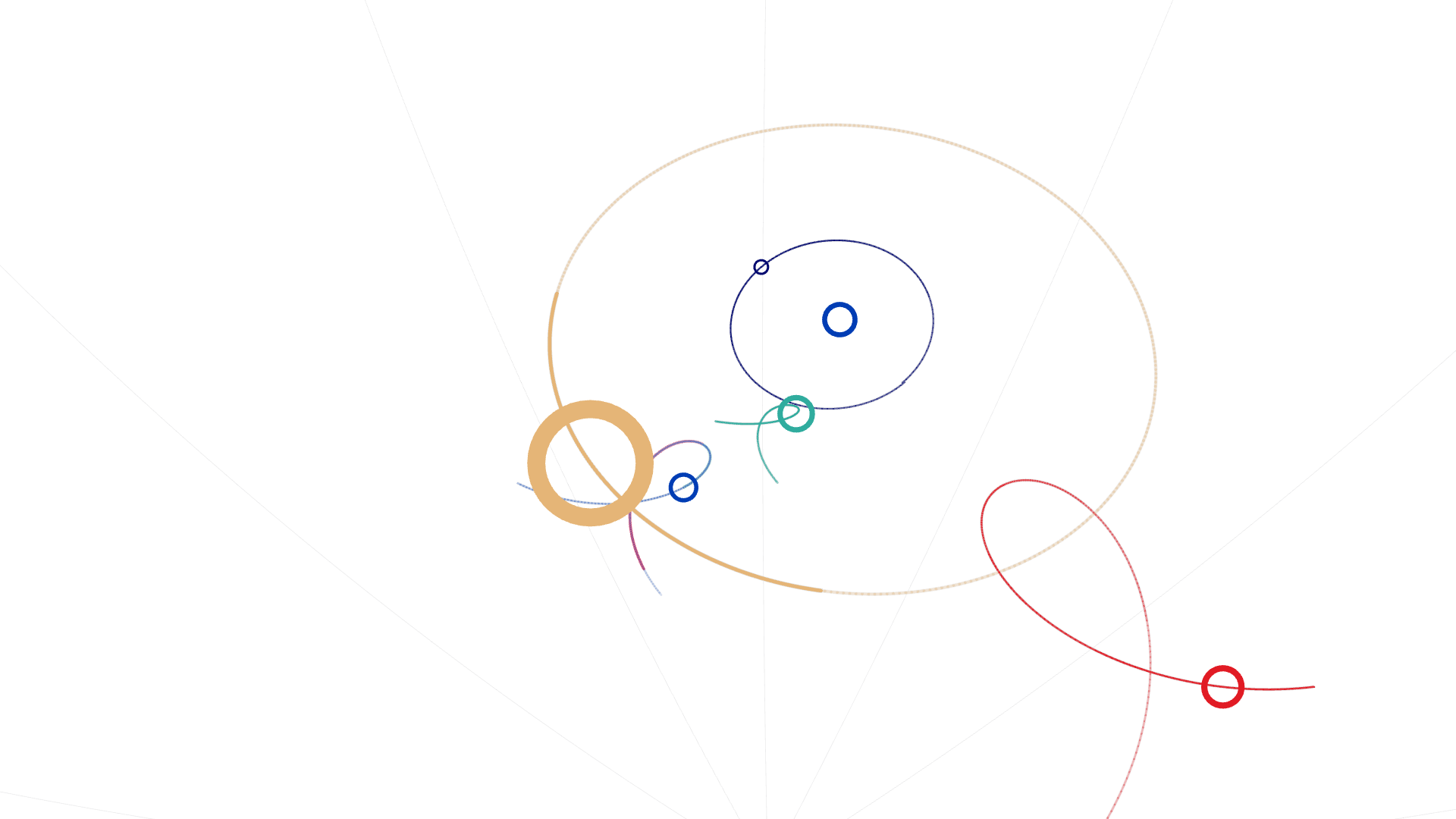
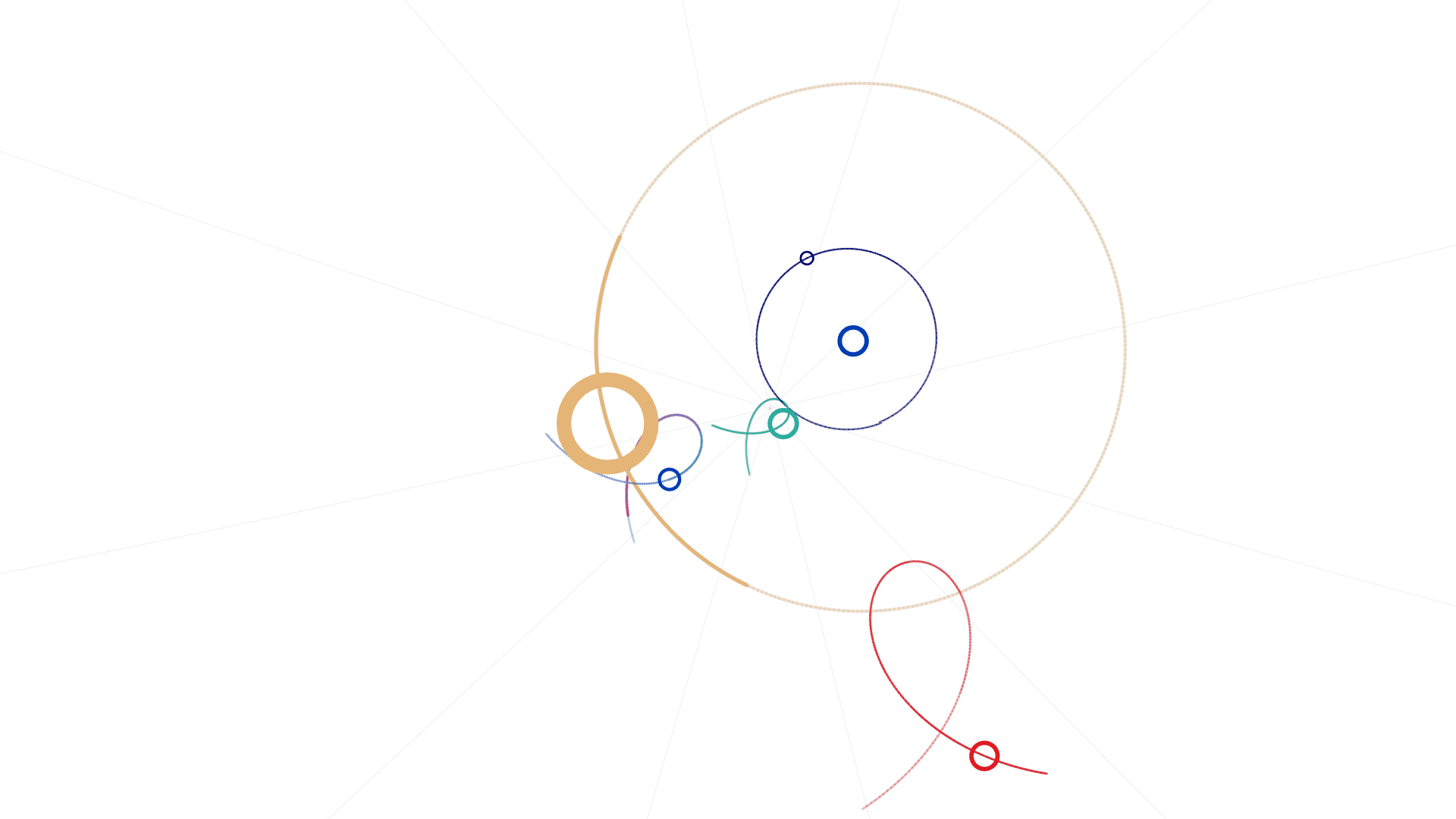
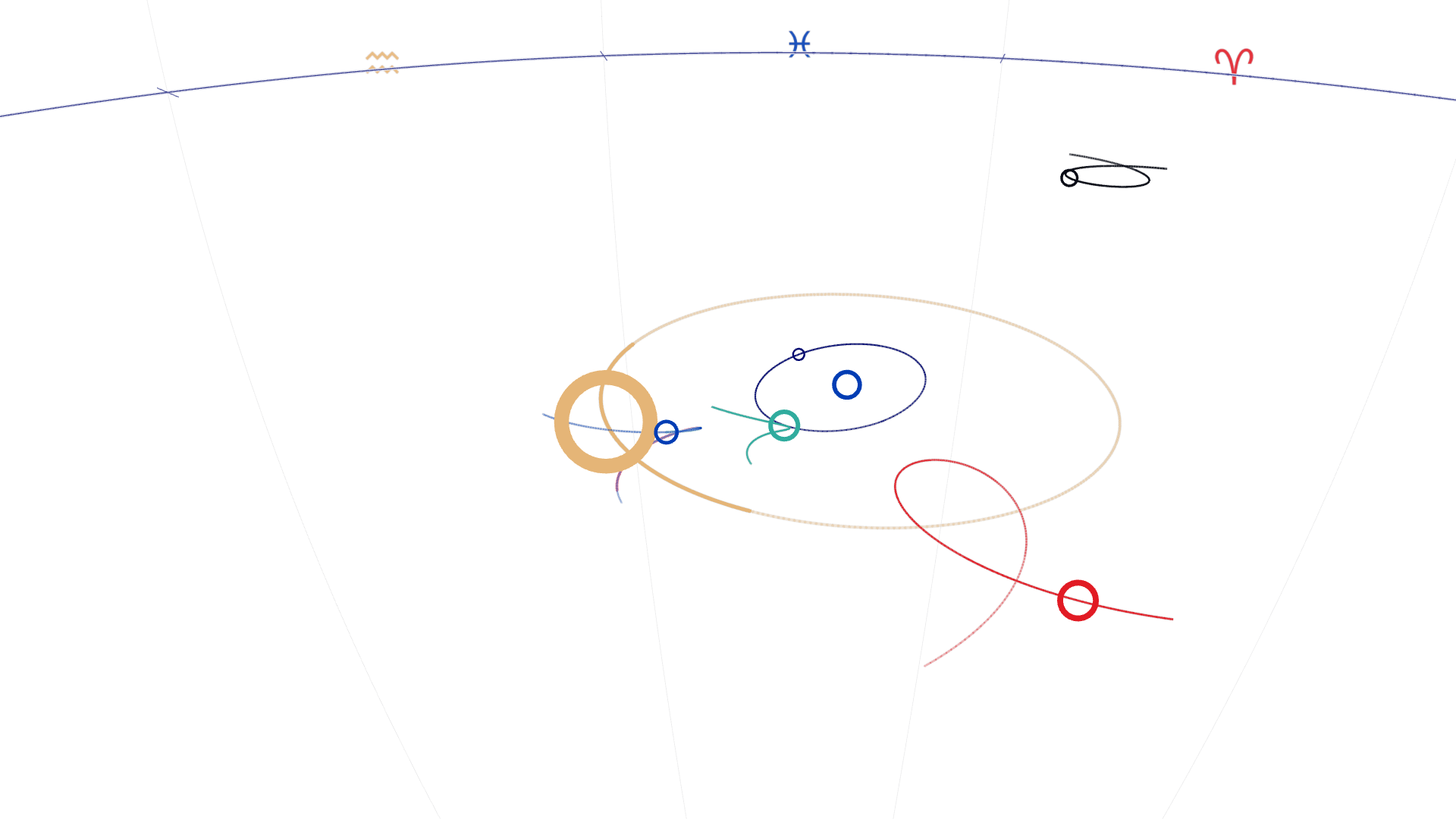
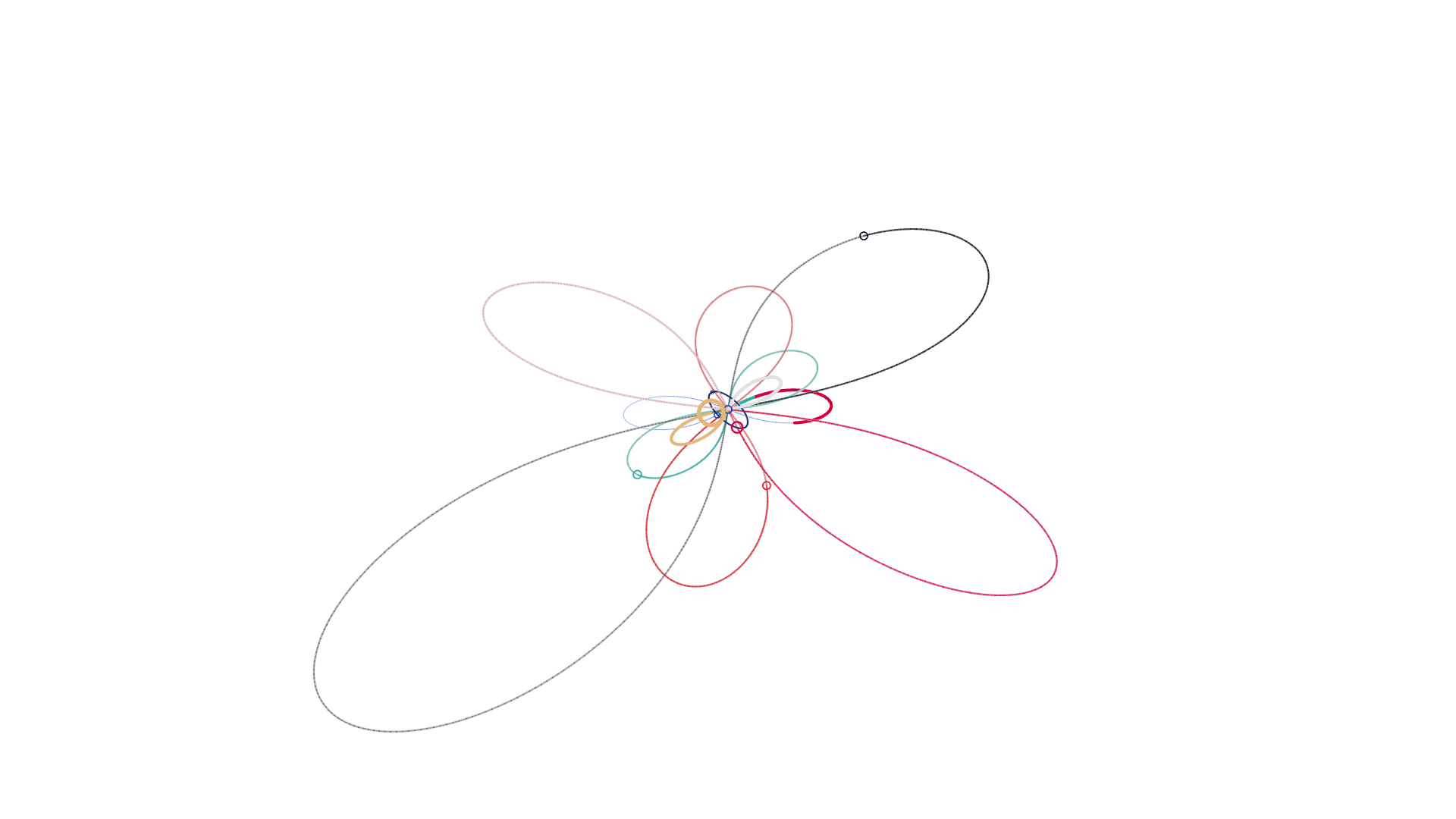
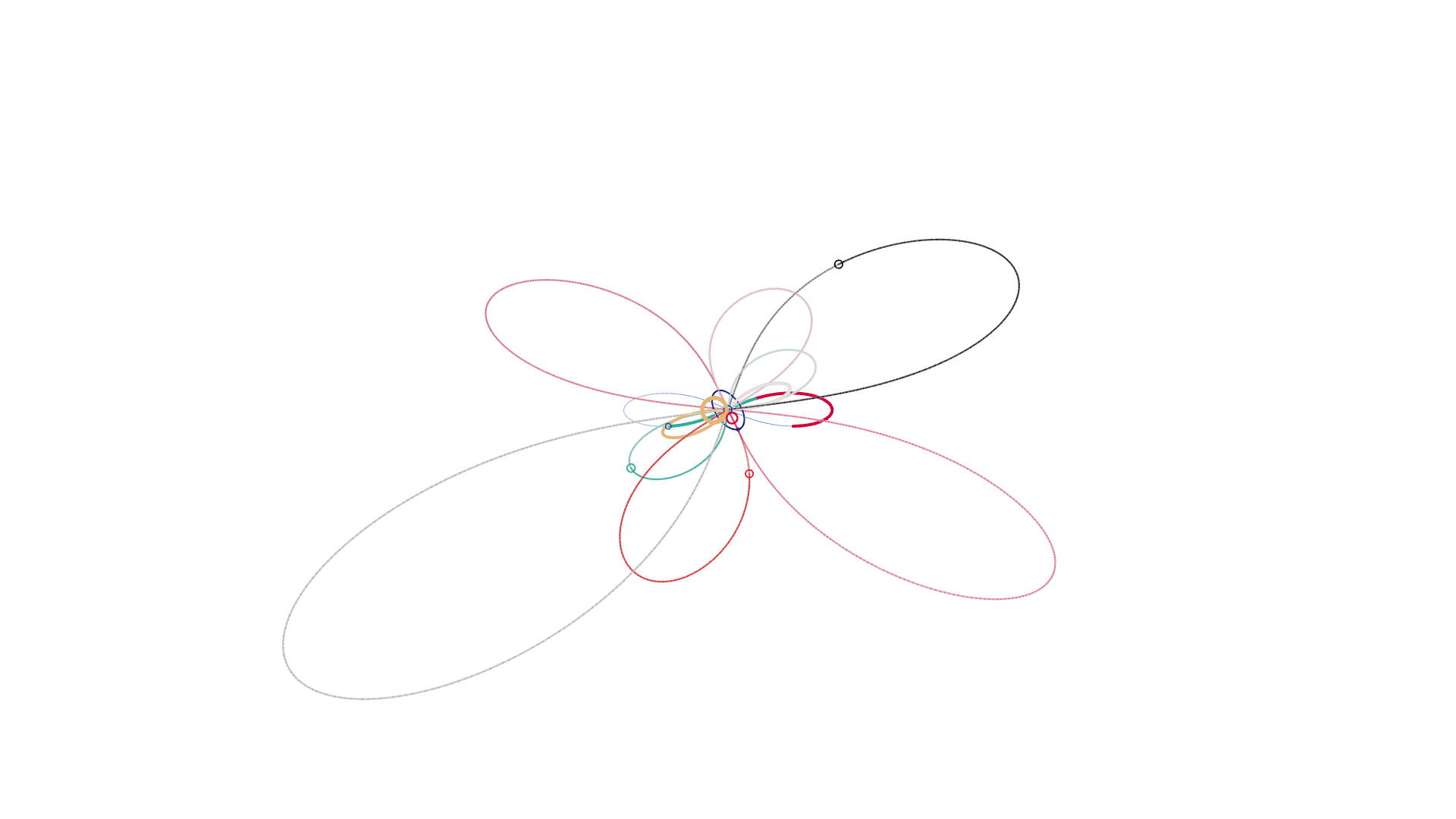
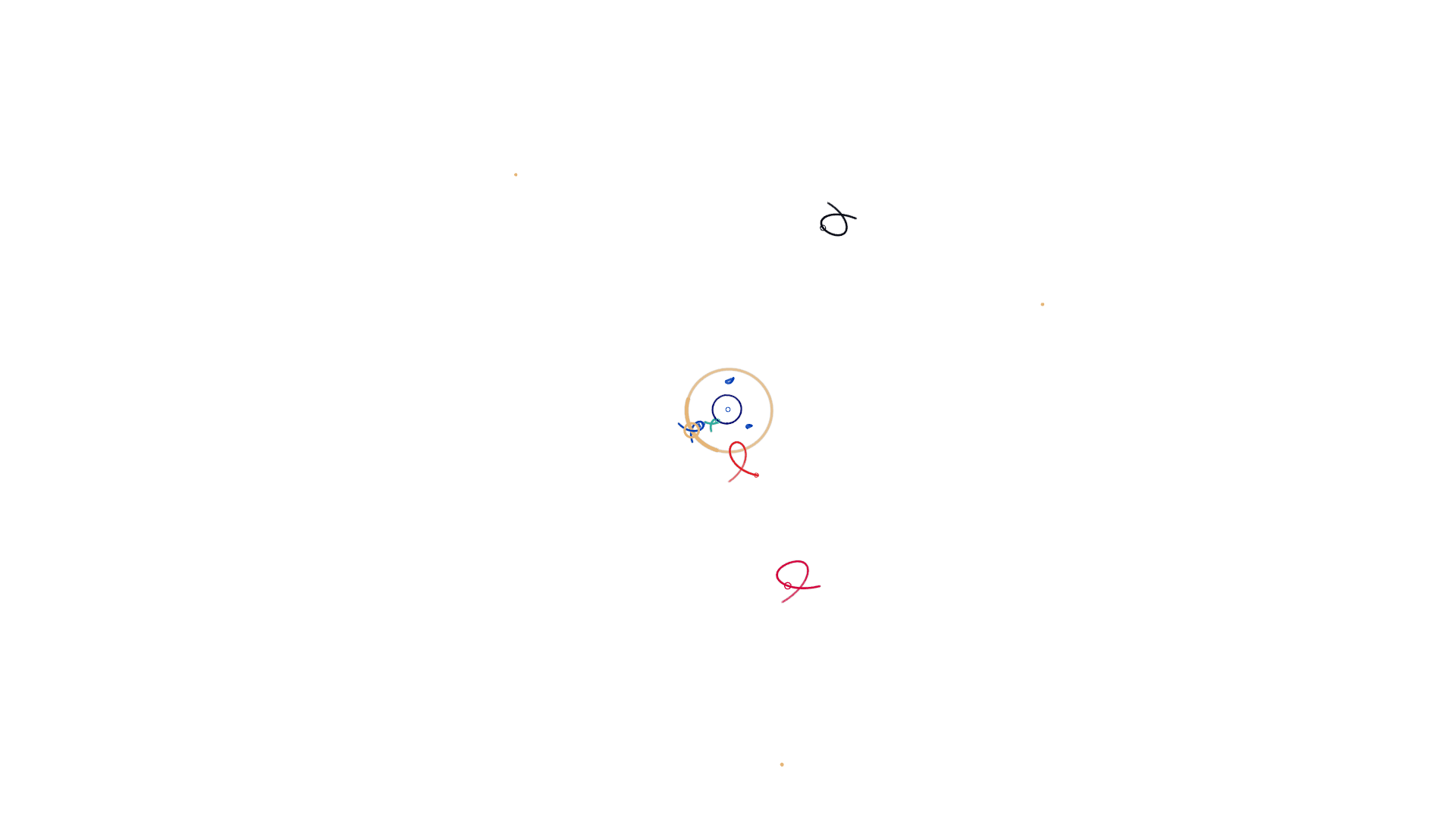
The native Macroscope gesture follows calculated apparent longitude. Distance is remapped into display radii, and latitude is exaggerated so the curve can be seen. The reconstructed lemniscate is a separate drawing for study. Neither gives a literal spatial orbit or an AU ruler.
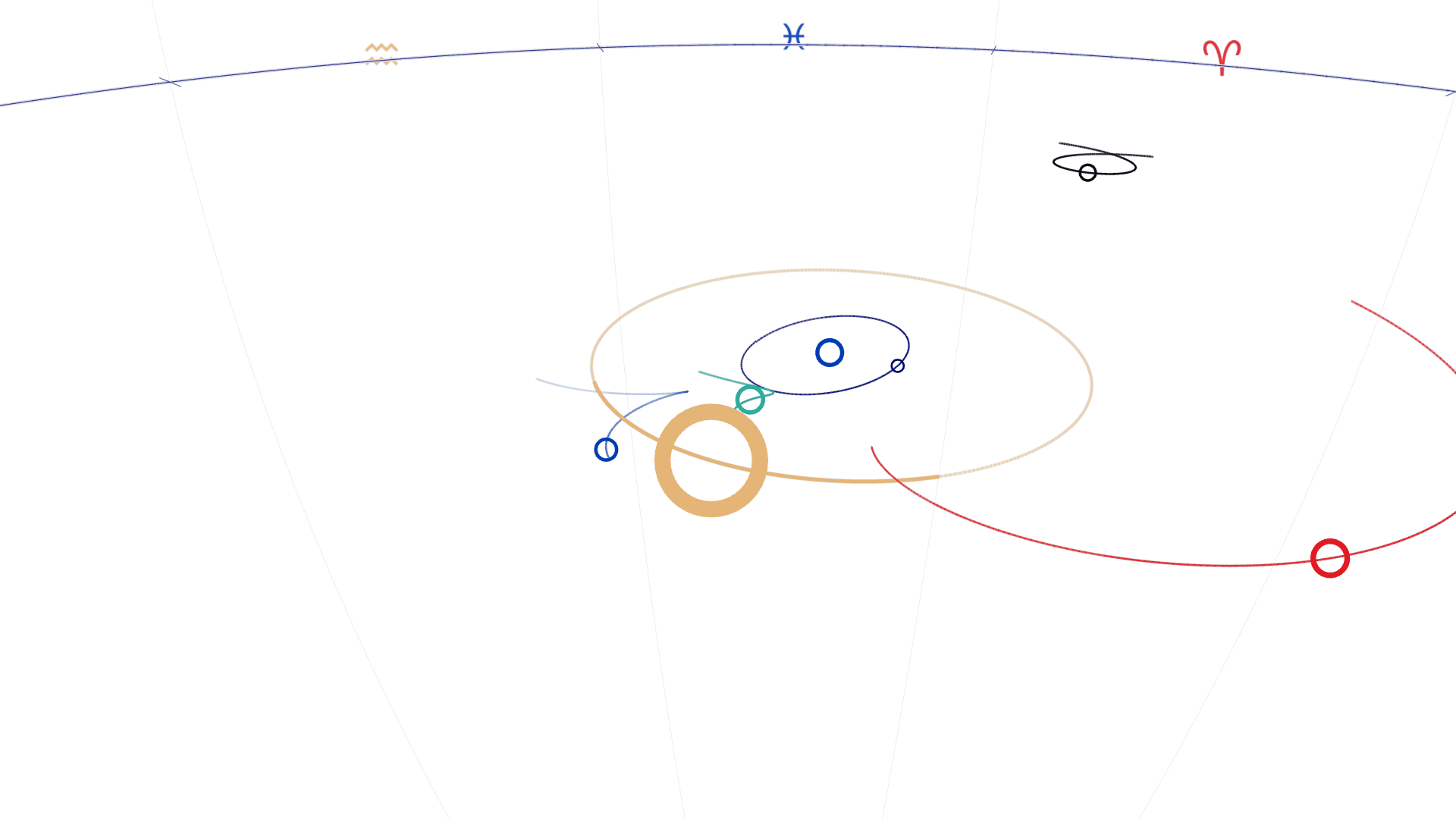
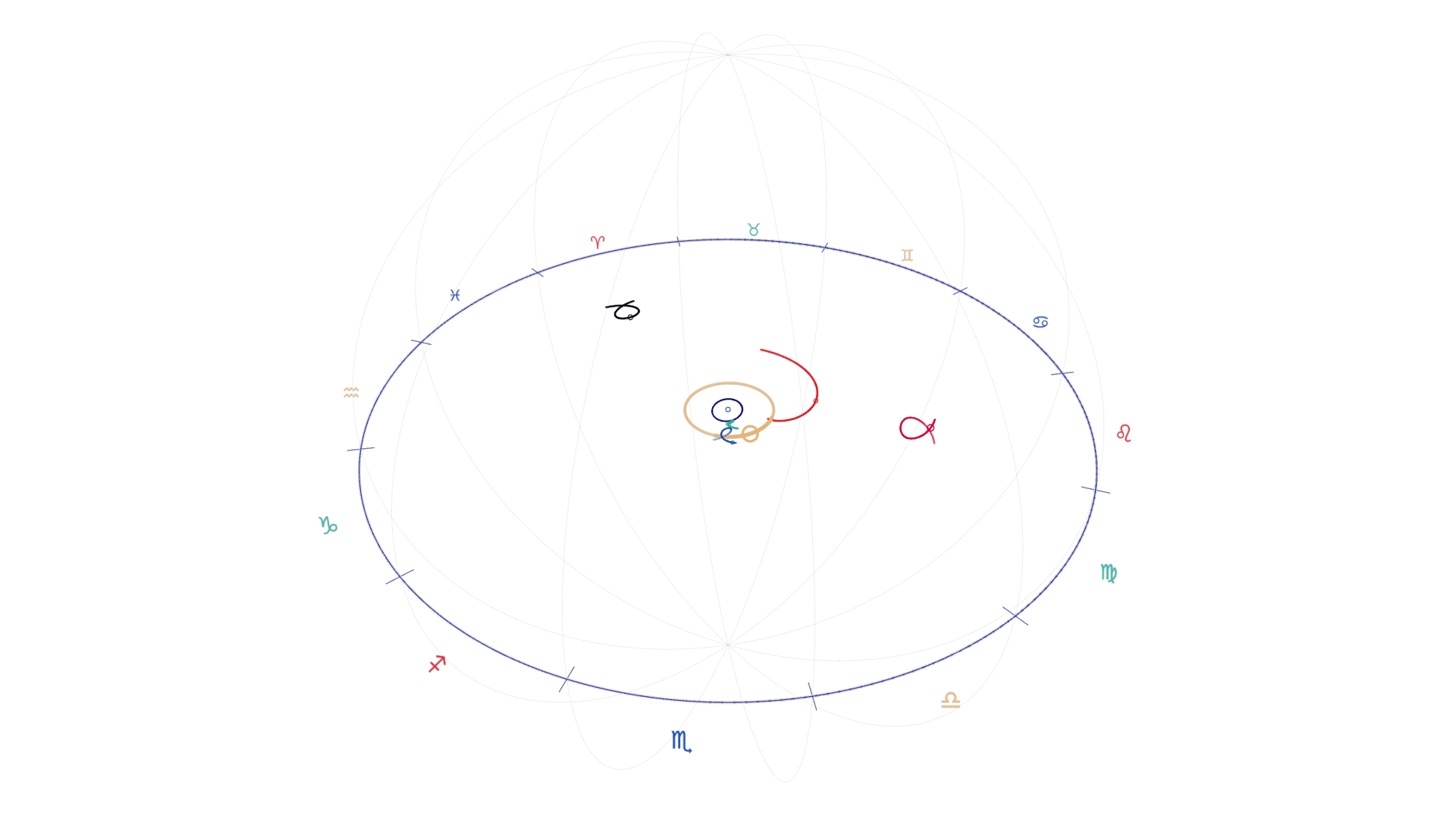
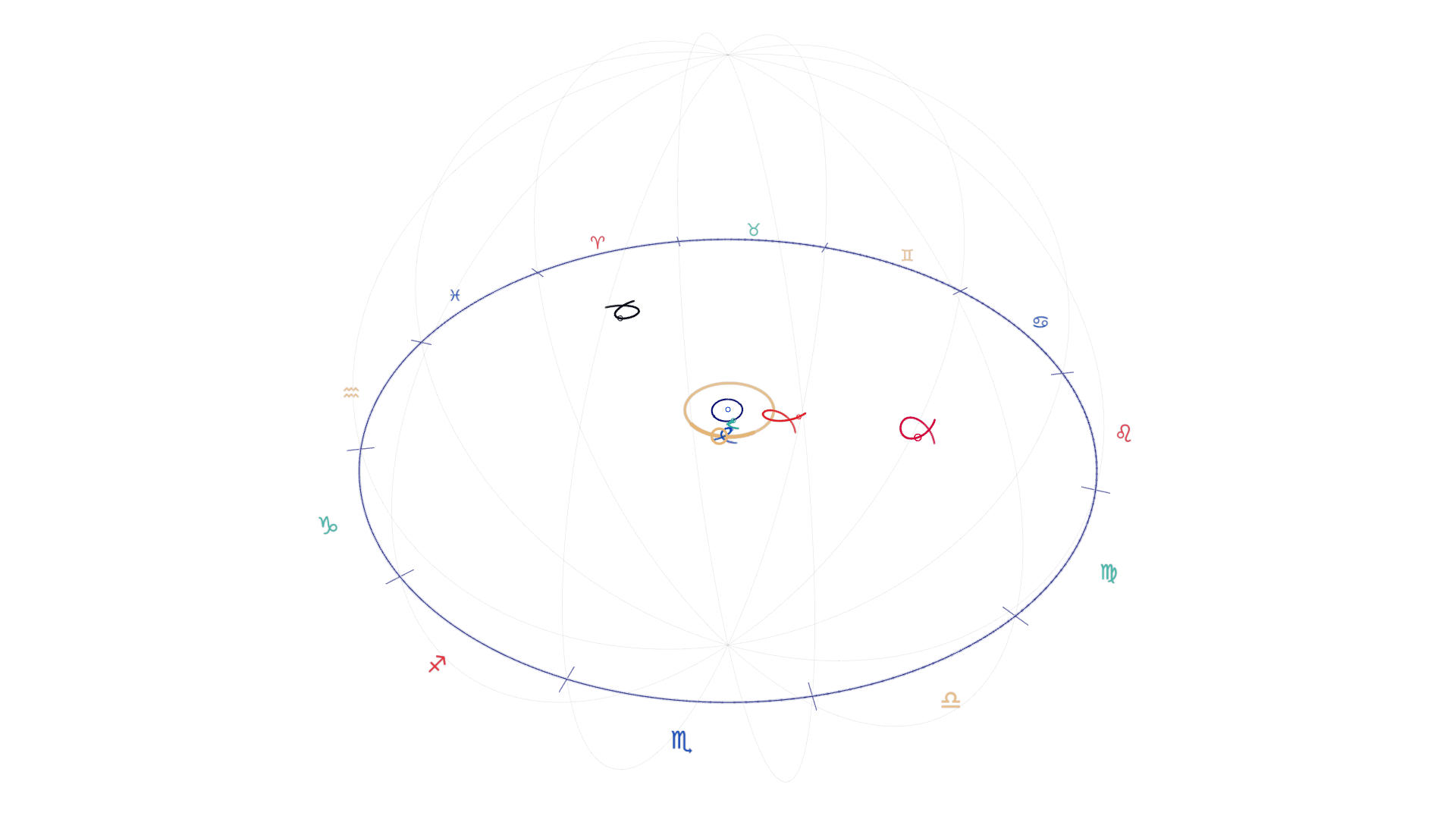
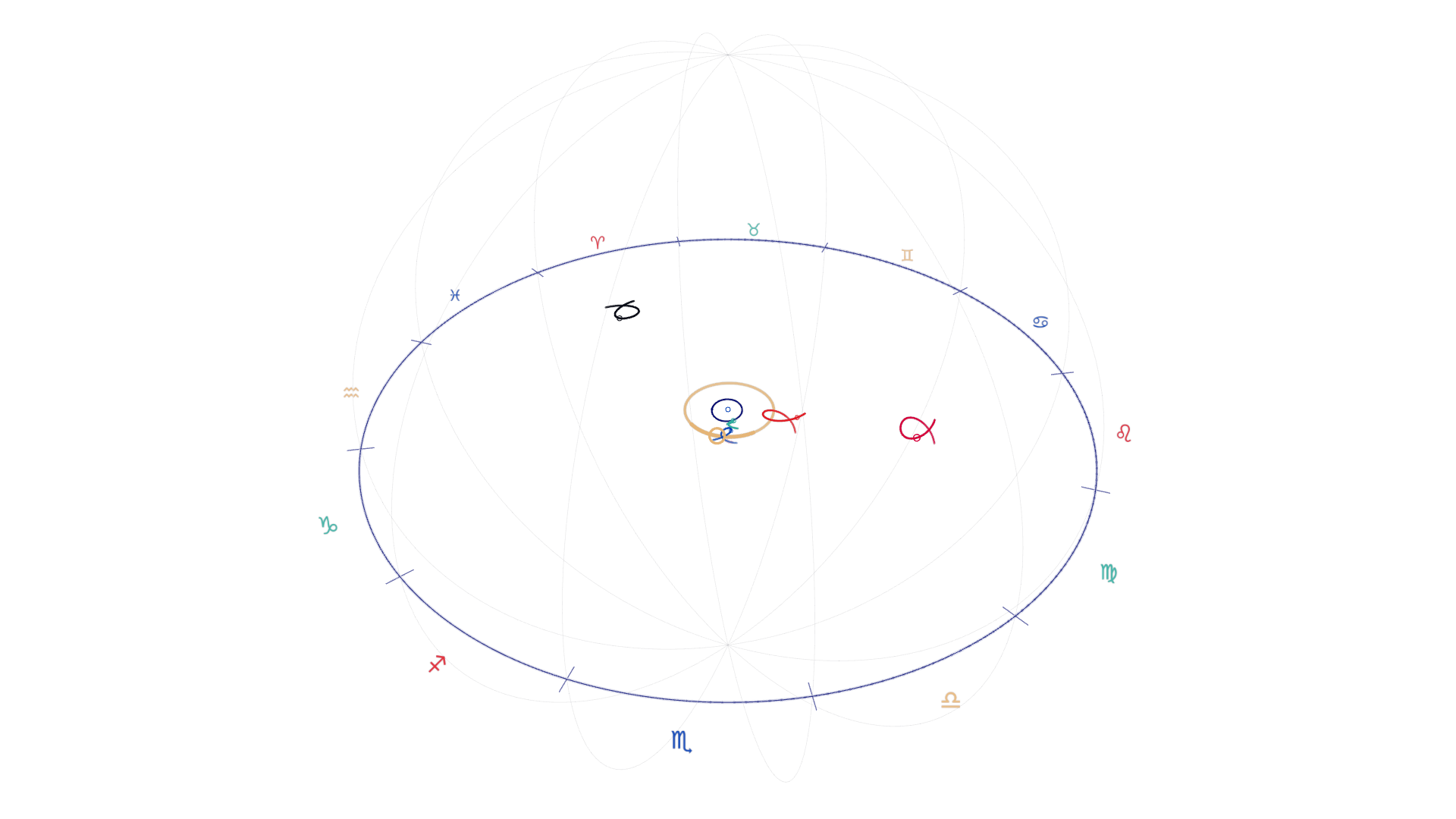
The zodiac ring shows tropical signs, which are twelve equal sectors distinct from the stellar constellations. A camera change can reveal a bend or uncover a planet hidden behind another enlarged body. Backward motion is measured in zodiacal longitude, while the direction a line takes on the screen depends on the camera angle.
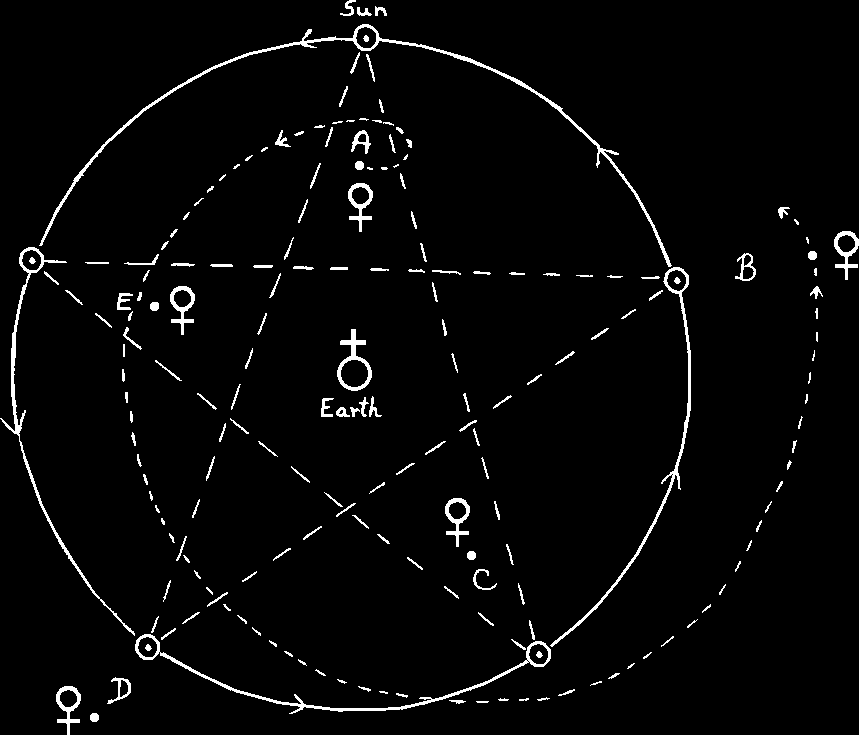
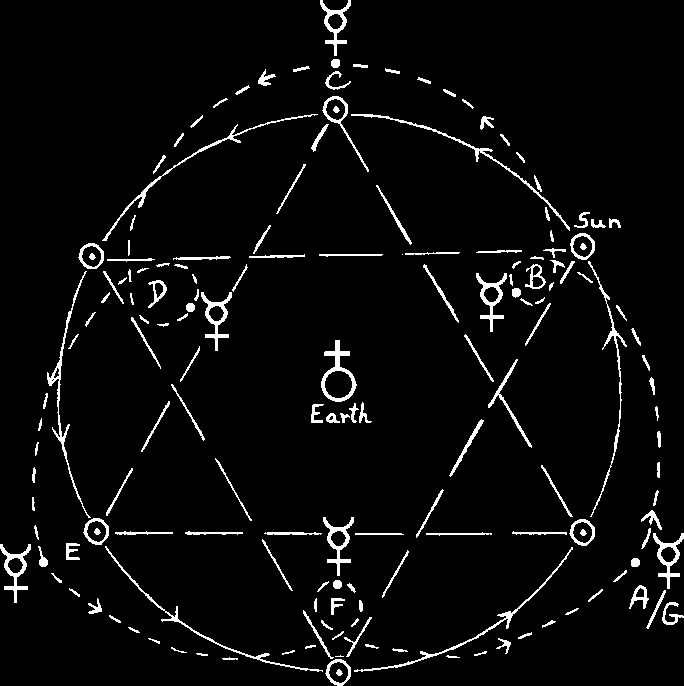
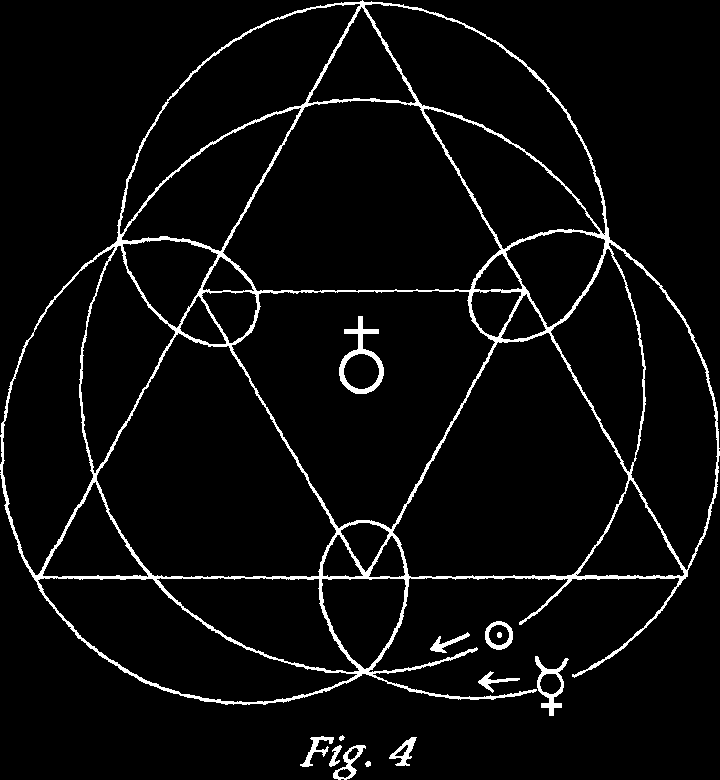
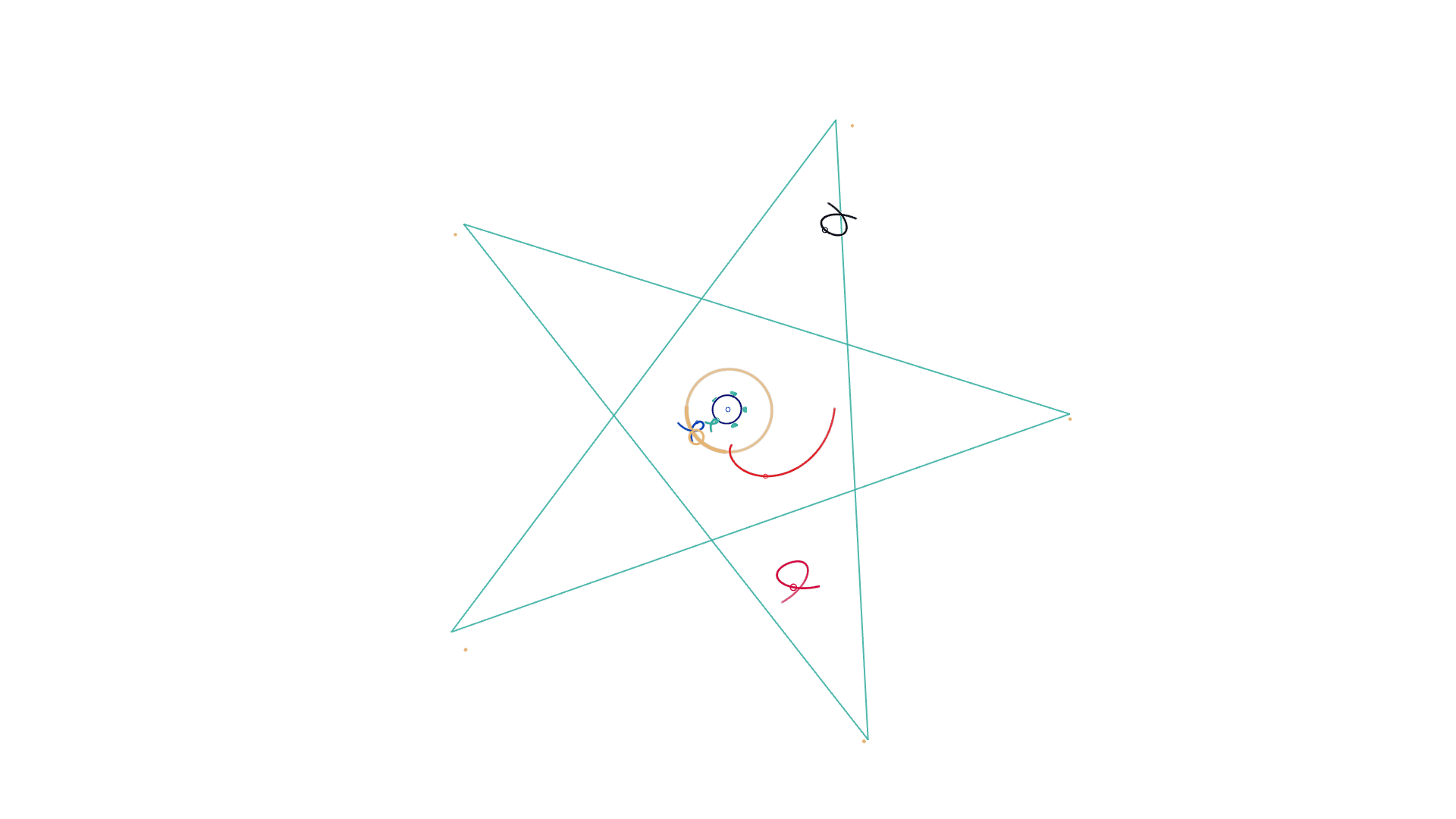
The autumn shadow arc covers part of a larger rhythm. Venus’s complete fivefold figure spans about eight years; Mercury’s paired triangles here span a calendar year. The straight lines join conjunction longitudes.
Watch the 2026 journey
The films follow the first crossing to the final crossing, with crimson descent and teal ascent. The multi-angle gestures keep the other planets in the scene and show the tropical signs in wide views.
Venus
Mercury
Both planets in sequence
The complete Venus pentagram
Across about eight years, Venus joins five successive inferior-conjunction longitudes, and the straight lines that connect them are a rhythmic construction.
Retrograde gestures in the reference drawings
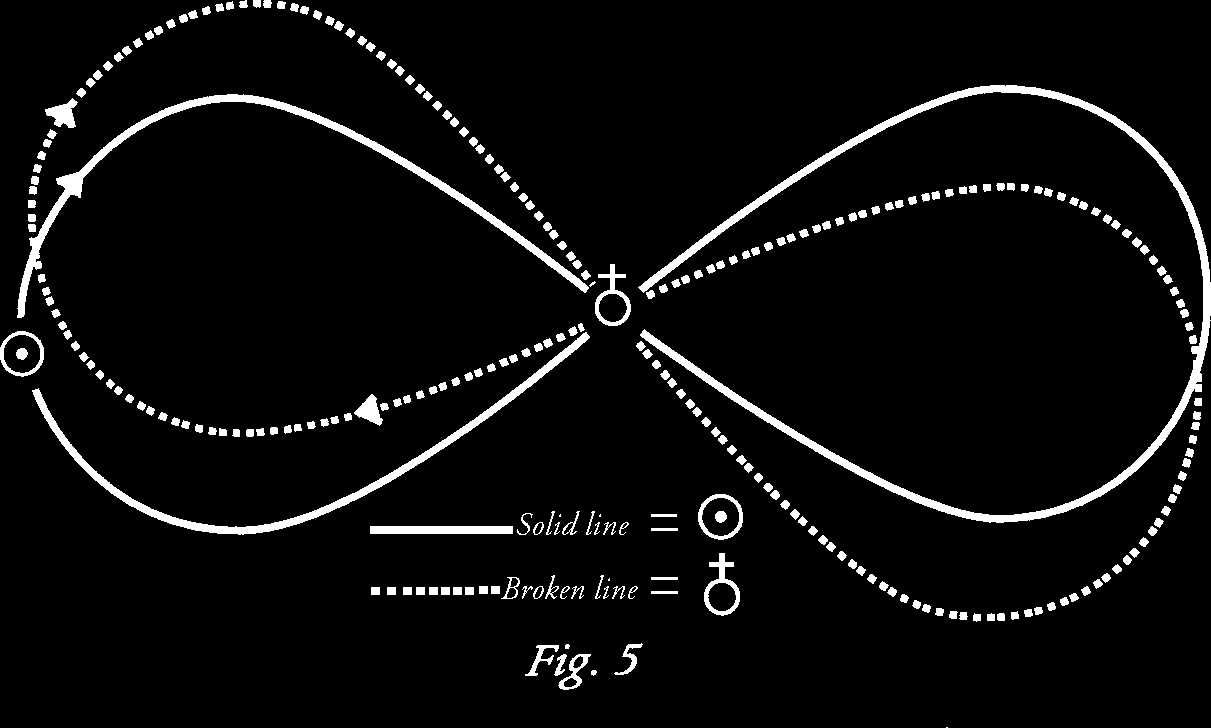
Venus: every moment, from four viewpoints
Open a moment to compare its four live gestures with the reconstructed lemniscate. The slowing and forward-motion frames are study snapshots taken between the stations, and all times are given in UTC.
First crossing ·
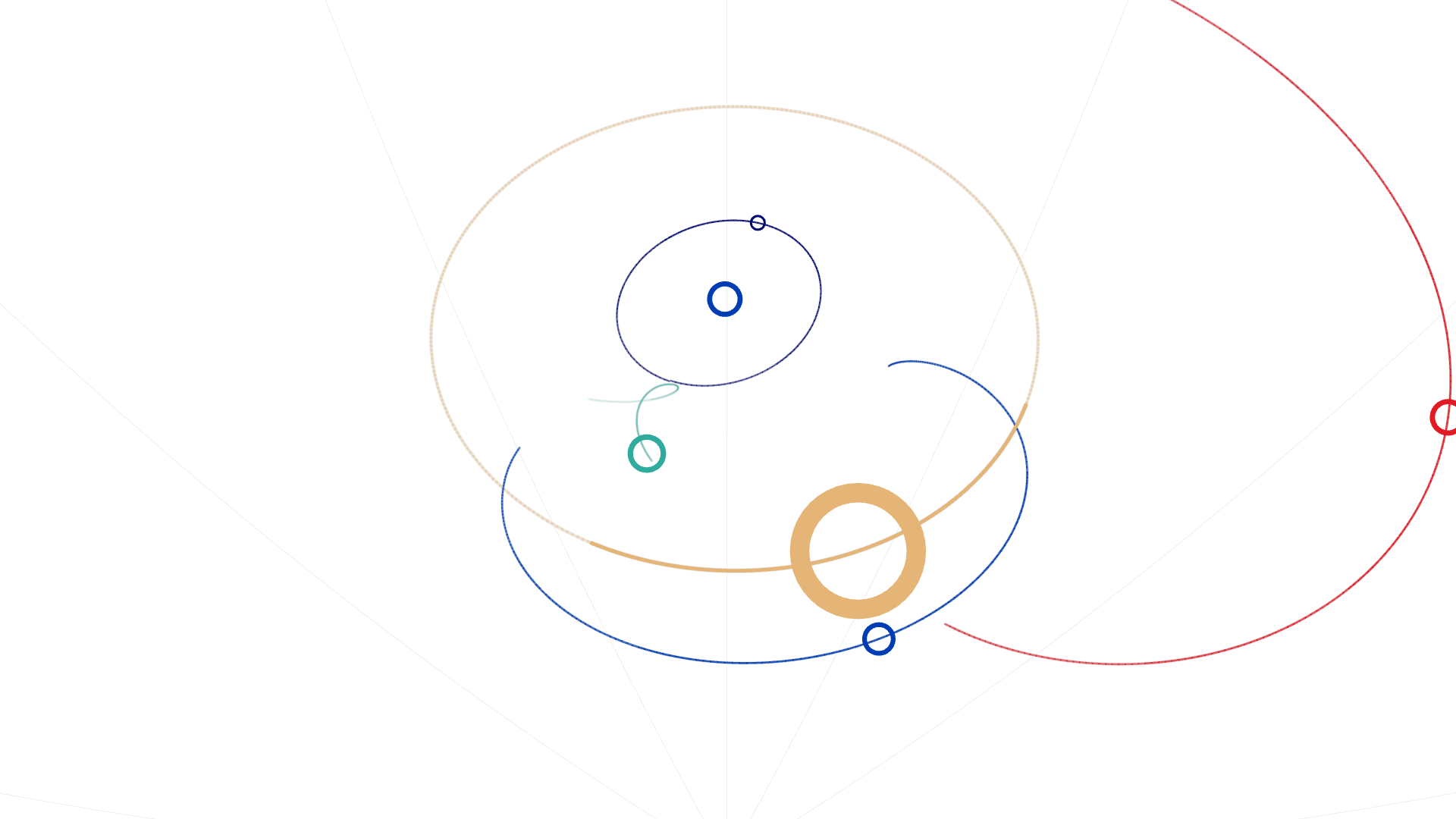
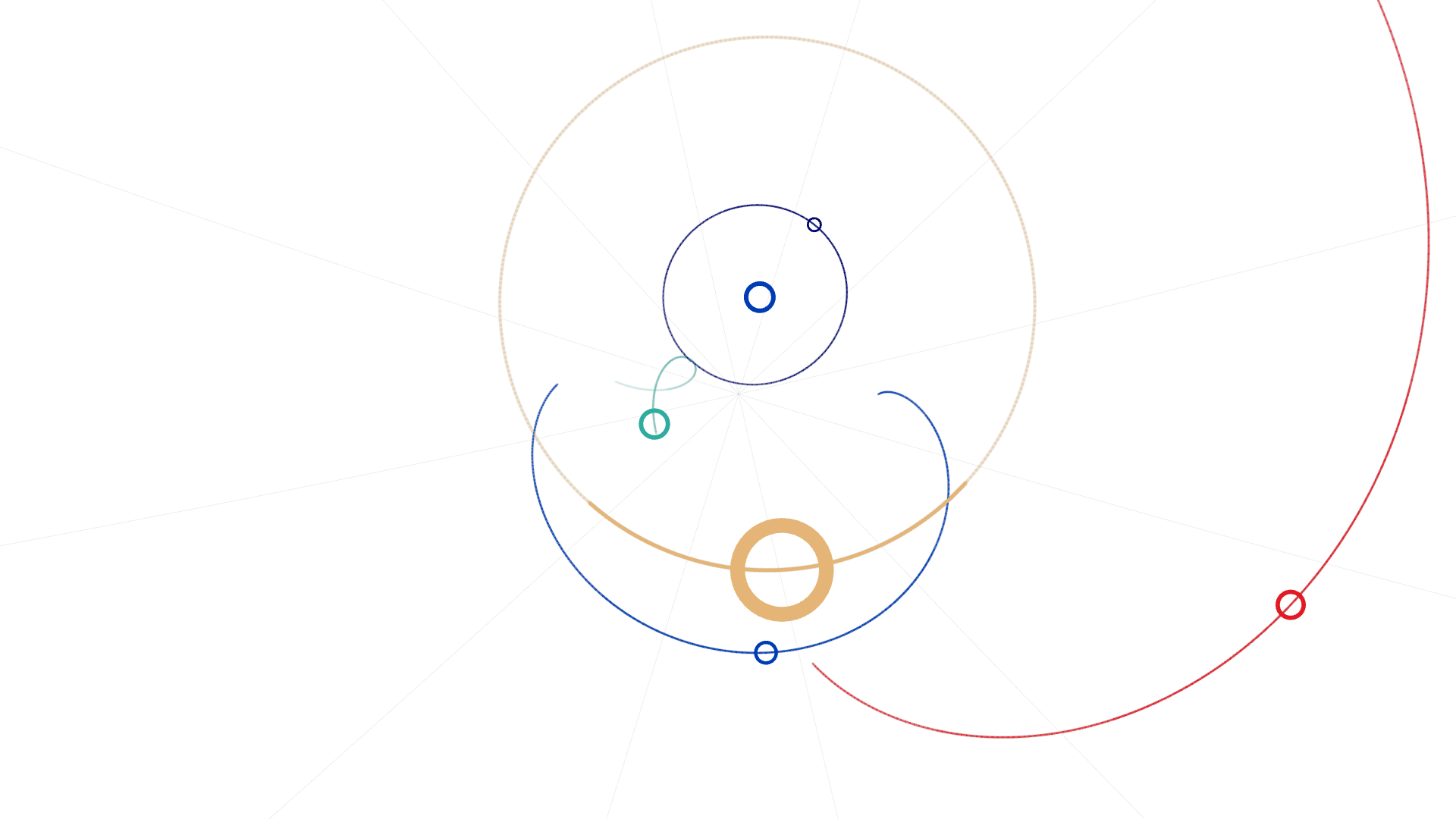
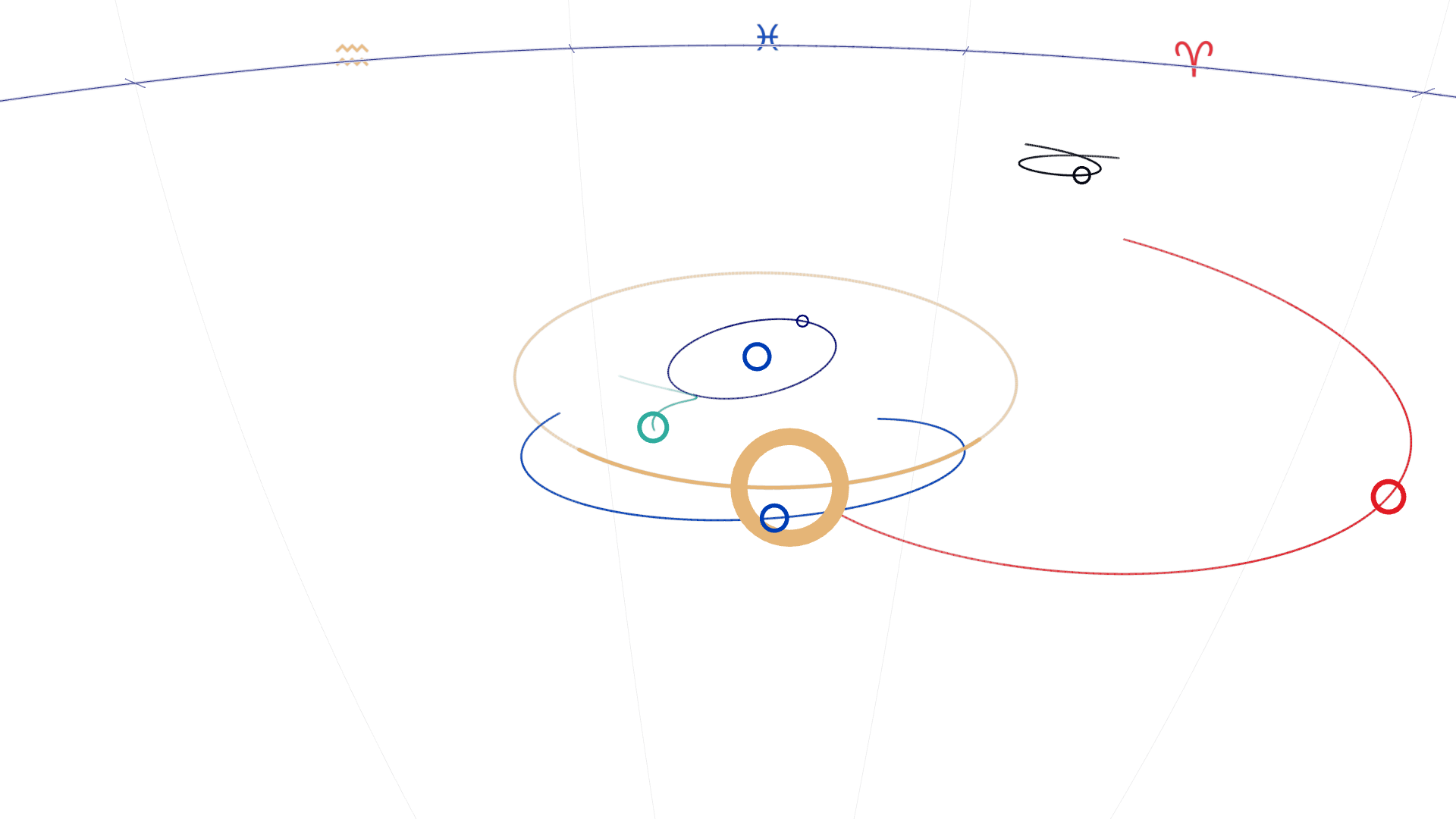
Slowing-motion study frame ·
Backward station ·
Solar meeting ·
Fastest backward motion ·
Closest to Earth ·
Forward station ·
Forward-motion study frame ·
Final crossing ·
Mercury: every moment, from four viewpoints
Open a moment to compare its four live gestures with the reconstructed lemniscate. The slowing and forward-motion frames are study snapshots taken between the stations, and all times are given in UTC.
First crossing ·
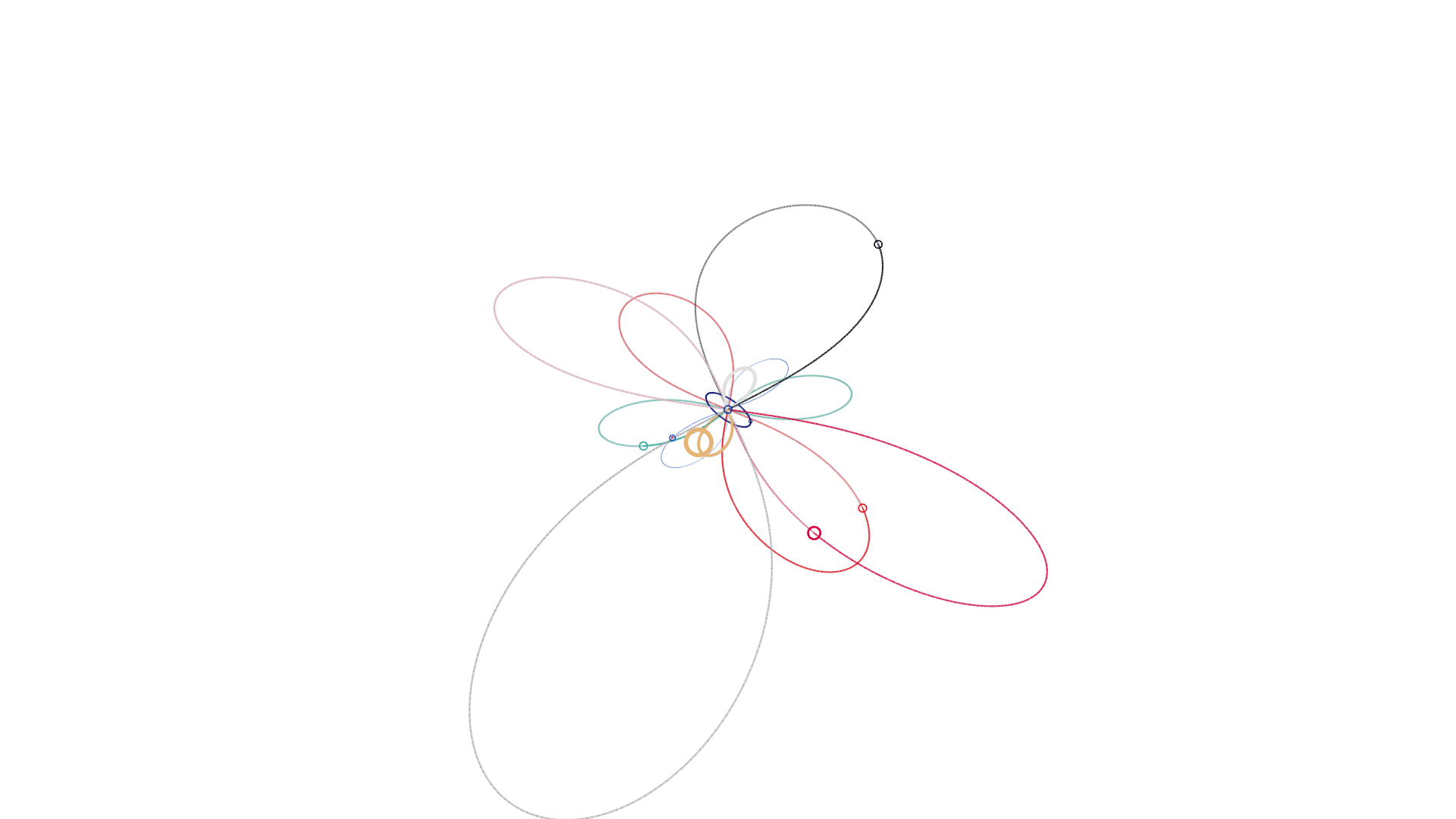
Slowing-motion study frame ·
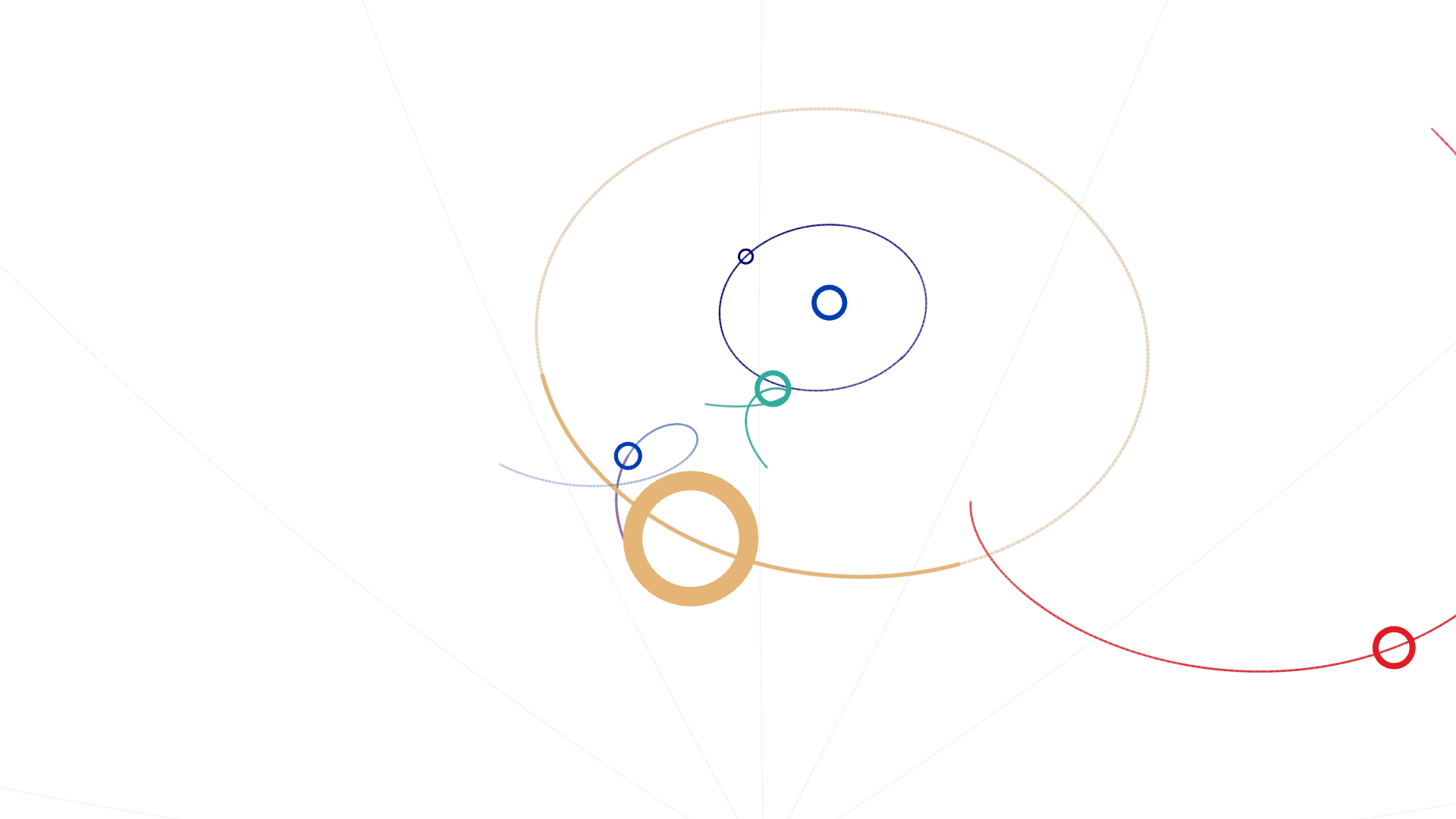
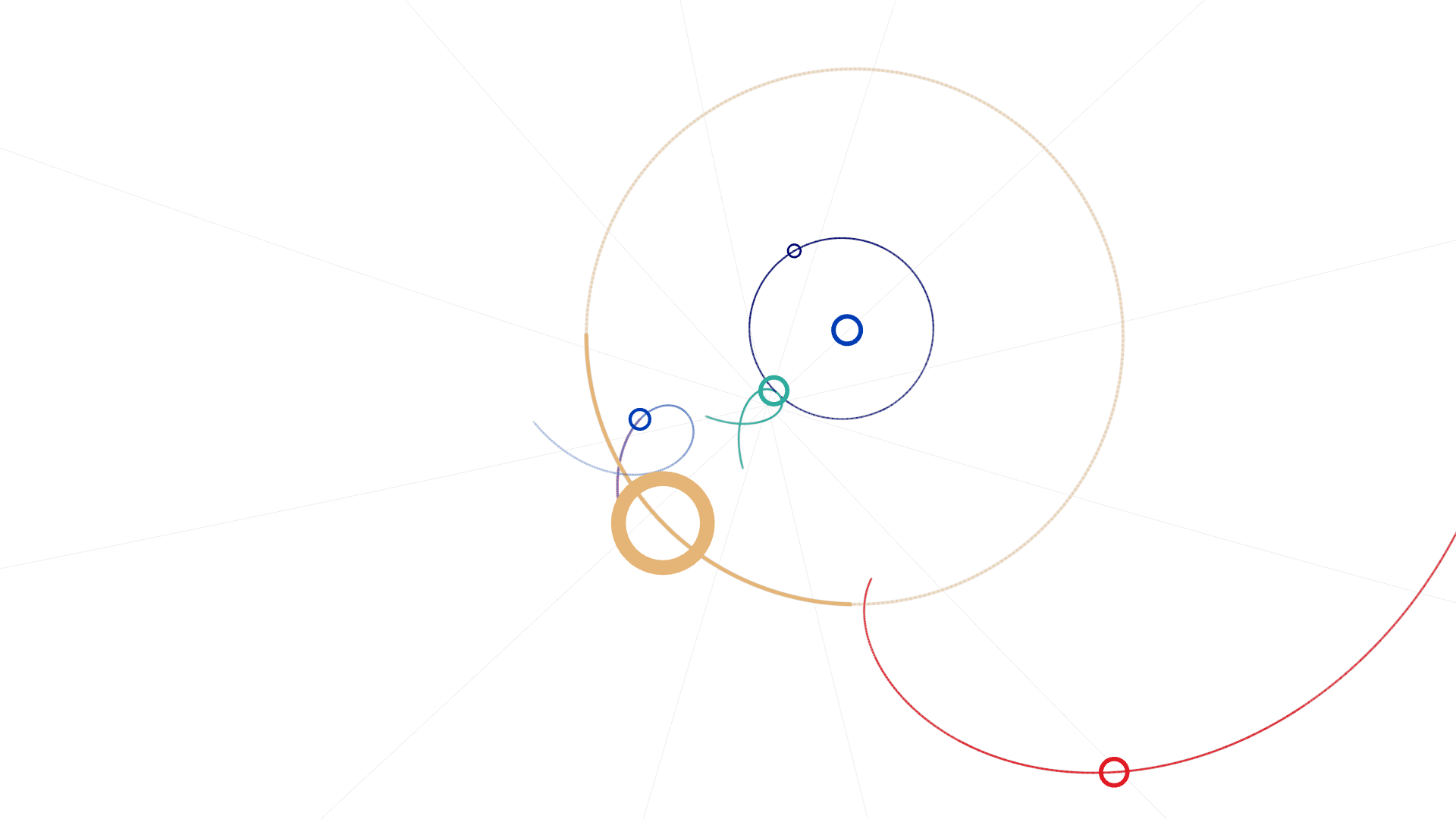
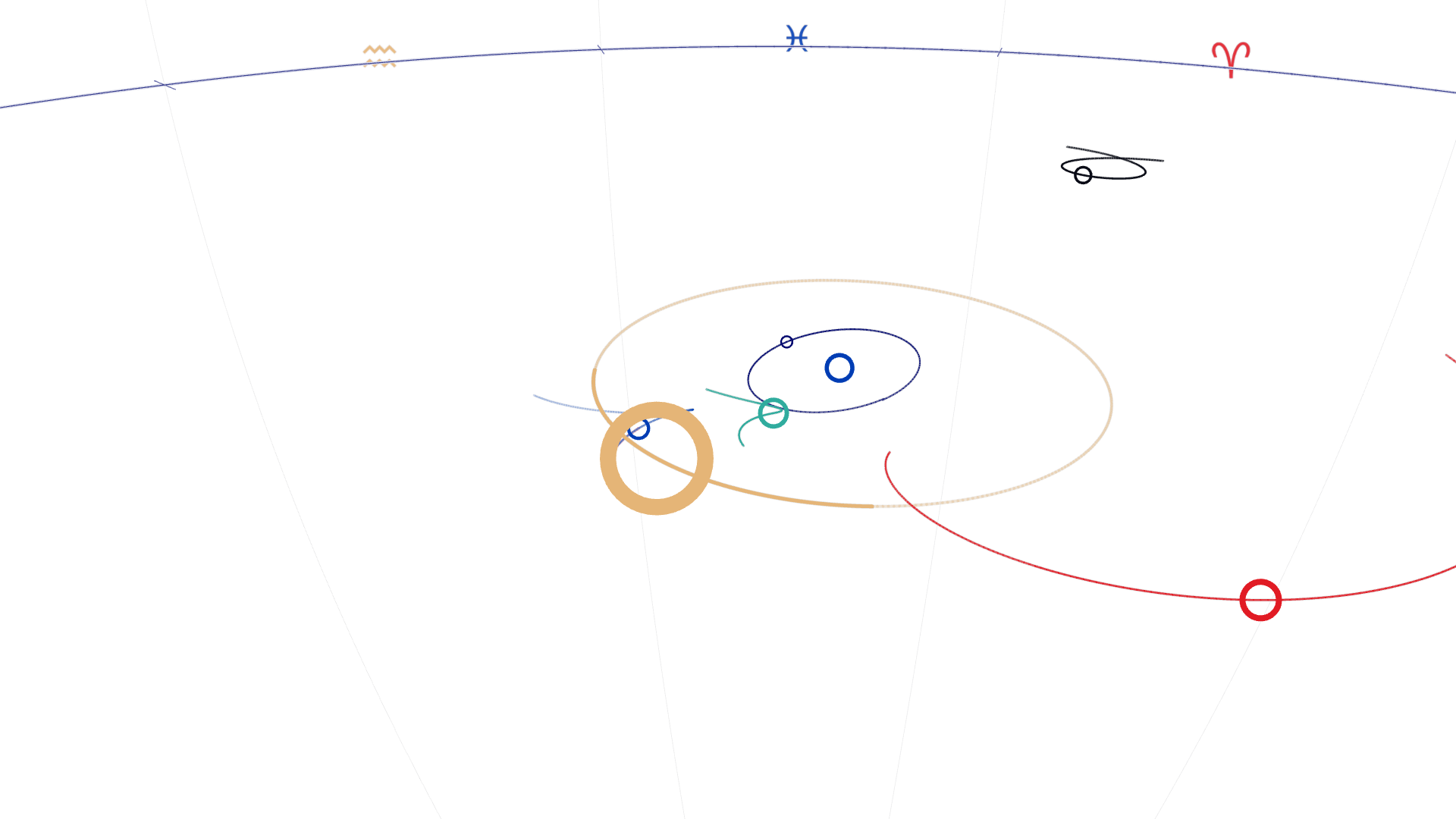
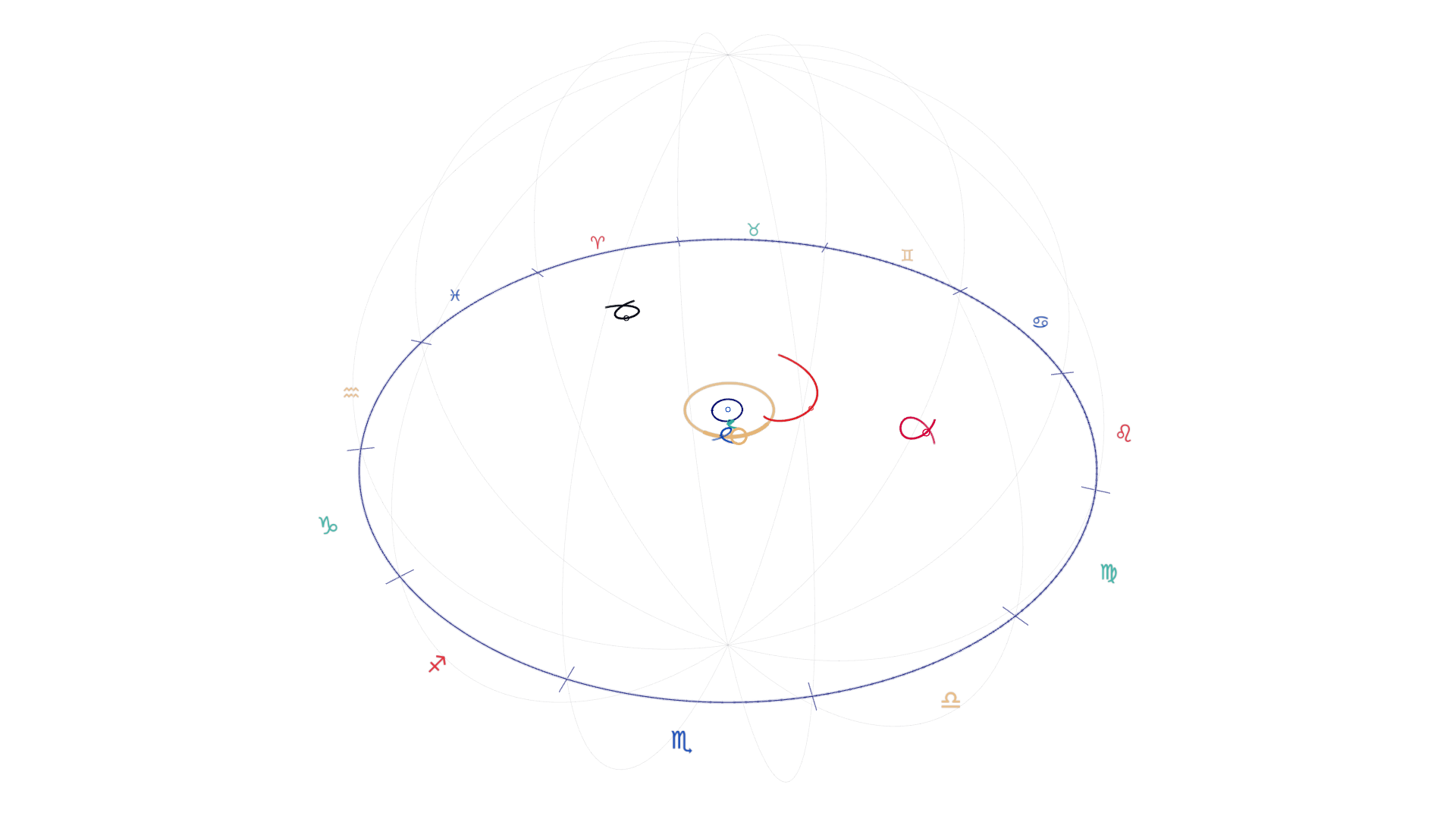
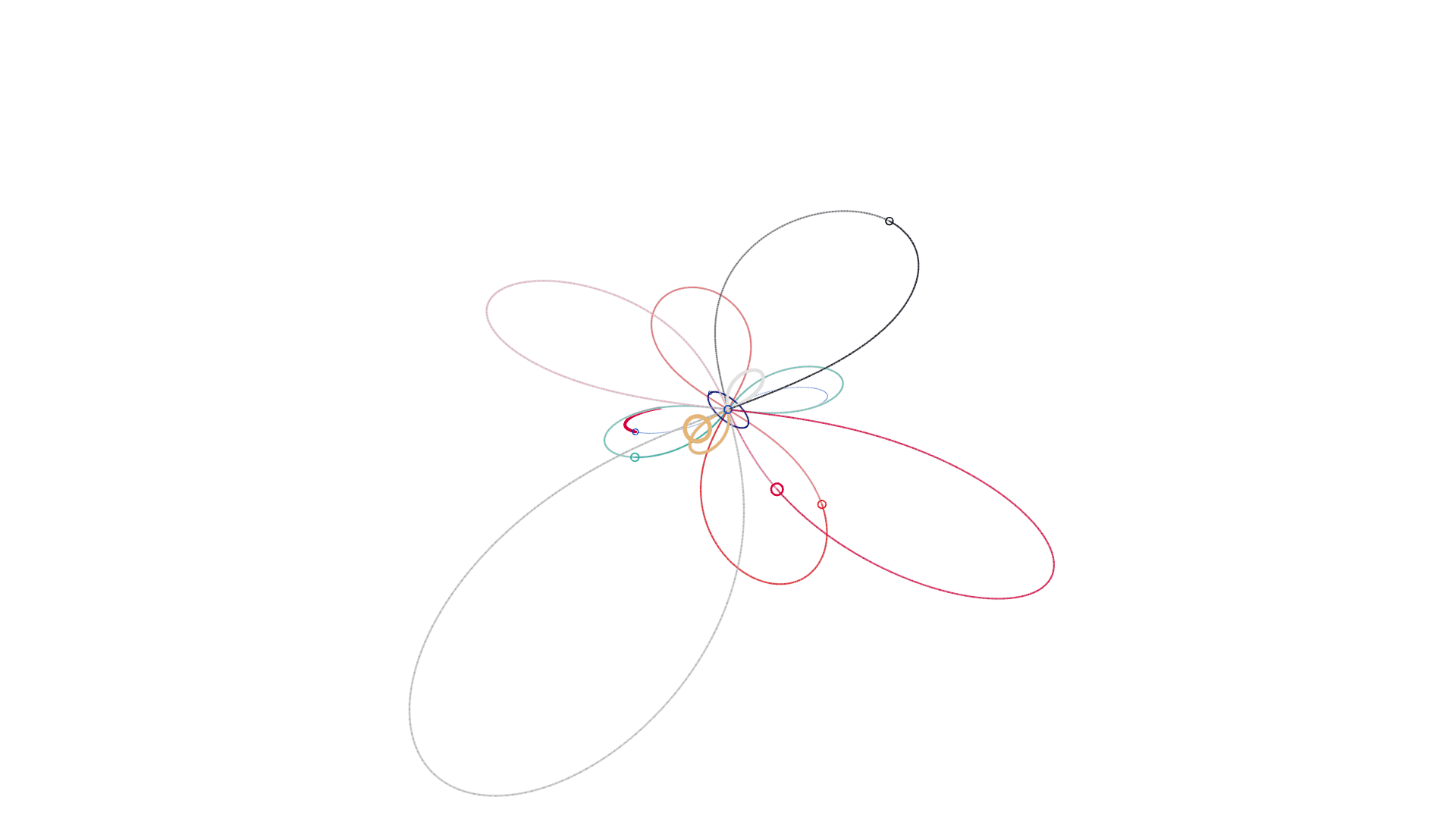
Backward station ·
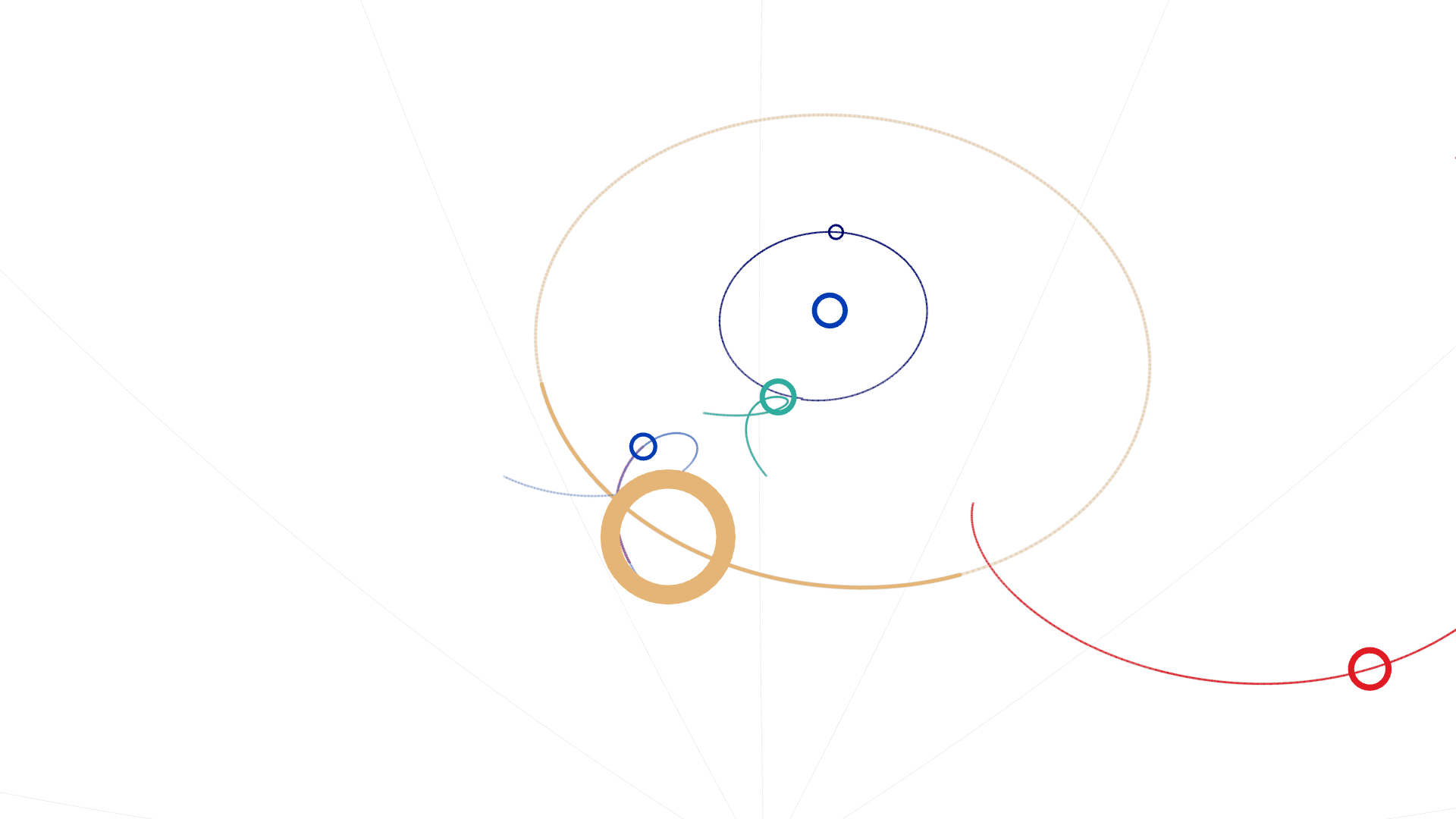
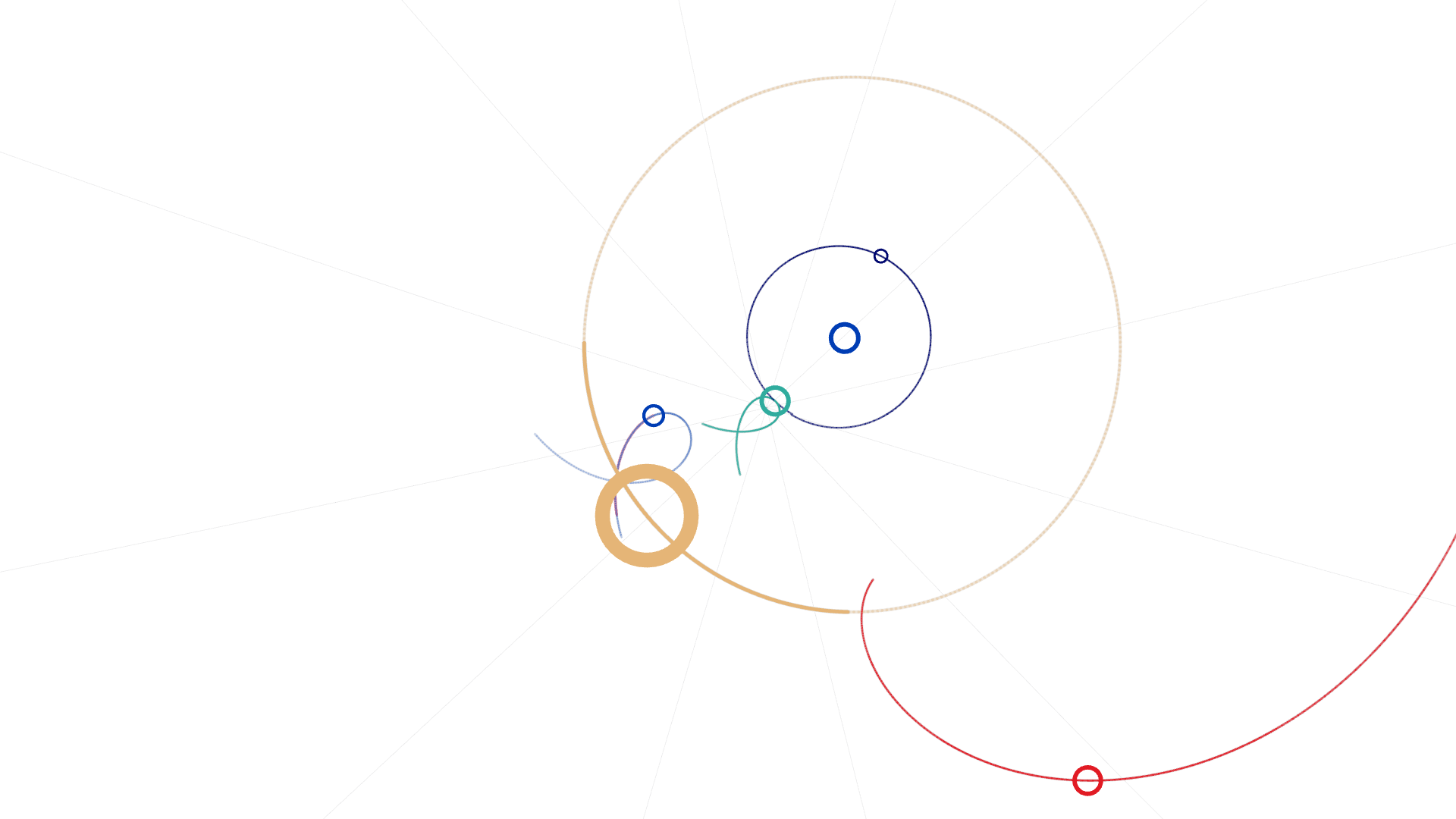
Closest to Earth ·
Fastest backward motion ·
Solar meeting ·
Forward station ·
Forward-motion study frame ·
Final crossing ·
Continue with lemniscatory astronomy or the moving sky.