Loading

About Astrosophy
Astrosophy is a study platform grounded in human agency. It joins precise astronomical calculation with spiritual cosmology, so that the sky can be studied as a field of conditions for free action and moral imagination. A chart in Astrosophy describes those conditions and leaves the outcome with the person who lives them. The work stands between the twentieth-century foundations of spiritual science and the questions of the present.
With this in view, the platform holds the moving sky, the birth chart, and the human constitution in one place. Today supports daily observation, Macroscope shows planetary movement, the Library gathers sources and studies, and Self lets you set those studies beside your own biography. Together these tools support the I-organization and the disciplined observation of cosmic relationships, so that each person can meet the shared sky with freedom and clarity.
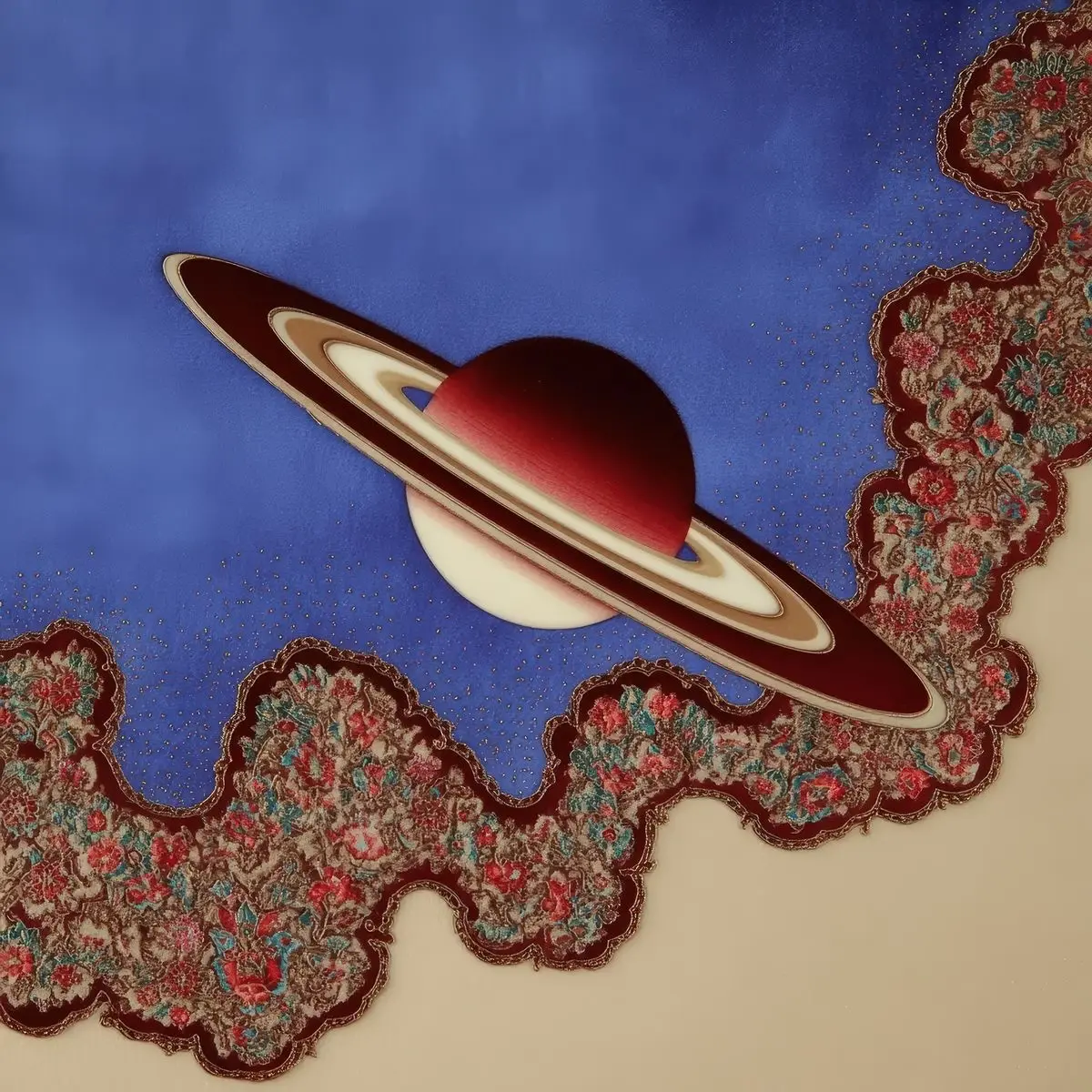
Anthroposophy begins with the conviction that the human being belongs to the earthly and the spiritual worlds at once. Its central movement is incarnation, in which spiritual realities become consciously knowable and are then embodied in thinking, education, medicine, art, agriculture, social life, and the development of the individual. In this movement spirit seeks form, and knowledge seeks practice.
Astrosophy approaches the same threshold from the other side. It begins with what has already become manifest: the human biography, the rhythms of life, planetary relationships, periods of crisis and development, and the recurring correspondences between inner experience and cosmic movement. Its question is how the spiritual becomes legible within a life.
Together, the two form a reciprocal movement. Anthroposophy follows spirit toward incarnation, and Astrosophy follows incarnation back toward spirit. Between them a method arises in which cosmic symbolism, human experience, spiritual perception, and clear thinking test and deepen one another. The research impulse remains open, and each investigator carries it further across the threshold between the invisible and the visible.
Spiritual life moves between two tendencies. The Luciferic tendency draws consciousness upward, toward revelation, inspiration, and spiritual experience that can lose its hold on earthly conditions. The Ahrimanic tendency draws consciousness toward fixation, calculation, system, and mechanism, until a structure stands in for the living reality it was meant to describe. Neither pole is discarded, and the task of the I is to establish a creative center between them.
Within that center, an intuition gains authority through testing. A planetary pattern, a biographical correspondence, a spiritual impression, or an inner recognition is observed, returned to, distinguished from projection, compared with experience, and gradually clarified. Doubt belongs to this discipline, and when it is cultivated well, it protects perception from fantasy and asks it for greater precision.
In this way, spiritual experience acquires a scientific character when the activity of thinking remains awake within it. The work is to develop a form of cognition that can receive spiritual content and keep it living.
Temperament, psychology, heredity, and a single biography belong to the earthly personality, which is the temporary configuration through which a deeper individuality acts. Astrosophy describes these conditions of incarnation and keeps them distinct from the being who incarnates through them.
Spiritual science describes the human being through physical organization, etheric life, astral consciousness, and the activity of the I. The etheric holds growth, regeneration, formative forces, rhythm, memory, and the maintenance of living form, so planetary movement can be studied beside processes of vitality, development, recovery, and metamorphosis. The astral holds desire, attraction and repulsion, sensation, imagination, and the soul's response to the world, and it is read in relation to the etheric and physical organizations.
At the center of these members stands the I, the principle that observes, differentiates, transforms, and gradually takes responsibility for the others. A natal chart is therefore an image of conditions. It shows the tensions and rhythms of incarnation, and the I remains greater than the configuration. No cosmological system is given authority over the individuality, and the study opens the field in which conscious development and freedom become possible.
Body, time, heredity, geography, relationship, karma, and historical circumstance can be felt as limits. They are also the means by which a spiritual individuality becomes capable of action. Spirit becomes effective on Earth by entering form, and in this way limitation becomes the substance of transformation.
Because of this, a life can be observed over time. Recurring motifs, developmental thresholds, relationships, reversals, crises, and periods of maturing may reveal an underlying continuity of individuality. Each event is given time before any karmic meaning is drawn from it.
Planetary rhythms give this investigation a structure in time, and spiritual science opens it toward karma, reincarnation, and the unfolding of consciousness across the stages of life. A reading is useful when it returns you to your own experience, so it is worth revisiting as your biography develops.
Spiritual science was meant to become practice, and its concepts entered education, medicine, architecture, agriculture, movement, speech, art, and social life. In the same way, cosmic knowledge gains meaning when it changes perception, strengthens observation, clarifies biography, deepens self-knowledge, or gives rise to new forms of practice.
Every spiritual tradition can become identified with the forms in which it first appeared. Concepts harden into terminology, institutions keep structures after the impulse has moved on, and repetition can take the place of observation. A living spiritual science continues through renewed investigation.
For this reason, terms such as karma, etheric forces, planetary beings, hierarchies, and reincarnation earn their place when they sharpen observation. The language of spiritual science stays open to questions, refinement, and testing against experience. Astrosophy labels calculation, source statement, and interpretation, so that each reader can see where a claim comes from and decide what weight to give it.
Astrosophy belongs to a lineage of researchers who read the cosmos as an open book of spiritual knowledge, and Anthroposophy is the ground of this research. We are grateful to Rudolf Steiner, the founder of spiritual science, whose work gave the cognitive tools for modern initiation.
We are grateful as well to the researchers who carried this work into mathematics, astronomy, and biography, to those who continue to study the lemniscate, and to the teachers, translators, editors, and authors whose books and platforms keep the sources available for study.
Spirit becomes form, and form reveals spirit. The path of Astrosophy is the conscious participation in this revelation.
Questions? info@astrosophy.app
Astrosophy updates
Astrosophy is still being built. The monthly newsletter brings new features, performance improvements and the changelog for each release to your inbox.